
There are a number of cynical ways to compare what Marvel and DC have been doing with regard to their movie output over the last twenty-something years. Some would say that Marvel folks had developed a plan and stuck with it while DC guys flailed about in a reactive way trying to catch the same wave with mixed results. You might even be inclined to say that Marvel had better superheroes to work with in ensemble scenarios or that their source material lent itself towards more entertaining output, while DC had always had better villains and only a handful of mostly overpowered heroes whose backstories and origins we had seen too often..
There’s a grain of truth in all those statements. However, the most important distinction between these two comic book movie houses pertains to levels of control and perceived institutional culture. To my mind, Marvel has operated like an autocracy where direction of travel, aesthetic continuity and artistic choices have been decided up top and people had no other choice but to fall into line or GTFO. Feige-way or the highway. Which is why there is a limit to excellence Marvel movies can achieve and why the entire MCU experiment has quickly grown to resemble a TV anthology where directors are hired to perform highly specific tasks and where their own aesthetic proclivities or vision are curtailed when they fall outside of the scope of the showrunner’s playbook.
DC on the other hand has been a different beast and I have written on this subject already a few years back. Although they have always behaved as though they wanted to tap into the same fountain of riches that the Marvel folks had gained access to, they would typically allow much more freedom of directorial expression. In fact, their successes waned exactly when they chose to mimic much more closely the MCU strategy and ended up having to revamp and restart their operation under new leadership. But they did allow filmmakers to take a punt, even if it hurt the cohesion of the experiment or if some of these ideas didn’t necessarily go to plan, or even if they ended up having to course-correct mid-stream. I can’t imagine Kevin Feige would ever sign off on Suicide Squad and Birds of Prey that looked as though they were inspired by Joel Schumacher’s take on Batman movies from the mid-90s. Similarly, I think I know what the answer would be if Mike Flanagan pitched Marvel a body horror movie. For that to happen, you’d have to leave Marvel’s influence and go to Sony who are much more audacious in this regard (Venom). But the DC folks have historically been less disinclined to saying no to projects that don’t conform aesthetically with the grand vision and that’s why Clayface exists.
And boy, am I glad that it does because I don’t think I have had this much fun watching what technically passes for a comic book movie in years. Granted, the idea of setting a movie in the Batman universe without explicitly acknowledging the existence of the Caped Crusader isn’t new; Todd Phillips’s Joker and its sequel have done it already and they hadn’t been officially sanctioned as DC movies either, as far as I can recall. There’s even more evidence found on the TV screen where major superheroes are more likely to take a back seat (Pennyworth, The Penguin, etc.) Plus, the fundamental concept of capitalizing on what makes the character of interest worth pursuing–even at the risk of asking younger audiences to whom comic book movies have been marketed for the last thirty years to stay at home–should be prioritized over stylistic cohesion with the shared universe in which the movie is supposed to exist, let alone any obligations towards building the larger narrative. I’d rather watch a movie that thrives on its own terms but doesn’t add anything to whatever big picture ramifications the studio might have in mind than a mediocre marketing ploy that exists solely to get me excited for an upcoming tentpole release.
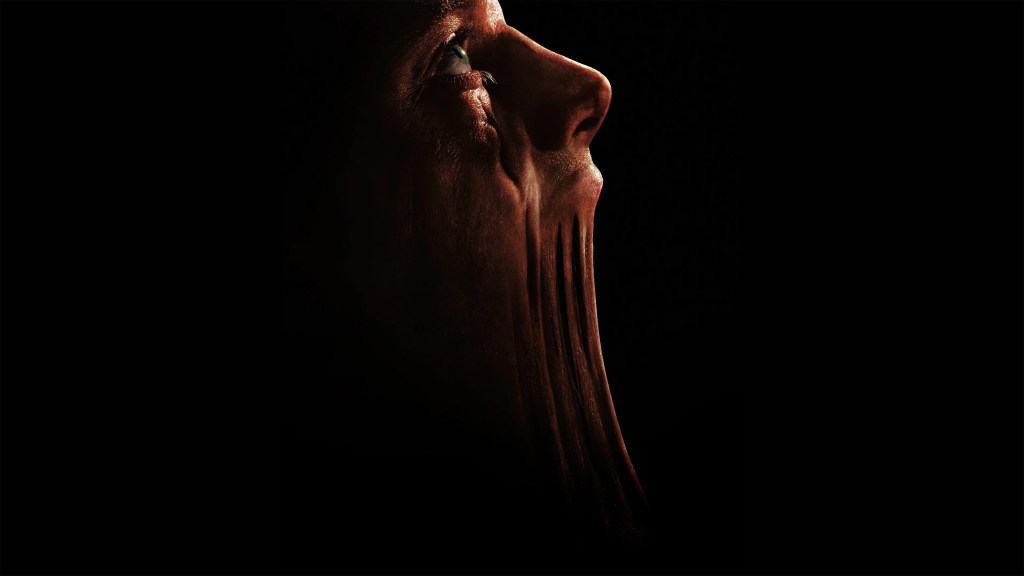
Clayface understands this assignment. Directed by James Watkins (Eden Lake) and co-written by Mike Flanagan (Doctor Sleep, Midnight Mass), the movie has enough genre provenance stapled below the title to inspire confidence in what the movie alleges in its marketing. This is not a marketing ploy to set up the next Batman and if it is, it’s doing one hell of a job camouflaging its intentions because it functions much like a slick and operatic revenge tale that is only interested in advancing its own narrative and themes. It just happens to feature one of the most intriguing and oft-underexplored villains in the DC universe, or to be more precise a hybrid incarnation thereof that picks and chooses bits and bobs from its many comic book iterations. Here, the titular clayface is an actor Matt Hagen (Tom Rhys Harries) who is about to reach the highest echelons of his profession before being robbed of his career in one fell swoop. After a night with a woman who turns out to be a local crime lord’s girlfriend he is hideously mutilated by the jealous mobster, in a medley of close-ups that spare not an iota of the gruesome spectacle, Hagen is left scarred and helpless… until he is offered a prototype treatment that involves nanorobots and AI to restore his visage.
Even if you’re unaware of the Clayface lore, you probably can tease out the rest. This is archetypal for a reason. Hagen suffers tremendous side effects after overdosing on the treatment and begins to transform into something more sinister, powerful and cruel–a shapeshifting monster capable of imitating anything or anyone. At the risk of sounding reductive, the thirty-second low-down you give to your movie buff friend is that Clayface is essentially The Fly with elements of Phantom of the Opera and the action sensibility of John Wick set in the world of Batman where the Caped Crusader has conspicuously taken a leave of absence. That’s the kind of Letterboxd review I can get behind: tight and snappy, accurate and almost completely useless to anyone wishing to find out if they should head out to see it.
But here I am telling them in a longer-form rant that they, in fact, should. For one, It’s rare enough for any comic book movie to present as almost completely unmoored from whatever big picture scheming the studio might be ensconced in in the background. This way, the movie is allowed to breathe and engage with its characters, such as they are. Granted, we are still in comic-book-movie-land that comes with its own self-imposed obligations to character veracity and adherence to iconography and the filmmakers did not intend to upset the applecart in this regard. What they wanted to upend instead was the long-held perception that comic book movies are made with all four quadrants in mind and delivered a product intended for mature viewers with a mild body horror fetish.
Taken together, Clayface carries enough freshness and visual bravura to counteract its expected narrative predictability. We all know where things are going but the way the movie is going about it is what sets it apart. Between its noir-ish pacing and the frequent indulgences in gore and violence, it is enough to call it a standout among its comic book movie peers: a great example of what happens when filmmakers are not manacled by imperious showrunners and instead given enough latitude to let their voice shine through. It’s still not a feral predator like The Substance or The Fly, but a caged equivalent of it. Nevertheless, Clayface can bare its sharp teeth and send shivers down the spines of those who came to witness it with its savage roar. At the end of the day, even a caged tiger is still fearsome.





Leave a Reply