
As the adage goes, the journey matters more than the destination. It ought to inspire you to look around you as you move through life, take in the surroundings, and refrain from obsessively talking up the finish line of whatever it is you are currently busy doing. It’s the people you meet along the way, sights you visit, experiences you have; these are things of import.
Yeah, well, that’s all true but if after a whole day’s trip through the most picturesque landscapes punctuated with pit stops at the most exquisite restaurants where you sampled the most incredible local cuisine you end up veering off the road and crashing into a tree mere minutes before pulling up to your house, this day will not live on in your mind as the day of the wonderful trip with all its amazing features; it’ll be forever registered as the day you crashed the car. Long story short, destination matters after all.
Which is something that didn’t look immediately obvious to the folks behind the recent South Korean science-fiction monster film Hope. Directed by Na Hong-jin, whose most recent directorial feature effort was The Wailing from a decade ago, this movie has been hailed by critics the world over as a breath of fresh air in the world of genre filmmaking and an intriguing experiment where a daring auteur took on genre fare with an explicit mission to elevate it well beyond its baseline. Not that it should register as a surprise at all: The Wailing was also similarly saluted as a paragon of genre freshness with its idiosyncratic take on a bouquet of ghost/possession tropes.
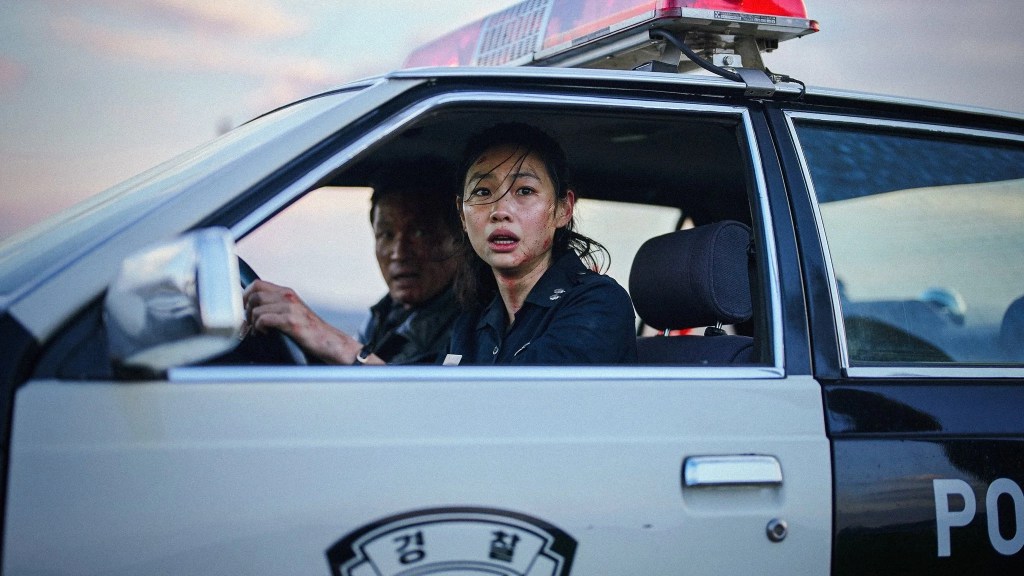
In any case, Hope positions itself as a deliberate take on a piece of action sci-fi perked up with its director’s emphasis on a combination of memorable iconography and frenetic, Greengrass-esque, immersion in action. We are thrown into a story where a bunch of locals situated somewhere close to the North Korean border find a savaged carcass of a cow in the middle of the road, which then immediately escalates into a full-blown siege of an otherwise sleepy town. As we desperately cling to the shoulder of the local police chief Ko Bum-seok (played by Hwang Jun-min), the movie veers between extended high-octane chase sequences, suspenseful moments of frightening tension when the characters come into close proximity to the threat (that for a period of time remains obscured and kept out of the frame in an effort to ratchet up the anticipation) and frequent outbursts of violence. That’s the journey. A mixture of Jaws on crack with Godzilla where the monster is small enough to be obscured by small-town infrastructure.
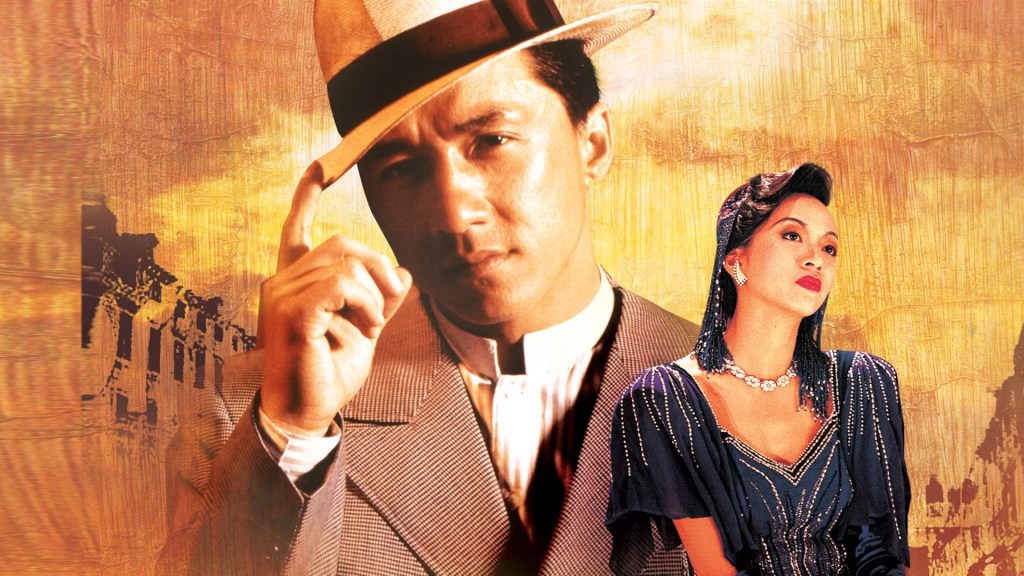
And does it work? Primarily, yes. But up to a point. The fundamental idea of throwing the viewer into such a kinetic string of extended action set pieces where everything is delivered at speed and with an intensity matching the film’s own breakneck momentum can only register as refreshing. Not to draw direct parallels but the feeling accompanying what unfolds on the screen is not too dissimilar from how The Raid registered with Western audiences or when the 80s Jackie Chan actioners hit American video store shelves: an evolution of genre filmmaking that is fundamentally rooted in a Hollywood tradition but somehow uninhibited by its guardrails. Freer, more audacious, more buzzed and unshackled.
But that’s unfortunately not the whole story. While Hope doesn’t quite run out of steam, which would be the expected outcome for a movie paced this fast and so wholly devoted to its central chase/siege set piece, it runs out of film stock before the story has a chance to conclude. Somehow, we have been sold an incomplete product marketed as a standalone feature with a beginning, a middle and an end. And only very recently the director announced that plans for the sequel have been confirmed and that he might even be able to complete a trilogy. Which would have been nice to announce upfront by way of titling the movie accordingly or something. I know I griped about how Dune kept its Part One post-colonic subtitle out of marketing because the filmmakers didn’t know if there would be money to fund the rest of the story. It’s a gamble and I would like to live in a world where filmmakers don’t have to pretend and play all hard-to-get and there’s money available for them to direct a trilogy and tell the world about it too. What’s the worst that could happen?
Oh, I don’t know; a movie will end on an unresolved note and we might not get to see a continuation but at least we’ll know there was supposed to be one. A title like Hope tells me nothing at all about the simple reality that there’s no resolution to this story. What we get is a narrative that introduces new characters towards the end of the movie, teases a few things here and there and cuts off abruptly midway through an action scene, on a quintessential TV-esque cliffhanger. We even get a post-credit scene but not a single acknowledgment that a follow-up is on the way. Not even an equivalent of “James Bond will return in [insert title of the next Bond movie].” In fact, the filmmaker himself went around and talked about this movie being a self-contained narrative–which it wasn’t–and how a flip of perspective and an introduction of a whole bunch of new characters that recontextualizes the monster angle completely was fully fleshed out and completed because it left the film’s protagonists in a morally unsettled position. What?
I’d have been much happier if I had been told from the get-go that Hope was intended as Chapter One of a grander narrative, which would have explained quite a few quirks of the film that could only have been otherwise explained by indulgent directorial decision-making to extend and protract. When viewed through the lens of a trilogy-in-the-making, those extended chases and long stretches of action filling the rather lengthy running time of the movie would make much more sense because they’d be more in tune with an arc spread across multiple films. Moreover, there would be no expectation for everything to conclude neatly at the end. The only downside to it all is that if they had opted to title Hope as Hope: Part One or something like that and the money never materialized, we’d be left with a movie that advertised its own failure… like many other movies before it (e.g. Warcraft: The Beginning or King Arthur: Legend of the Sword). The obvious alternative would have been to turn this entire project into what I like to call a “1+2 Trilogy” where the first film stands completely independently and doesn’t require a sequel while inviting one, much like Star Wars, The Matrix or Back to the Future, but that would require some serious changes be made to the script or even a total narrative overhaul. That’s the obvious and often-practiced way of having your cake and eating it too.
But if the example of this movie teaches us anything, it is that you can’t just make The Fellowship of the Ring without telling me you’re doing the whole The Lord of the Rings, let alone pretend that The Fellowship works as a standalone feature; it doesn’t. Well, I’d argue that it works better than Hope does as a standalone feature because it actually resolves its first-act arc while accelerating its trilogy-wide narrative. This movie here does no such thing, unfortunately. It just cuts to credits as though there was another episode of the series coming out next Friday.
And this, my dear friends, is how you ruin a perfectly good journey: by making sure the destination was memorably and upsettingly awful. Hope really behaved like a masterpiece in the making for at least good two-thirds of its duration, at which point any sane mind would begin asking questions about how this progressively complicated narrative would eventually resolve its conflicts because it looked more and more as though it either wasn’t going to do it at all or it would resort to drastic measures to tie everything together in the last five minutes. That final stretch of the movie is where everything–and I do mean every single little aspect of the narrative–takes a swan dive face-first into cowpat. Thus, it is all but ensured that everyone who ventured out to see it in cinemas or chose to spend some time in front of their TV watching it would not come away from Hope elated with its brisk pacing and intense action filmmaking, but discombobulated, disappointed and despondent about the way in which the movie resolved (or failed to resolve) its own narrative obligations towards the audience.
It turns out that the biggest gamble played by Na Hong-jin and his collaborators with Hope didn’t regard the fate of what they clearly intended as a franchise with a trilogy arc that they wanted to obfuscate while hoping that audiences would adore it without the foreknowledge of the size of their required emotional investment. It was a gamble that some viewers might end up feeling tricked and swindled when confronted with a realization that they weren’t told what they were signing up to watch upfront. I don’t mind watching trilogies. Nothing against a miniseries either. But I’d like to be told what I’m watching at least so that I wouldn’t scratch my head during the screening because the pacing doesn’t gel with the running time of what I paid to watch and whatever freely dangling story elements would be picked up at a later date.
Therefore, I have no other recourse but to make sure the discrepancy between the quality of the journey and the impact of its destination is appropriately reflected in the rating Hope shall receive. It would be cruel and unfair to dismiss the experience wholesale on the back of feeling tricked into watching a TV pilot against my will and guilt-tripping me into wanting more. Equally, it would be disingenuous and wholly unsustainable to rationalize this outcome as a satire on franchise filmmaking and a joke played by an auteur on our gullible Western expectations while pretending this was a purposeful experiment aimed to make the movie look like unfinished business. What I am prepared to do is to acknowledge that for the most part Hope is a five-star experience brought sharply down to a one-star disaster in its very final minutes. Which makes the three stars you see up top look more than appropriate.



Leave a Reply