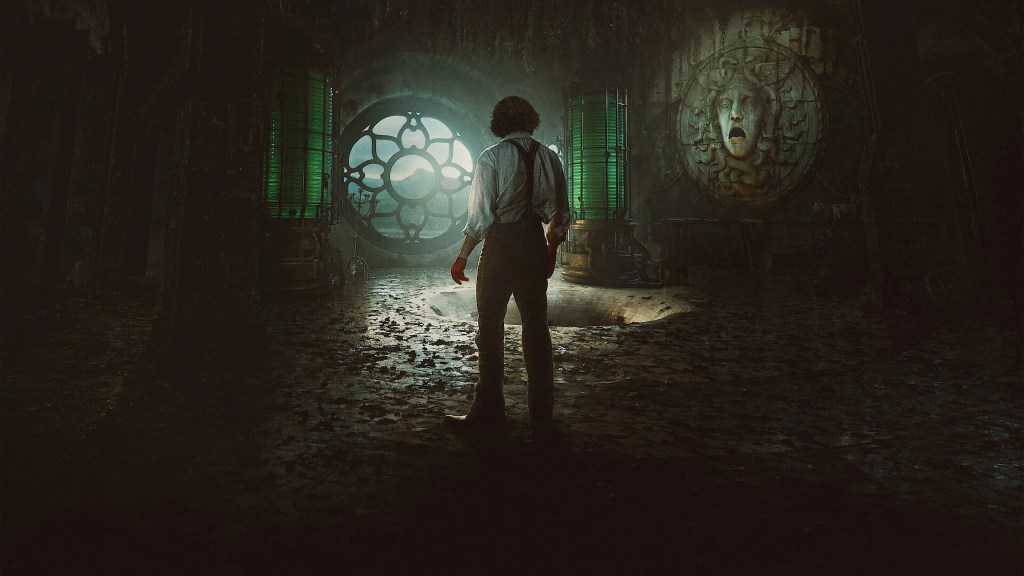

Mary Shelley’s Frankenstein, or the Modern Prometheus belongs to the elite club of all-time literary classics that have been adapted for the screen so many times that it is in fact impossible to keep track of all of them. There’s at least over 60 straight-up adaptations of the text, a number which balloons to over 200 if we factor in B-movies, indies and movies that reposition the text in many ways despite remaining fundamentally faithful to it. And then, if we were to count just movies in which the character of Frankenstein’s Monster or Victor Frankenstein himself are featured, then nobody really knows how many we have to contend with. We’re definitely in the territory of multiple hundreds. And multiple hundreds of anything is a sizable amount.
Therefore, a bit over 200 years after the publication of Shelley’s epistolary piece that is in my opinion way more interesting to talk about than it is to read, I think it’s reasonable to inquire about reasons why anyone should pick up this text from the shelf and adapt it for the screen anew. And despite the fierce density of works dealing with this story, ranging between the 1931 Frankenstein, Hammer’s The Curse of Frankenstein from 1957, the transgressive Flesh for Frankenstein or the more prestige-adjacent Mary Shelley’s Frankenstein directed by Kenneth Branagh, just to name a few, there are still valid reasons to resurrect this piece.
Especially now, the idea of looking back at how Mary Shelley’s text reflected numerous anxieties concerning the disruptive force of the industrial revolution or the emergent prominence and hubris of science characteristic of the Enlightenment mindset seems particularly timely. Furthermore, as we also find ourselves on the precipice of a major revolution involving adoption of artificial intelligence in everyday life, automation displacing jobs and livelihoods and a widespread disruption looming just around the corner ready to rifle through our pockets, the thought of a filmmaker like Guillermo Del Toro—an outspoken critic of the use of AI in art and filmmaking—deciding to direct a new adaptation of Frankenstein would be seen as an incredible opportunity to deploy his artistic vision in pursuit of staging a veiled yet still stinging commentary on just how poignant and immediate Mary Shelley’s work remains today.
Unfortunately, nothing could be further from the truth. Del Toro’s attempt at Frankenstein is predominantly driven by another—still valid, yet less intriguing—reason to retell this story. And it is simply because it is a cool text to play with while indulging in Gothic iconography, all of which have always remained the filmmaker’s favourite playthings. He has always been fond of dark and brooding fairy tales anchored in heightened aesthetics, such as The Devil’s Backbone, Pan’s Labyrinth, Crimson Peak, or his Oscar-winning The Shape of Water and the most recent adaptation of Carlo Collodi’s Pinocchio. From brooding tones and ornate set designs to deployment of vivid colour schemes and punctuating his work with flashes of gruesome violence, Del Toro has developed a distinguishable comfort niche into which he has now dragged Mary Shelley’s novel by the hair and clubbed it hard enough for it to emerge transmogrified and warped to suit the filmmaker’s penchant for “performative gothicking,” a term I inadvertently coined while writing about the Robert Eggers-directed take on Nosferatu, which happens to suffer from the same malady.
It is as though the filmmaker was not anywhere near as interested in what the story he was adapting had an opportunity to deal with, as he was in the simple act of playing dress-up with a classic Gothic tale and fiercely indulging his many aesthetic darlings. Just as it was the case with his recent efforts (Nightmare Alley and Pinocchio), the filmmaker does not waste a single opportunity to craft opulent steampunk dungeon sets or multiple heightened funeral scenes complete with fairy tale caskets, high-contrast costumes and requisite pomp and circumstance. Even further, he most definitely looked at the source material and decided that while he fundamentally cared about its epistolary structure—which, by the way, wears out its welcome partway through reading it as you find out how manufactured and tedious the concept of reading about people telling recursively nested stories about people telling stories can really get—he didn’t care about it enough to keep its major dramatic beats intact.
Instead of Victor Frankenstein’s (here played by Oscar Isaac) scientific bent stemming from a general appreciation of alchemy, he gets to create the Monster (Jacob Elordi) seemingly under Faustian patronage of a syphilitic philanthropist (Christoph Waltz), and predominantly driven by unresolved childhood traumas. The monster’s quest to reckon with his creator is also underpinned by different emotional drivers and Frankenstein’s own doomed escape towards the North Pole is conveniently related to the tragically staged death of Elizabeth (Mia Goth) at Frankenstein’s hand, for which the Creature is blamed. It only follows that the idea of making so many drastic changes to the narrative—they are truly numerous between moving its setting forward in time, adding characters and meddling with motivations, let alone enmeshing inspirations taken from other classical adaptations of the novel—ought to have some reasoning behind it. Yet, it is all rooted in aesthetic pursuits. It’s all to make the story look more romantic and Gothic, as opposed to striving for it to accommodate a novel and intriguing angle of interpretation the source material alone wouldn’t enable.
Consequently, Guillermo Del Toro’s take on Mary Shelley’s Frankenstein is a beautiful and ornate box of chocolates with gold embossing, intricate detail and exquisitely crafted artwork. Inside, however, there are thirty-six bog-standard Cadbury’s truffles that you’d easily find in any supermarket in a three-for-two deal. It’s all considerably unfulfilled and thus infuriatingly painful to sit through for those who seek more than an exercise in pure aesthetics needlessly convoluted by plot machinations placed in the narrative for no other reason than to superficially embellish the story’s Gothic fairy tale provenance. Translation: Del Toro’s Frankenstein might be beautiful to look at, but it is too arduous and self-indulgent to ensure an entertaining or enriching viewing experience.
And it’s a real shame because I don’t believe that the adaptation of Shelley’s text required too much engineering and scriptwriting gymnastics to flesh out the elements of the narrative the filmmaker tends to gloss over in pursuit of his beloved Gothic beats. In fact, they were there all along, ready to be seized brought forth. The movie could have spent a precious few minutes digging deeper into Frankenstein’s tragic pursuit of becoming a god among men, which frankly never required any romantic subplots at all. Shelley’s text was already geared to reignite a discussion about hubris of men’s pursuit to attain powers they were never meant to wield, such as creating what they thought was life by snatching it from Death’s sweet embrace, which would have resonated splendidly as a timely commentary on tech companies pursuing the creation of what essentially amounts to alien intelligence by way of having it emerge from lines of code. The driving force pushing the Creature to come after its creator—in a departure from the novel, as I don’t necessarily remember too much emphasis placed on Frankenstein mistreating it in any way in the book—was inches away from reflecting on the impending threat of superintelligent AIs built as patchworks of other inferior models coming back to confront us. Unfortunately, the film doesn’t leave enough space for the viewer to ponder anything but the iconography and as the movie comes to its inevitable climax where, following a string of nested stories, the Monster confronts Frankenstein and obtains his ultimate validation rings decisively hollow.
It’s quite honestly ironic because I would have expected a filmmaker who never wastes an opportunity to shout “fuck AI!” at Q&As to miss an opportunity to lean into this commentary decisively while adapting a seminal piece of writing on the subject of scientific discoveries turning on their creators. In fact, it’s doubly ironic in my opinion because Guillermo Del Toro once again shows that his interests lie purely in the realm of aesthetics and iconography, thus joining the likes of Wes Anderson and Tim Burton in a line-up of visual auteurs whose work will easily become fodder for generative AI. It probably won’t take long for next-generation video-generating tools developed by Silicon Valley Frankensteins to enable the average Joe to type in a prompt like “generate a 150-minute-long adaptation of Mary Shelley’s Frankenstein in the style of Guillermo Del Toro” and the end result will be indistinguishable from the movie Del Toro made himself. After all, the main accusation against AI-created art and one that holds the strongest is that it is an exercise in emotionally hollow aesthetics that may look nice but stems from nothing but a purely performative and meaningless pursuit.
Thus, his movie is nothing but a creative death rattle packaged in familiar iconography. Guillermo Del Toro’s Frankenstein could have said a lot but elected to spend its entire duration navel-gazing and hoping that viewers will be happy to look at pretty pictures and lavish sets and take pleasure from seeing a filmmaker who once again opted to tickle his Gothic gland in public.


 Flasz On Film
Leave a comment