With the exception of Inside Out 2, Pixar has struggled ever since COVID disrupted the world and reshaped how we watch movies. Onward, Soul, Luca and Turning Red didn’t make any money at all in cinemas, while Lightyear and Elemental—albeit technically earning double what the other four movies made combined—still failed to turn the tide. With each of these projects costing nearly two hundred million dollars in production budgets alone, Pixar has been steadily bleeding money for five years. And in times like these, you can bet that finger-pointing and blame-shifting has become the name of the game.
In fact, following the lukewarm response to Elemental, Pete Docter, who is one of Pixar’s head honchos, admitted that the studio would no longer enable personal stories of “director’s catharsis” and instead pursue stories that speak to “a commonality of experience.” In translation, it signaled a major course correction: directors would be disempowered, with creative control shifting to larger producing teams. Stories would no longer originate in a single person’s experience and instead would come together in a meeting. Though, let’s be honest, their movies could only have been considered “personal” when graded on a curve, against other Disney and Pixar productions, because neither the House of Mouse nor The Home of a Hopping Lamp would ever grant a single filmmaker the kind of freedom afforded in other, less organizationally conservative studios. They looked at movies rooted in personal search for meaning in grief (Onward), cultural integration (Elemental), or fundamental belonging (Luca) and decided that these “personal” ideas were to blame for Pixar’s underwhelming financial results.
Granted, there may be something to it. After all, when America seems completely consumed by culture wars the idea of queer coding a character or suggesting someone might have two mums might render the entire movie a cultural lightning rod or a cudgel with which one side will beat another, so gambling a nine-figure sum on a project that might alienate a section of its audience is not the best financial decision. But it’s not the whole story either. Movie attendance has never truly recovered from the pandemic, and there’s simply not as much money on the table as there used to be. Furthermore, the ever-increasing costs of living have undoubtedly hit Pixar and Disney much harder than any other entertainment outfit, specifically because their entire business model depends on families heading out together to see their movies. Movie-going has become incredibly expensive in recent years and Disney themselves have taken away the incentive to go out by telling those very families they count on coming out to see their movies that they could just wait a few months and watch the same movie with their kids at home for a tiny fraction of the cost, on Disney Plus.
And then there are Internet thinkers who now believe that Pixar movies keep losing money because of their “bean-mouth” aesthetic and that they are all too generic to distinguish themselves from each other, allegedly because many artists who join the Pixar stable originate from the California Institute of the Arts (CalArts) where this minimalistic—some would call it generic—style of animation comes from as well. But hang on for a second! Aren’t all Pixar movies visually related in this way? Sure, some go for the bean-mouth more than others, but it’s there in Inside Out 2, and it clearly didn’t stop it from making over 1.5 billion dollars at the box office. Correlation and causation.
Look, there are no easy answers to complex questions despite what populist snake oil salesmen would have you believe. It’s probably likely that the reason why Pixar movies have failed more than they succeeded in recent years (and thankfully they managed to end up in the black thanks to having at least one major juggernaut in the mix) is a combination of all those many factors. Sure, these movies are all aesthetically related to each other, but it’s not the end of the world. In fact, you could argue that it’s a part of the brand. The world has simply changed.
The pandemic has reshaped our viewing habits. The post-pandemic economic crisis has made us think twice about the money we spend on entertaining our families. Disney has effectively undermined their own theatrical business model in the meantime to assert their space in the streaming market. Pixar movies cost a fortune to make. Their films’ progressive coding—however gently rendered—has also become weaponized by the radical right, turning Pixar’s output into a difficult cultural tightrope. And all these factors most likely work in mutual amplification.
But!
This doesn’t change the simple fact that many of these unsuccessful Pixar outings end up well regarded and praised, both by critics and audiences. Sure, I may have had my own problems with Lightyear or Elemental—as I might be personally tired of seeing Toy Story milked to death and the tattered mechanic of “what if X had feelings” has begun grating on my sensibilities just a tiny bit—but these movies do work and audiences don’t mind the fact they are rooted in personal storytelling or infused delicately with progressive messaging. Maybe Pixar’s real mistake is trying to slap a simple sticking plaster on a deeply complex problem.
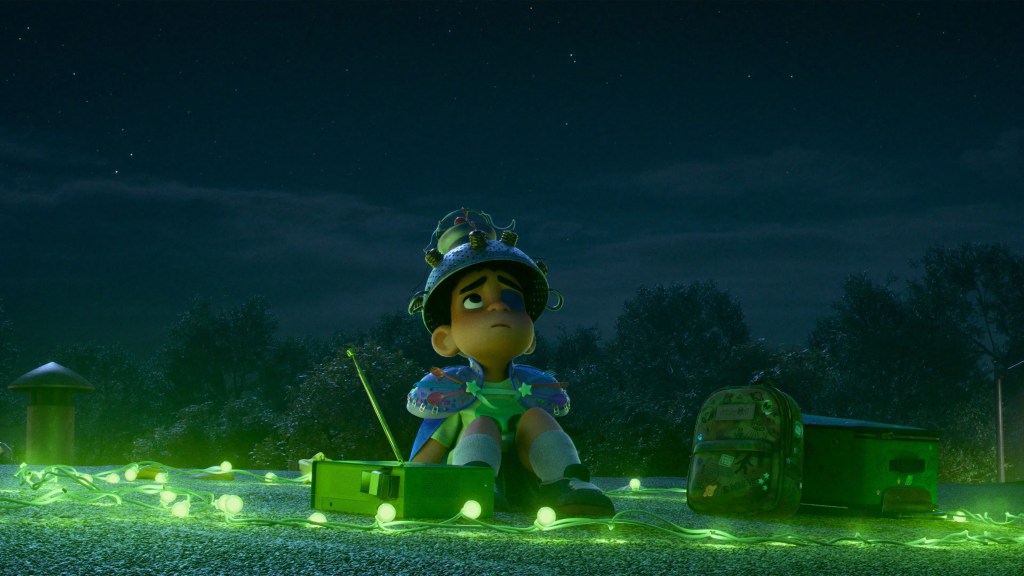
The recently released Elio is a great illustration of what Pixar’s problems are and how their own obstinacy will become their own undoing in the end. It’s easy to find horror stories about its production woes and how this personal tale of alienation and belonging inspired by Adrian Molina’s early life as a military base brat with subtle queer coding was taken over by the studio machine and revamped in hopes of generating broad appeal. Between multiple directors coming in to work on this movie and many delays, anyone interested in the kitchen side of the entertainment business would be able to tell just how much trouble this production had faced ahead of its release. The feeble marketing made it clear: Pixar didn’t believe in the film.
However, audiences don’t care about any of the behind-the-scenes drama. They go out to see movies with their families based on trailers, posters, and all other forms of easily accessible marketing material. Whether they choose to go and watch Elio has very little to do with its messaging or a possibility that a critic would be able to connect the dots and see it as a story about growing up as a gay kid on a military base—which you can still do, despite all the meddling with the picture. I, an adult, see Elio as an emotionally charged and intellectually stimulating piece on youthful alienation, grief and search for belonging. A ten-year-old boy will see it as an adventure, and they will have fun watching it if their parents feel it’s a good idea to spend money and time to go out and see it. But they won’t because they won’t know, and they won’t know because Pixar didn’t believe in Elio enough to let everyone know they should go out and see it. And then they will organize a company all-hands meeting and tell everyone that the leadership had been right all along and that no original stories would ever be made at Pixar again. A self-fulfilling prophecy.
And I think it’s an incredibly short-sighted strategy with diminishing returns because even stories of “general interest”—not that Elio wasn’t one; adolescent alienation and a search for belonging or your tribe are pretty general, if you ask me—will end up failing at the box office if Pixar don’t acknowledge all these other compounding factors driving viewers away from cinemas. Maybe what they need is a dose of marketing genius that would incentivize movie-going instead of waiting for that new Pixar movie to come out on Disney Plus. Perhaps there is something they could do to reduce their overhead costs to de-risk their projects going forward. Or maybe they need to work the way other studios used to do, namely bank on a few populist juggernauts of “general interest” compounded by sequel appeal and then use the receipts to sponsor some of those personal projects, instead of blatantly abandoning them.
I think Pixar has a future where movies like Inside Out 2 or other instalments in their long-standing franchises bring in the moolah while movies like Elio, Soul and Luca allow creative filmmakers to express themselves and tell great stories about human experiences with considerable emotional impact. Pixar folks need to come to terms with the simple economic facts driving movie-going habits and find a way to retain what made them great once.
Movies like Toy Story, Up and Wall-E used to be synonymous with Pixar-esque creativity and without them they’d lose their character and personality in pursuit of financial success. What they should have done—regardless of the production turmoil, changes and meddling—was to give Elio a chance to find its audience instead of pretending it wasn’t there because it didn’t conform to the common cultural denominator. If Elio fades into obscurity, it won’t be for lack of quality—but because Pixar, in chasing broader appeal, forgot that cultural longevity is built on risk, not retreat.




 Flasz On Film
Leave a reply to Heidi: Rescue of the Lynx (2025) – Review – Flasz On Film Cancel reply