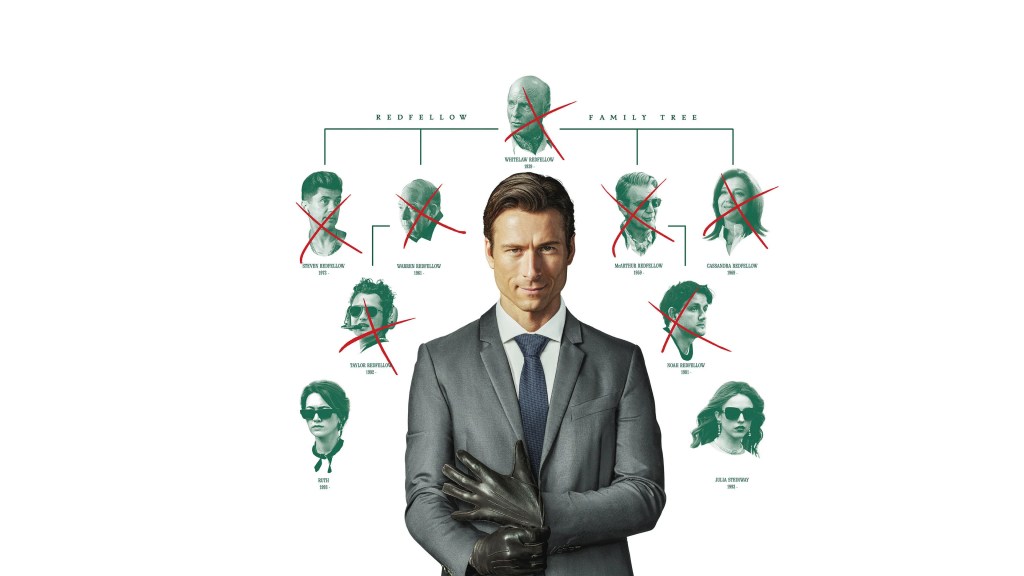

The theme of eat-the-rich satire in movies has always been present somewhere on the spectrum of mainstream entertainment. However, ever since the late 2000s—in the aftermath of the historic financial crash—we have seen a considerable and persistent uptick in their prevalence. It is fairly logical to notice that emergence of films openly critiquing class divisions correlates strongly with times of economic strife… and because in the last twenty years we’ve seen a number of theoretically once-in-a-generation economic and societal calamities—from populist waves and Brexit to a variety of regional wars and the COVID pandemic—the theme has calcified into a fairly well-defined micro-genre.
What’s even more intriguing is that looking back at movies like District 9, Elysium, The Purge or even Get Out (to name but a few) and then comparing them against films like The Menu, Bugonia or Parasite, you can see how far we’ve come. More specifically, how we’ve traversed from allegorically commenting on the ever-widening chasm between the haves and the havenots to brooding in class-based carnage; clearly, the gloves came off somewhere in the meantime.
Therefore, in 2026 we might be too exasperated and fatigued to stay at arm’s length from the material and the current consensus on eat-the-rich movies indicates that we are more at home with visceral and cathartic wish fulfillment than gentle-gentle similes and allegorical distance. Which is why a movie like How to Make a Killing, despite the fact that it technically fits within the current zeitgeist as an exploration of this thematic space, just feels out of place. Or out of time.
This could be because it has been knocking around Hollywood since 2014, when it featured on the famous Black List; then titled as Rothchild. Written by John Patton Ford, the script languished for five years before Jon S. Baird (Filth, Stan & Ollie) expressed interest and the project formally entered development with Shia LaBeouf and Mel Gibson in lead roles. But the excitement fizzled and the production fell apart… that is until the screenwriter himself took the mantle of the director, cast Glen Powell in the lead role together with Margaret Qualley (who remains a shining highlight of the finished product), Jessica Henwick and Ed Harris, and the movie finally saw the light of day. Twelve years it took.
Which also possibly explains why I feel about it the way I do. While I cannot possibly be sure as to how different the produced script was from the one reported in 2014 as one of the most-liked unproduced screenplays, what I can say is that the movie still feels at least a decade out of step with the times, which—depending on how you feel about what is now an unbridgeable canyon separating the billionaire class with their private jets and tropical islands from the rest of us just trying to stay afloat, not to mention those of us who are already effectively drowning—might make the movie feel disingenuous, divorced from reality or maliciously apologetic towards the point-one-per-centers who have gotten filthy rich on the back of our collective misery in the nearly twenty years since the financial crash.
What the movie is asking us to do is to follow a guy: first name Becket, last name Redfellow (Glen Powell). We are introduced to him as he begins recounting his life story to a priest through prison bars, as he is to be executed before the film runs its course. His mother came from a filthy-rich end of New York nobility, but ended up cast out after she got pregnant and refused to get rid of the baby. Therefore, Becket endured a working-class upbringing, hoping that one day the family fortune would be his. All he needed to do was to outlive all other potential inheritors… which brought him to devise a plan to methodically identify and eliminate the family that left him and his mother out in the cold.
That’s more or less the movie. On paper, you might think that it should work. After all, what’s not to like about a variation on a classical revenge archetype where a lone wolf embarks on a mission to right some wrongs. But this is where the problem is. The paper upon which this narrative is sketched out feels out of time or out of step with the reality experienced by those who would have to go to the cinema to watch this movie unfold in real time on the screen.
How to Make a Killing asks the viewer to follow and root for a guy who has a genuinely legitimate claim to the kind of fortune nobody in the audience will have the faculties to comprehend. Pardon my directness here, but I think it’s a little bit too late for us all to muster any sympathy towards billionaires fighting for what’s theirs. It’s as though the filmmaker wondered—out of the kindness of his heart—if the rich could also participate in the act of eating the rich. Inclusivity and all. Yeah, I don’t think this approach would work. Not now, at least. Not anymore. Or—and this is a big “if”—a few conditions would have to be met, if this movie were to work.
First of all, moral ambiguity would have to be injected into the proceedings. As it stands, How to Make a Killing emits the kinds of pheromones you’d find in bog-standard romantic comedies and inoffensive mainstream fare about good guys getting the girl and bad guys getting their comeuppance, while somehow never seeing anyone get their hands dirty. The spine of this movie—a story about a guy going on a killing spree—is surprisingly sanitized and plays like a Disney fairy tale for the majority of its duration. It is as though the intention behind the movie was not to alienate any particular section of the audience and to make sure entire families could enjoy it. Meanwhile, the central theme and the thematic thrust baked into the narrative begged for violent catharsis.
I fully realize I am now effectively discussing a movie I did not get to see but I think by doing so I’ll be able to illuminate what matters here. Because How to Make a Killing never gets any dirt under its fingernails, the comedy organically built into the narrative registers as flat. The satire is disarmed. I’m unable to live vicariously through Becket as he goes full Travis Bickle/Patrick Bateman on his family of snooty and detached billionaires and consequently my care for his plight is impeded.
Furthermore, the movie completely dismantles any possibility of discomforting me in the process because Glen Powell is like a human golden retriever—impossible to dislike. It is my strong belief that the story and its thematic underpinnings demanded that Becket’s character would try to antagonize me or at least make me doubt his motives. In fact, I should be put in an overtly upsetting position of cheering for him while also feeling disgusted with his actions, which in turn would introduce crucial dramatic tension into his life outside of this central murderous pursuit.
Sadly, this is not the case. We see him develop a plan and flawlessly execute on it while attracting attention of two female characters. This in truth is the only narratively interesting aspect of the movie as Becket is forced to juggle between his childhood-crush-turned-femme-fatale (Qualley) and Ruth, Jessica Henwick’s character. After all, on a thematic level this constitutes the tension between the allure and dangers of high life and the idyllic normalcy of having someone capable of touching grass. And there’s probably a way of tapping into this dramatic dissonance, but How to Make a Killing truly forgoes the notion of digging deeper into this love triangle. Or maybe it does or at least it tries to but the way Powell performs and/or is directed does not create that tragic fissure in Becket’s character. It is honestly like looking at a TikTok video of a golden retriever trying to pick between two snacks—a hearty sausage and a piece of high-class paté—while also hiding the fact that it had turned the room next door upside down off camera. It’s a bizarre predicament to find yourself in.
Which is why How to Make a Killing ultimately fails to succeed. Its laughs are pedestrian while the satire, such as it is, remains out of step with the zeitgeist. As I said, at this point in the game, a movie like this should strive for more. While the screenplay languished in development hell, the world has simply moved on and a story in the eat-the-rich space requires more nuance and sophistication, as well as visual audacity. Unless of course its goal is to entertain pensioners whose hearts might not be strong enough to stomach the kind of cathartic violence a movie like this should be able to countenance, and whose capacity for detecting thematic subtleties might be hindered by their own inability to sympathize with the plight of havenots.
It only goes to show that while deciding to step behind the camera to direct this film, John Patton Ford should have really thought about updating the story. Maybe even starting from scratch would have been a better choice because in 2026, in a post-Parasite world of class-based carnage, making a movie that hides from discomfort and cowers in the corner while violent retribution is enacted off-screen just doesn’t cut it. How to Make a Killing could have brushed shoulders with American Psycho, even while remaining moored to its comedic aspirations, but it didn’t have the courage to cross a few lines to get there. In 2014 it would have been enough… but 2014 was a long time ago. Almost in a completely different era.



 Flasz On Film
Leave a comment