When was the last time that a movie surprised you? When was the last time you sat down to watch a film completely blind, unaware of any marketing, unguided by any recommendation whatsoever? When did you allow a movie to win you over and let you say, “you know what? That was actually pretty good”?
I have been thinking about this concept I called an “actually” movie: a film that surprised you in some way and maybe defied some preconceived expectations you might have had, and I started asking myself these questions I lined up neatly in the paragraph above. How often does it happen to me that a movie can catch me unawares or maybe win over my affection in some way? I’d say that it doesn’t happen very often.
Sure, a good part of why that is may have something to do with the fact that I take deep interest in movies I watch and pay attention to what’s coming out soon, which movies are doing well with critics and general audiences and so on. I particularly care about the interplay between movies and the culture at large and how cinema imprints on us while we imprint on it. Therefore, I understand that it might be more difficult for a movie to take me by surprise completely and that I do have to take extra measures to seek out these hidden gems that either look completely unappetizing from the outside or already carry a stigma of some kind, and in spite of it all still manage to put me in a vise, have me transfixed and see me emerge somehow discombobulated by the quality of what I was exposed to.
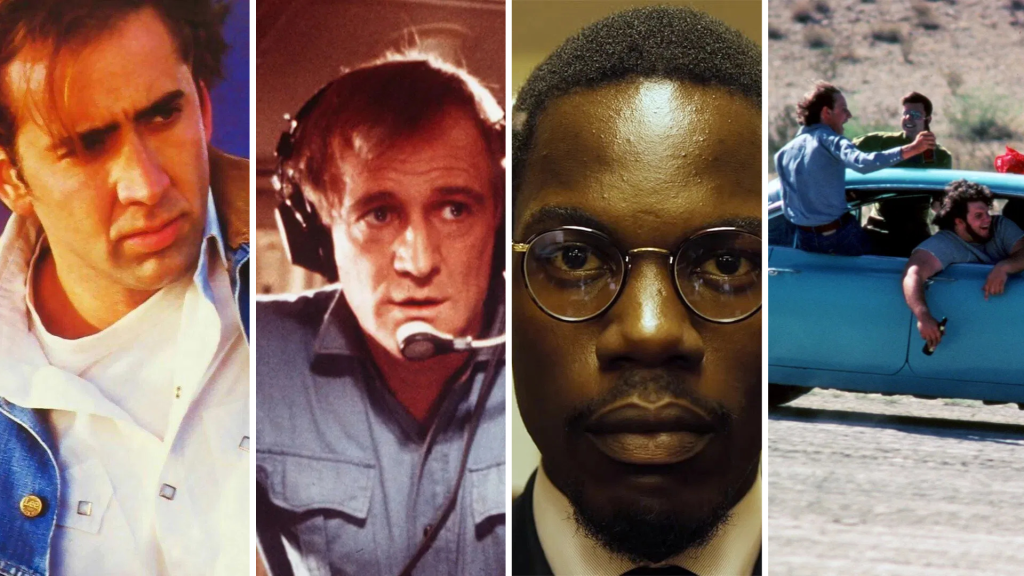
Running a podcast about movies or setting yourself on a themed retrospective most definitely helps with finding these films. Just recently I finally caught up with John Dahl’s Red Rock West and earlier this year I had the pleasure of sitting down to watch Richard Lester’s Juggernaut, as well as George Roy Hill’s adaptation of Slaughterhouse-Five. I went into watching these films almost completely cold, with only hints of knowledge as to what they were about or who was in them. Well, I had read Vonnegut’s novel beforehand so I did know what to expect from Slaughterhouse-Five to an extent, but then again I couldn’t have been quite sure what was on offer either because the book itself doesn’t look easily adaptable at all.
The kind of joy I experienced watching these movies brought me back to my salad days when apart from programmed broadcast television and cinema, the only way to watch movies and actually exert some control over what you’d choose to see involved putting on your shoes and venturing out to the video store. This is where your friendly neighborhood video store clerk would make a suggestion or two and where posters and standees combined with more elusive word-of-mouth would guide your choices. But then, sometimes just as frequently, the decision what to rent out and watch at home would be dictated by what’s available. Sometimes the movie you wanted to rent would not be returned on time and you’d find yourself standing there, surrounded by VHS covers from all sides, feeling how the money in your pocket grew heavier and hotter with each passing minute.
That’s how you’d find yourself at home, watching a movie you knew nothing about and maybe didn’t hold much hope for. And this is how you’d occasionally find those “actually” movies. I feel that these chance encounters with films you’d be surprised to call “actually good” have been rendered scarce and perhaps even extinct ever since a trip to the video store was replaced by a short scroll through titles algorithmically recommended by Netflix, Amazon or Disney Plus. And it scares me.
In fact, in contrast to many people who suffer from FOMO (Fear Of Missing Out) or what Germans call Torschlusspanik (fear of time running out) defined as anxiety of not being able to watch everything coming out every week, I have become acutely aware of not knowing what I don’t know exist. From where I am sitting, it doesn’t disturb me anywhere near as much that I won’t have enough hours in my life to watch all the movies and TV shows that I’d like to see or that I might succumb to the Netflix Choice Paralysis and won’t be able to decide between multiple recommended titles available to me at all times. I am now more worried about not knowing that there are movies out there that I would enjoy and not having a mechanism available to me that would inform me of their existence, let alone have them recommended to me directly.
After all, the logic of algorithmic recommendations is based purely on what you’ve watched and enjoyed. When I signed up to Netflix a long time ago, I spent some time marking movies I liked in an effort to supply the streaming platform with some data to begin predicting what I’d be likely to respond to next. But the problem is that a recursively trained model will never recommend to you anything that you don’t know that you’d like. It will only refer to what it knows and what it knows is what you watched. Consequently, what you end up seeing when you want to find something to watch will be ranked according to what the algorithm thinks you are likely to respond to, not something random or challenging to you. The only way to see the latter is to hope that what’s currently popular among other viewers is outside of your wheelhouse as you might see it listed among most watched titles in that brief window of their popularity. But discovering something is nearly impossible because what you see when you engage with algorithmic recommendations served to you by streaming platforms is specifically tailored to you alone. You live in your own echo chamber and if you like action movies and science-fiction, Netflix will not recommend to you a Sofia Coppola film or a subversive rom-com like Materialists.
It was honestly quite frightening when I flicked between my own Netflix profile and my partner’s because the vast majority of titles she’d be recommended I didn’t even know that Netflix had. What’s quite funny is that she told me a few times that she can’t find anything good on Netflix any more and now I have begun to think that maybe she should look on my profile for some inspiration, while I do the same on hers. But that’s only two people. At this point, I don’t even know how many titles I have access to between all the platforms I am subscribed to because everyone’s streaming experience is completely unique to them.
When Mubi launched some years ago, their business model relied on only carrying thirty movies at a time, which prompted some great discoveries and where “actually” movies resided in spades, but then they adopted a wider library of titles and the magic was gone. The Criterion Channel also curates mini-retrospectives which opens up these outside possibilities of finding movies that you didn’t know existed and giving them a chance only to see yourself surprised, but this is still only a localized approximation of what we had in video stores. I can’t just walk around and look at covers or make a random decision the way I used to be able to, in a completely uncurated fashion.
In fact, this phenomenon extends further and impacts on literally everything you interact with. It’s impossible to discover new music in a genre you don’t know that you’d like. If you’re into death metal, Spotify will not ask you to give Canadian electro-pop a chance. If you’ve just finished reading a Dan Brown book, Amazon will most likely tailor its recommendations to include more titles like it instead of Infinite Jest or anything by Larry McMurtry or Margaret Atwood. If we let content providers decide what we watch, read and listen to, our horizons will never widen. Instead, they will narrow into nothingness over time.
It is fundamentally useful to defer to opinions of critics, writers, YouTubers or friends and neighbors to combat this and thus inject some freshness into the entertainment we engage with. As someone who operates in this space I’d love to know that my work has widened someone else’s cultural horizons, but at the same time I think it is important to reclaim your own agency in this regard. While I’m not going to recommend to you a movie that I know you’d like, it will be something that I liked. In the context of that video store experience, it’s instructive to hear what other patrons or the store clerk recommended, but it won’t replace that thrill of the hunt and the serendipitous discovery made because you picked up a movie completely by chance or because the cover somehow called to you from the shelf.
This is why I think it is important to head out to your local book store or a library and surround yourself with books. Go to a physical media store and browse through movies and music. Buy some if you can. They won’t survive if they don’t make money. Make a random choice. Find a project that would see you watch movies you didn’t know existed. That’s how I found out I loved Spike Lee’s Da Sweet Blood of Jesus and Kevin Reynolds’s Fandango. Pick a new music genre to listen to on Spotify next week. Go to the library and find a book by an author you don’t know.
It is up to us to generate opportunities to discover something new because what we think is a discovery is heavily curated towards content that smart-ass AI algorithms believe we are preconditioned to like already. And while it is fun to like something in general, there’s something special about reclaiming your agency and discovering something you didn’t know you’d actually like.


 Flasz On Film
Leave a comment