
When Bong Joon-ho’s Parasite swept the Oscars merely minutes before the ensuing COVID pandemic shuttered the world economy and sent the movie industry into a tailspin, I remember that what accompanied this event was an electric atmosphere of refreshing change. Not only did it become the first non-English language film to take home the top prize of the Best Picture Oscar, but it also came through as a bit of a dark horse, beating the odds-on favourite 1917 directed by Sam Mendes. Suffice it to say that Bong’s movie created a cultural moment with its Cannes win and a long journey towards universal acclaim and industry acceptance with its stunning tally of four Academy Awards out of the total of six nominations.
For a brief minute it looked as though the Academy voters finally got something right after a few years of desperately trying to course-correct in the wake of the Weinstein scandal, #OscarsSoWhite and the 2016 EnvelopeGate and chose freshness over familiarity. Edge over comfort. Bong Joon-ho became a leading industry voice after over a decade of adding to the conversation about the growing class divide (Snowpiercer) and the catastrophic impact of human activity on the natural world (The Host, Okja). Having won with Parasite and taken the world by storm, this visually idiosyncratic filmmaker with a penchant for embedding highly allegorical messaging in otherwise stylized cinematic environs could literally do whatever he wanted. The world was his oyster as I can only assume that opportunities for new movies kept flying through his letterbox and everyone in Hollywood wanted a piece of the Bong Joon-ho pie.
In fact, the very idea of seeing how recent Oscar winners follow up their victories and make the best of their new-found artistic freedom is fascinating to study. James Cameron having set records Titanic, and having toyed for a second with a sequel to True Lies, went on to make the biggest movie ever, Avatar. Kathryn Bigelow used her directorial freedom to make movies she truly cared about with her writing partner Mark Boal, namely Zero Dark Thirty and Detroit, of which only the former has been seen as successful. Sam Mendes went from American Beauty directly into a stylized adaptation of a graphic novel Road to Perdition. Guillermo del Toro made Nightmare Alley. Alejandro González Iñárritu went from his back-to-back victories with Birdman and The Revenant to divide opinion with Bardo. Damien Chazelle jumped from La La Land into making a powerful yet misunderstood Neil Armstrong biopic First Man and then went full hog with Babylon, a swirling vortex of on-screen chaos that literally nobody but a handful of gonzo critics had the audacity to praise openly.
The pattern is clear. Most filmmakers after securing their industry standing have made bold leaps into territories they have not previously dabbled with. Ang Lee found himself on the map with his Best Director Oscar for Brokeback Mountain only to go stratospheric with Life of Pi and then to squander his cache with Billy Lynn’s Long Halftime Walk. But he aimed somewhere and tried to use his brief moment of widespread Hollywood acceptance to make movies he’d have found impossible to convince anyone to finance without the magical swaying powers of the little golden man he held in his hand.
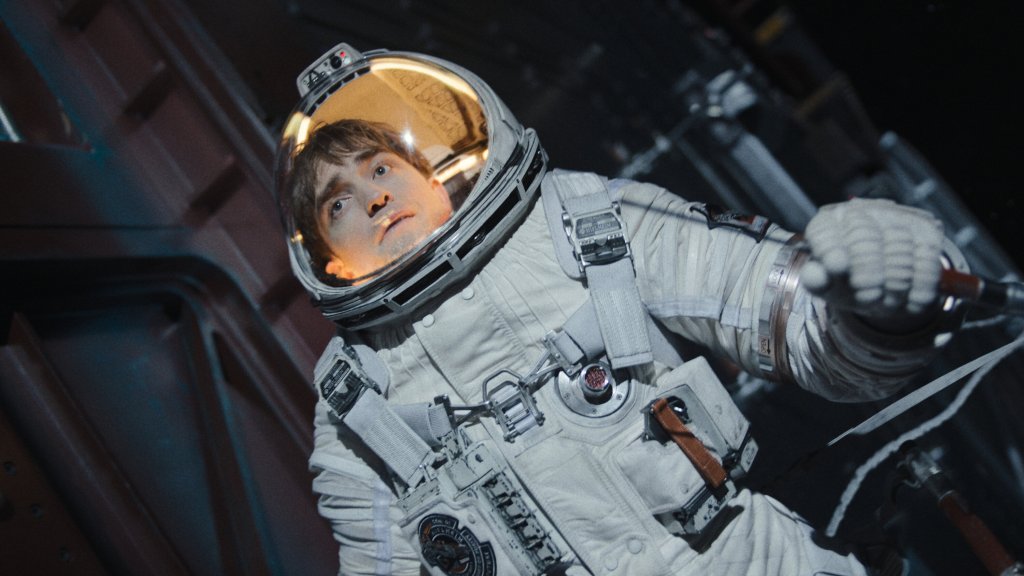
Meanwhile, Bong Joon-ho looked at all the opportunities and avenues he could pursue as a freshly minted golden calf of the movie industry and pursued one that not only didn’t require him to think outside the box, but it didn’t force him to leave the comfort of his own bed. Thus, he signed on to write and direct an adaptation of Edward Ashton’s hot novel Mickey7 into what became Mickey 17, with the backing of Brad Pitt’s incubator of Best Picture Oscar frontrunners Plan B Entertainment, WB footing the bill and Robert Pattinson, one of the hottest actors currently working in Hollywood, attached to star.
What came out as a result of the world handing Bong a free access pass to the best, brighthest and most expensive and exuberant resources Tinseltown had on offer, was what I can only call a nearly two-and-a-half hour snailpaced slugfest that looks as though all Bong wanted to do was a best-of compilation of all of his eat-the-rich allegorical efforts all packaged into one narrative. Admittedly, the production of Mickey 17 must have looked attractive to literally everyone in the movie biz, but I don’t think Bong was the guy to do it because you simply cannot overlook the fact that he had treaded these waters before with Snowpiercer, The Host, Okja and Parasite. And I have to be honest that the concept of merging aspects of all four of these movies or rather seeing their elements reflected in Ashton’s novel wasn’t a good enough reason to risk his cultural cache because audiences are famously fickle and it might just happen that they won’t respond to this material positively at all. Which I think is what is at play.
On paper, Mickey 17 has what it takes to bring a little bit of stylized heft to an overtly allegorical science-fiction narrative where a prole on the run from the mob signs up to join an expedition to colonize other worlds and where the central gimmick of the story is that he signs up as what is called an “expendable,” someone who would be sent out to perform all the most dangerous tasks and risk his life continuously because in the event of his demise a new copy would be cloned and spat out of a ginormous whatchamacallit 3D printer for living beings and his ordeal would continue. Think working-class Edge of Tomorrow and you’ll get sufficiently close.
The twist lies in the fact that the world of Mickey 17 stipulates, based on a lengthy expository sequence of scenes, that only one copy of a cloned expendable may be alive at any given point in time and whenever a duplicate is present, both must be destroyed. Which is what happens eventually because Mickey (Robert Pattinson), having been presumed dead after being grabbed by a group of alien creatures referred to as Creepers dwelling on the snowy planet of Niflheim, comes back to find that another Mickey had already taken his place. Thus, the film’s basic intrigue is set in motion or at least so it would seem.
And that’s because Bong’s Mickey 17 uses its doppelganger narrative the way a teenage boy uses a chair in his bedroom, as a repository for clothes that have been worn before but in the eyes of said teenager still have few uses in them. Mickey’s idiosyncratic odyssey thus becomes a crutch, an excuse for the filmmaker to indulge in his Snowpiercer-meets-Parasite class war conversations where the population aboard this ship is clearly divided into haves and havenots and where certain characters are overtly there to resemble real-life personalities. Mark Ruffalo’s turn as Kenneth Marshall, a malevolent boss running things aboard the spaceship, is clearly a satirical takedown of Donald Trump. Whether Marshall’s Lady Macbeth-like wife Ylfa (played by Toni Collette) is supposed to be a play on Trump’s own wife Melania remains an open question and the filmmaker has (smartly) distanced himself from such straight-up parallels. Instead, he admits to have concocted them as conglomerations of many historical power couples, like the Caucescus of Romania, but I think it doesn’t take a genius to see just how close to Trump Ruffalo plays his cards and how overtly the film insinuates a commentary on white colonialism and the uber-rich effectively enslaving the poor through removal of social mobility, all of which are nods to the contemporary American experience.
Which is all great but it is also honestly exactly what Bong has previously handled in Snowpiercer, a movie that was shorter, more precise, cheaper and more compelling. And that’s not even the half of what Mickey 17 tries to corral because somewhere in there it has a few things to say about the struggle of technology versus nature (which Bong has also handled in the past), the fundamental precepts of dystopian narratives like control, surveillance and removal of basic freedoms from the masses in pursuit of their wholesale ownership and it is all wrapped around an infrequently comedic gimmick of having to manage two Pattinsons on the screen instead of one. And somehow it just doesn’t gel. The whole thing is languid, hamfisted, tonally repellent and uninteresting.
In fact, Bong’s Mickey 17 comes across as desperate and heavy-handed, much like Adam McKay’s Don’t Look Up came across a few years back when it was rejected on principle by audiences who refused to be beaten over the head with easily identifiable allegories and thinly-veiled stand-ins for contemporary politicians. However, what I think McKay’s movie had that Bong’s just does not was the freshness of not having directly repeated itself. Sure, Vice and The Big Short functioned as vicious satires on the Republican establishment and the greed of cowboy bankers that had precipitated the beginning of the avalanche of once-in-a-generation black swan events we are still living through, but in itself was sufficiently fresh or tangential to McKay’s work to elicit a positive response. Put simply, the movie was fun enough to counterbalance its quirks and instances of authorial overreach, whereas Mickey 17 is just weird, messy, busy and not compelling enough to sell me on the idea of paying attention to its disjointed and cacophonous shenanigans in hopes of them all coming together in the end. It’s just too much to ask.
Therefore, let this movie be a warning to all those filmmakers, like Sean Baker whose movie Anora just bagged a whole bunch of Oscars and is sure to see a handful of doors open for him in Hollywood, that this once-in-a-lifetime ride access pass to Tinseltown resources and a single-entry card to the good graces of big studio moguls ought not to be squandered on stuff they have done before. When the audience demands you come back onto the stage for encore, you don’t repeat a song you played as part of your set. You give the audience something great, something special, something unforgettable. You swing for the fences. Maybe play a cover of a classic they’ve never heard you play. Maybe reharmonize one of your biggest hits and see the audiences connect and understand that hearing this version of what they already know makes the experience special. But be careful of the medley trap. You might as well, like Bong Joon-ho, get lost in it and serve the world a barely passable collection of everything else they’ve heard before that doesn’t hold together as a single piece.
Thus, I don’t know what I should settle on here. Is Mickey 17 a free ride at an amusement park spent on going on a ride the filmmaker knows like the back of his hand? Is it an encore song where the band repeats their best hit beat for beat? Or is it a teenage boy’s chair covered in used closed that still, on the first glance, pass the sniff test? Or maybe, in a fit of meta-self-awareness, it is all three because not being able to decide which bits of his comfort zone Bong wanted to lean into was also part of the problem, just like it seems to be what I’m struggling here myself? But then again, I’m not the one with quarter of a billion dollars, my entire reputation and prospective Hollywood career on the line. I’m just a guy with a keyboard and a bunch of metaphors he cannot decide to whittle down. And here I was thinking that Bong Joon-ho was a guy who had at least a handful of projects sitting dormant in a in-case-of-Oscar-break-glass case. I might have been wrong all along. Mickey 17 suggests that the man who captured the moment in 2020 may have been a one-trick pony.
 Flasz On Film
Leave a comment