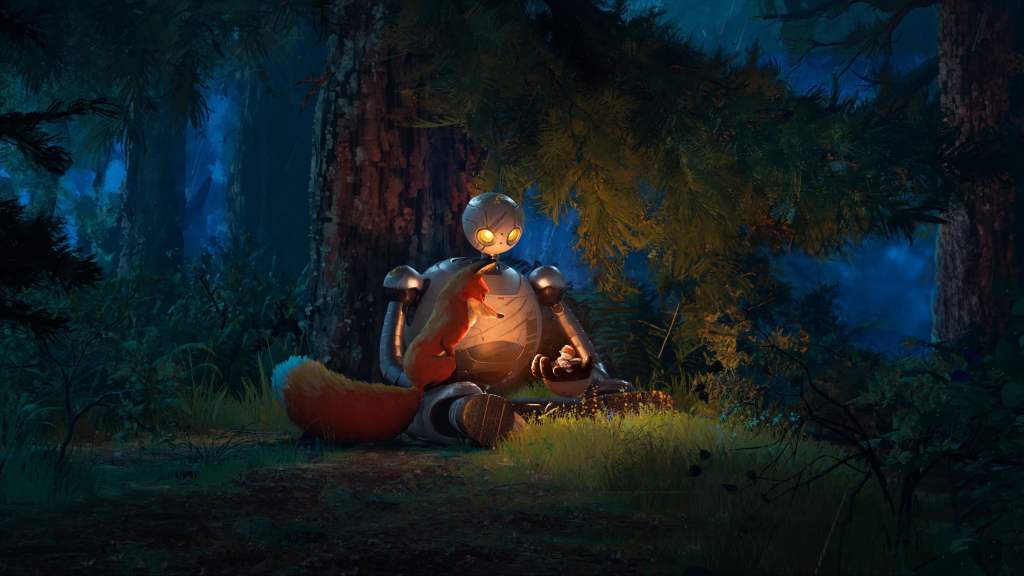

Dreamworks Animation Studios has had a long history of playing catch-up to other big players in the arena of four-quadrant entertainment. In fact, since their launch in 1994—later propelled by absorbing the staff of Spielberg’s short-lived Amblimation—they have stayed at least a few steps behind Pixar, who arrived at the scene in 1995 with Toy Story and assumed supremacy over this field which they have not relinquished to this day.
However, Dreamworks have occasionally tried to poke the proverbial bear with their me-too attempts at furnishing the kind of entertainment Pixar was great at doing. After all, their first official release was Antz, produced and released alongside A Bug’s Life. They also came out with Shark Tale, almost as if to capitalize on the unmatched success of Finding Nemo. But they could never find the kind of success with their one-off notice-me-senpai ersatz pieces that Pixar enjoyed seemingly effortlessly.
Thankfully, they could quickly abandon these ideas at aping Pixar and The Mouse House in general quite quickly, but not before coming out with Disney-esque pieces like The Prince of Egypt or The Road to El Dorado) because—again, like Pixar did with Toy Story which they have milked for a long time since the original success—Dreamworks found their cash cow in Shrek, a snazzy and edgy four-quadrant fairy tale that did what Pixar never did, which was to appeal to adults. And then they added Madagascar to their portfolio of successful franchises they could reliably grow over the coming years. And then How to Train Your Dragon and Kung Fu Panda and Trolls. In fact, I’d say that between so many successful properties, Dreamworks folks had a good thing going.
Which is why I approached their latest release, the Chris Sanders-directed The Wild Robot with at least a degree of confused trepidation. On one hand, who am I to tell a massive studio with a history of commercial success that they should stay in their lane and not pursue originality? After all, I think I’ve written enough words on the Internet in favour of artists and studios letting go of their pursuit of total franchisification of the entertainment space. But on the other hand… it’s not like Dreamworks have had a lot of success with their non-franchise movies. But then! Their franchise movies were at some point original so what the hell am I even thinking?
So I sat down and watched The Wild Robot half-expecting god knows what and half-trying to have fun… and half-kind-of-feeling-it-in-my-bones that what I was about to subject myself to was going to be one of those games of catch-up on behalf of the filmmakers. I know. Three halves. Look, it’s late. And maths is hard, OK? Don’t judge me.
So, anyway. The Wild Robot is probably not going to spawn a decades-spanning franchise or become a lasting cultural touchstone like Shrek or Kung Fu Panda. And that’s because it’s–how do I say it politely—a bit meh. A bit safe. Risk-averse. Middle of the road. Focus-grouped to the nth degree. But at the same time, you can see that a lot of effort went into making it, so again, I am a bit of two minds about it because you just have to acknowledge how beautiful the film’s iconography is and how interesting it is to see filmmakers choose to adopt a hand-painted aesthetic for a movie aimed at a whole family… and where youngest viewers are most likely used to the Pixar-esque visual toolbox. And sometimes it’s enough for a movie to be pretty or to make people feel good. Because how else can you explain the Paddington phenomenon? But I don’t want to re-litigate this debacle either.
And indeed, this story set in a clearly post-apocalyptic landscape where the world had been ravaged by climate change, but it’s still somehow lush and unkempt and blooming with life, managed to capture the hearts and minds of critics and audiences alike because it made a killing at the box office and as of writing of these words a sequel has officially been green-lit for development. So, you can expect another movie set in this universe and with more adventures of that weirdo robot Roz (Lupita Nyong’o), that pesky fox Fink (Pedro Pasca) and, I presume, that goose Brightbill (Kit Connor). But that’s a problem for another day.
The problem for today is that I don’t think I can honestly count myself among the chorus of voices praising this movie to high heavens, let alone refer to it as “a monumental achievement in animation” or “one of the best animated movies of all time.” Look, I am fully aware we live in the age of influencer-led hyperbole where every movie is “the best thing ever” and better than The Godfather or something, so I typically don’t respond to any such bold claims with more than a suspiciously raised eyebrow, but I honestly could not connect with this movie. Like, at all.
Sure, as I said, it’s an eye candy and I can totally see why Chris Sanders refers to it as a labour of love because it truly must have taken incredible amounts of effort to make this movie look this pretty. But it’s still kind of average as far as the story is concerned, even though I am fully aware its narrative is best described as archetypal. A robot washes up on a shore, gets activated by accident and proceeds to understand the world around it. Yadi-yadi-yada and the robot smash-bang-wallops and rolls over a goose nest killing everything and everyone in its path apart from one little egg. Which the robot adopts, nurses and, once hatched, raises a little gosling into adolescence. Conflict. Mission. Journey. Resolution. Roll credits.
So, you can see how familiar this scenario is and perhaps most folks will just respond to what I have to say with a resounding expression of disgust, because after all what’s wrong with a good old fish-out-of-water story? Or a coming-of-age story? Or a hero’s journey story? Or a making-sense-of-the-universe story? Or a finding-your-tribe story?
Do you see it now?
The Wild Robot is a bit like all those narratives compressed into one, but not necessarily by organic forces binding narratives together with character strength or storytelling innovation or worldbuilding prowess. Instead, it feels bound together by market forces and decisions made in the four walls of meeting rooms somewhere in Dreamworks HQ, all underpinned by PowerPoint slide decks, graphs and bar charts and focus group analytics pointing out that a movie in today’s environment will be 17% more successful if it tried to cash in on the Pixar shtick and the Ghibli shtick at the same. It looks as though someone made executive decisions to synergize across multiple successful modalities that Disney, Pixar and other Dreamworks movies had made money on before, so in the spirit of “screw less is more! more is more,” someone thought it would be a good idea to make a movie that does it all. A movie about growing up, a sense of belonging, about climate change, the rise of AI and automation and literally everything that seems to matter to everyone everywhere now. A kitchen sink.
Therefore, The Wild Robot looks a lot like Wall-E. And it looks a bit like Finding Nemo. And it has a distinct Aesop-esque Ghibli whiff to it, too. And it probably borrows a thing or two from Migration and Duck Duck Goose because those movies borrowed from Pixar and The Mouse House in spades themselves. Which makes the movie as a whole develop a bit of a pungent smell of something disingenuous. There’s an uncanny valley feel of inauthenticity to its shtick, as though it tried too hard to look original, like an AI-derived video that repels the viewer in ways nobody can quite put a finger on.
That’s where I am with The Wild Robot. It’s a movie I didn’t necessarily reject on principle, as it didn’t offend me on any appreciable level. It’s just a bit bland and perhaps inauthentic in the way it tries too hard to look original and edgy and cool. I think the word Gen-Z-ers would use to describe what this movie is in my view is “cringeworthy.” It’s just uncomfortably embarrassing to sit through something I can see from a mile away that it’s not even remotely original or intriguing.
Therefore, I emerge disappointed much the same way I’d be if I wanted to buy a Pixar movie, but I accidentally ordered one from Alibaba or Temu. It looks good from afar. Maybe upon a cursory glance it’s still fine. But the material quality and the way it’s designed and put together betrays it’s cheap and poorly thought-out provenance. Imagine asking your mum if you could go and see a Pixar movie and she told you that you have a Pixar movie at home. And that “Pixar movie we have at home” is The Wild Robot. I wouldn’t be angry necessarily. I’d be just a bit down. Which is what I am.

 Flasz On Film
Leave a comment