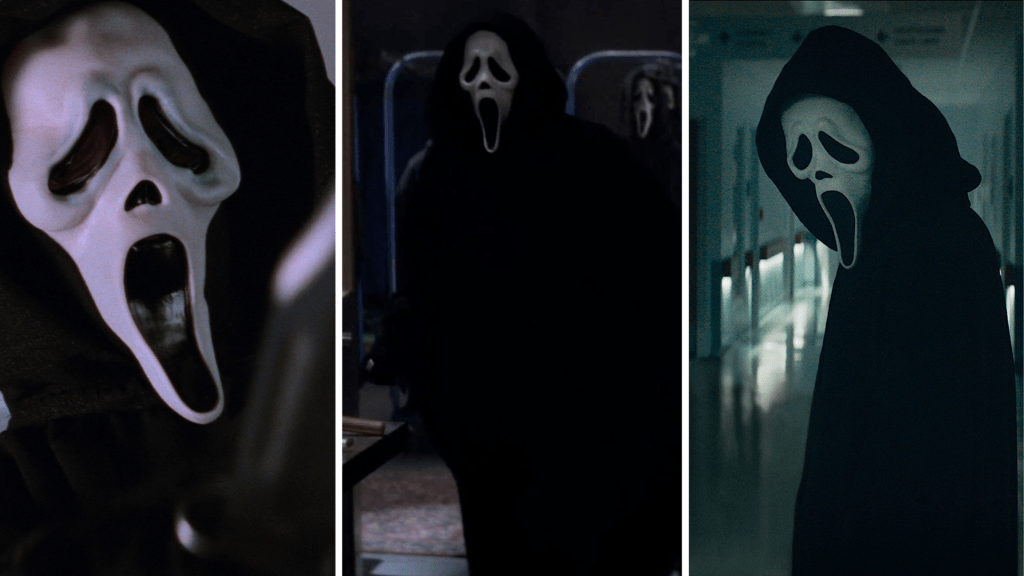
The most recent sequel in the Scream franchise, Scream 7 directed by Kevin Williamson, has officially crossed 200 million dollars in worldwide box office receipts. This makes it the most successful movie in this thirty-year-old series. While it might indicate to some that another slasher revival might be brewing, it is my belief that this phenomenon is quite unique to this particular franchise.
Historically, most horror franchises—from Halloween and Friday the 13th to Texas Chainsaw Massacre, Child’s Play and even more obscure ones like House, Phantasm and Hellraiser—were uniformly characterized by the same decline in popularity as time went on. The 1978 Halloween was one of the most profitable independent productions of its time and in real terms earned a decent chunk of change (70 million USD against ca. 300 thousand USD in production costs). However, the sequels that followed it could never come close and their gross receipts fell precipitously with each instalment. Some blips of success could be seen on this trajectory as slasher horrors enjoyed a brief period of rejuvenation in the mid-to-late 90’s, which gave Halloween H2O a sizable boost, but the downward trend remained. The same pattern re-emerged in 2018 when the David Gordon Green-directed Halloween essentially rebooted the franchise by ignoring all sequels: Halloween (2018) made 255 million USD (which still makes it the most financially successful slasher in history, unadjusted for inflation), while Halloween Kills made 130 and Halloween Ends scored 105. It must be acknowledged that the picture here is complicated by the impact of COVID on the global box office (and both sequels remained profitable), but it still looks as though sequels in this franchise suffered from noticeable diminishing returns.
This is replicated across all classic slasher franchises as well. Friday the 13th and A Nightmare on Elm Street all saw significant decrease in financial returns with each sequel while recording positive blips on the occasion of post-2000 remakes and crossover events like A Nightmare on Elm Street (2010) or Freddy vs Jason. When you look at such series as The Texas Chainsaw Massacre, Child’s Play, Hellraiser, Amityville or Children of the Corn—all long-running franchises with multiple entries—these trends are even more pronounced. In fact, in those cases their respective collapses in financial returns resulted in some sequels being spared a theatrical release and going straight to video and later to streaming platforms.
But the Scream franchise has remained a consistent outlier in this respect. The 1996 original bagged over 170 million USD in box office receipts. The 1997 sequel repeated this result almost to the letter and Scream 3 earned only slightly less—162 million. Scream 4 saw diminishing returns as it took home only 97 million, which most probably contributed to the series stalling its theatrical presence for a decade and temporarily moving to the small screen. However, beginning with the 2022 legacy sequel Scream (occasionally stylized as 5cream) the franchise reclaimed its profitability with 138 million going into the studio coffers. Scream 6 tallied 166 million and Scream 7, according to recent reports, stands at 204 million and counting. Thus, it remains the only slasher series in existence—and it needs to be qualified here that for the purposes of this discussion I only included franchises with more than six entries—with considerable financial staying power. And if you wonder why that might be, you’ve come to the right place.
Contrary to what Mikey Madison’s character in Scream 5 suggested was the problem with the Stab series (which is a proxy for the Scream franchise for all intents and purposes), which stated that it didn’t have an iconic villain for viewers to come back to like Michael Myers, Jason Voorhees or Freddy Krueger, it is one of the three main reasons that could potentially explain this inexplicable longevity of the Scream series. Exactly because we never had a single villain that would come back from the dead with each new sequel, the series could remain tactile and unburdened by mythology and progressively ridiculous reasoning the series would require to continue. Ghostface was never a single person. In fact, in most movies in the series the mask would hide multiple villains. Hence, the villain was not a character but an avatar. A concept.
This naturally turned each Scream film into a Scooby-Doo episode wit blood, guts and gore, but it undeniably imbued the series with inherent watchability. It was never about simply indulging some primal desires relating to watching helpless victims fall prey to supernatural power-walking villains, let alone the geekery associated with various accessories like knives, chainsaws and machetes. It was rather about audience participation. Watching Scream movies always included an interactive whodunit element where the viewer would try to figure out who the killers were before the characters did. Furthermore, a good chunk of the rewatch value lied in the idea of going back, scanning the periphery of the screen and looking how killers hid in plain sight, when and how they were introduced and how they left seemingly unmissable clues to their identity that everyone overlooked on their first go.
Therefore, nobody ever needed to introduce pagan cults or supernatural reasons to bring killers back from the dead, which in all classic horror franchises would venture into the realm of the absurd rather quickly. Scream movies were clean that way.
Moreover, what drove their popularity was the way the franchise was culturally self-aware and at least somewhat sentient. Though it built on Craven’s previous work with Wes Craven’s New Nightmare, saw Freddy emerge from the world of the film and invade the lives and dreams of actors who worked on the movie, Scream was a fresh and meta-aware movie that commented on the many rules, traditions and customs found in the universe of slasher horror while perpetuating or subverting them accordingly. And sequels continued this tradition by acknowledging what usually happens in further instalments in the series (Scream 2), how trilogies change the game (Scream 3) or how remakes tend to overhaul and dispense with the rules in the first place while essentially attempting to replicate the original recipe (Scream 4). The resurrected franchise (Scream 5 onwards) also carried on this conversation and gave the viewers something to think about when it came to faking originality using legacy characters and dormant nostalgia while playfully deploying these tropes in pursuit of surface-level entertainment and exhilaration.
This way, none of the sequels in the series were ever truly tiresome. And even if some of them started to show some franchise wear and tear (Scream 6 and Scream 7), this was also a part of the meta-journey because it’s impossible for any franchise to stay alive for this long without chafing. Continuing freshness through recurrent self-aware commentary seems to have been key to longevity over the course of three decades and it might be what will carry the series forward. After all, even if new sequels end up terminally braindead because all long franchises eventually run out of road, it might just be enough to make sure these movies comment on their own dimness to disarm viewer dissent. How can you be angry at a movie that knows how stupid it is?
And then there’s the series own lore. Contrary to nearly all horror series in existence, Scream has remained essentially unrebooted. Ever since 1996 we’ve been following Sidney Prescott (Neve Campbell), Gale Weathers (Courteney Cox) and until recently Sheriff Dewey (David Arquette), flanked by secondary characters introduced in older sequels and, in the resurrected legacy instance, kids and relatives of the characters we have seen dispatched previously. Chad and Mindy (Mason Gooding and Jasmin Savoy Brown) who have recurred since Scream 5 are related to the slasher trivia guru Randy from the first movie (Jamie Kennedy) while Sam (Melissa Barrera), who had been the anointed heir apparent of the series until she was fired for political reasons, was related to Billy Loomis (Skeet Ulrich).
Hence, for all its conceptual freshness associated with the fact that the Ghostface always hid a new killer behind it, the series has always orbited the core surviving cast and essentially functioned as a familial saga. Though, because this continuity pertained to main characters whose job in each movie was to survive to live another day and unmask the killers, the filmmakers never needed to tie themselves in knots to find reasons for them to come back. In fact, the self-awareness of the series guaranteed that Sidney, Gale and others would end up continually harassed by masked killers because in their own world they were recognized as iconic magnets for psychopaths and hence functioned as walking and talking self-fulfilling prophecies. Which meant that it didn’t take much thinking to get another Scream movie on the stove and lore-wise it would never look too stupid to ship.
In sum, the combination of these factors—the killer being a concept, the whodunit allure, the series own self-awareness and the fact it has always been a saga of survival—is what likely explains why Scream remains the most stable horror franchise in existence. In fact, if we look past canonical slashers we might see some extra corroborating evidence.
For example, the Final Destination franchise has also enjoyed similar (although slightly more wobbly) popularity immune to diminishing returns and sequel fatigue. And what it has in common with Scream is that it doesn’t have a personified villain at all. It’s a series about people cheating death and then their destiny catching up to them in elaborate death sequences. This formally looks like a slasher because we do always end up following a group of young would-be victims as they try to stay alive, mostly unsuccessfully. But we never have to invent a reason to bring the killer back from the dead. All this series ever required was an idea for the carnage that unfolds in a premonition, a good handful of inventive kill sequences and a cast of fresh faces with one or two recurring hinge characters, usually brought as cameos, support or exposition machinery. Consequently, most of the early entries in that series brought home in excess of 100 million dollars and the more recent sequels became even more profitable.
Furthermore, the Saw franchise with its total of ten instalments has remained a reliable profit generator since its inception in 2004. With merely two exceptions, Saw movies have consistently brought 100-150 million USD apiece. This clearly speaks to the fact that when it comes to franchise longevity, it is not the iconic villains or brand recognition who are responsible for their success. In fact, it’s just the opposite. When audience demand is tied to character identity loops and progressively ridiculous logic required to rationalize the continuing existence of the series (dead coming back, reverse exorcisms, pagan rituals and other mumbo-jumbo), franchises decay rapidly. Meanwhile, leaning into repeatable narrative systems—Ghostface identity whodunits, Rube-Goldberg kill sequences and inventiveness at the visceral extreme—franchises tend to be not only stable, but scalable.
And in that spirit, Scream remains a stunning success story because in contrast to Final Destination or Saw it still registers as a slasher series. It functions as a hybrid between a longstanding tradition rooted in exploitation cinema and giallo and more modern ideology of concept-driven series-building. The viewers might still flock to cinemas drawn to the iconic Ghostface mask, much like they would to Jason’s bloodied goalie mask or Freddy’s glove. But underneath this fundamental brand appeal lies a promise of something more because each sequel in this franchise comes with a Scooby-Doo-esque mystery and self-aware commentary on horror movies and the movie culture as well.
Granted, there’s also a possibility that the recent success of Scream 7 is additionally complicated by external politics as the movie itself is viewed by some as a political lightning rod. While mostly left-leaning viewers expressed their vocal opposition to the movie following Barrera’s exit from the production, it might be possible that a subsection of viewers who chose to head out and buy the ticket to see the film did so driven by a desire to “own the libs.” However, I choose to look at the underlying data and believe that trends and concepts that replicate across multiple franchises are much more robust than a potentially anecdotal blip in the dataset driven by potentially biased political readings.
Therefore, I believe that the Scream franchise owes its longevity to its fundamental originality. It endures not because it has a better villain, but because it doesn’t need one. Where other franchises are trapped in repeating identity, Scream repeats a structure while using its cast of survivors and meta commentary as a franchise adhesive—and that structure can evolve indefinitely.
 Flasz On Film
Leave a comment