For years now one of the main battlefronts of culture wars was the divide between demographic cohorts. Boomers this. Millennials that. Zoomers something else. And Gen-Xers too. And for the longest time I have found it difficult to identify with any of them. That is until I heard the term “Xennial.”
By now you must have heard this word. It describes a micro-cohort of people born between 1978 and 1985 (though the framework varies depending on who you ask) and it was specifically identified because this sub-generation is quite special. Comprising the tail end of Generation X and the elder Millennial cohort, it is a generation of people who enjoyed an analog childhood and came of age at the onset of the digital revolution. These are people who remember what it was like to be bored, enjoyed unsupervised time outside and perfectly understand the stress of having to talk to their friends’ parents after calling them on their landline. They also remember the early days of the Internet, peer-to-peer messaging, trawling forums and messaging boards for information and randomly stumbling on age-inappropriate content in the totally unregulated online space that existed before the advent of centralized social media platform and the deluge of user-generated slop.
They remember what it was like to take turns while playing video games, or that any of their adolescent indiscretions carried complete plausible deniability because there was no way of recording anything, let alone posting it on the Internet.
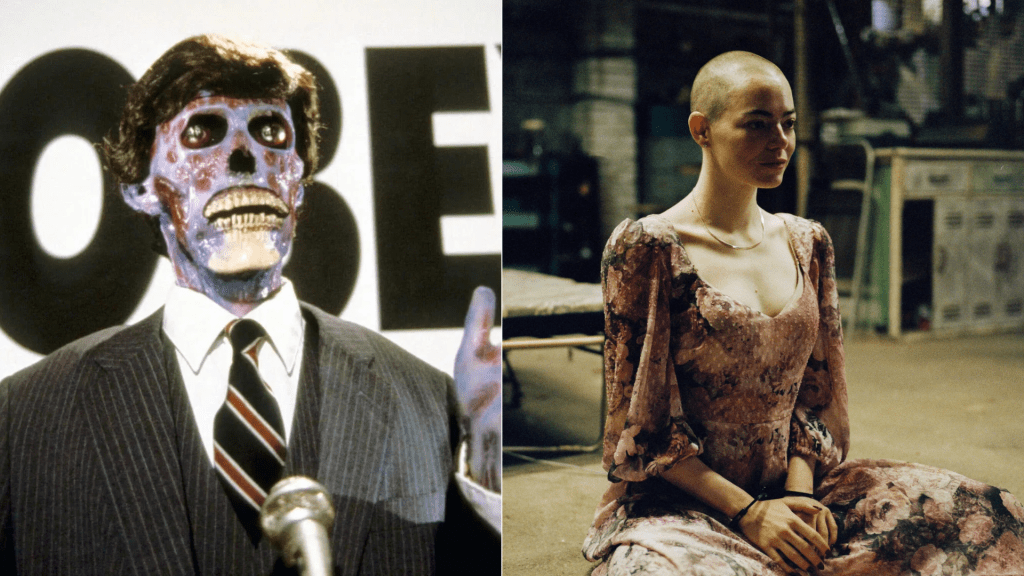
Xennials have the grit of Gen-Xers and the hope of Millennials. They don’t fear technology, but embrace it. At the same time, they aren’t wholly dependent on it as it is much easier for them to unplug from The Matrix and just be.
And I thought this was my cohort and my special little tribe of people who would intrinsically understand me. But nothing in life is ever that simple because the way this generation is described implicitly refers to people in the aforementioned age range of early-to-mid forties… but born and raised in the West. In fact, almost all of those generational descriptors are geographically pegged, which puts me—a Polish émigré living in the UK—in an awkward position. Not only do I share a limited cultural overlap with younger Millennials whose childhood was more digital than mine, not to mention the incompatibility with Gen-X whose distrust of technology and anything new I find revolting, it turns out that not all Xennials have been made equal either. And this is because rates of cultural penetration vary between geographies.
Now, this is a well-known fact that some fads and fashions crop up in different countries at different times and that the American-derived culture takes time to propagate and take hold elsewhere. However, things were vastly different for people like me and others born in the early 1980’s in Central and Eastern Europe. Because of violent political upheaval and rapidly unfolding economic transformation in the wake of the dissolution of the Iron Curtain in 1989 and 1990, the propagation of the Western popular culture ended up completely disrupted. We didn’t just get a delay but a complete collapse of cultural timelines. Consequently, the 80’s and the 90’s somehow arrived together instead of sequentially.
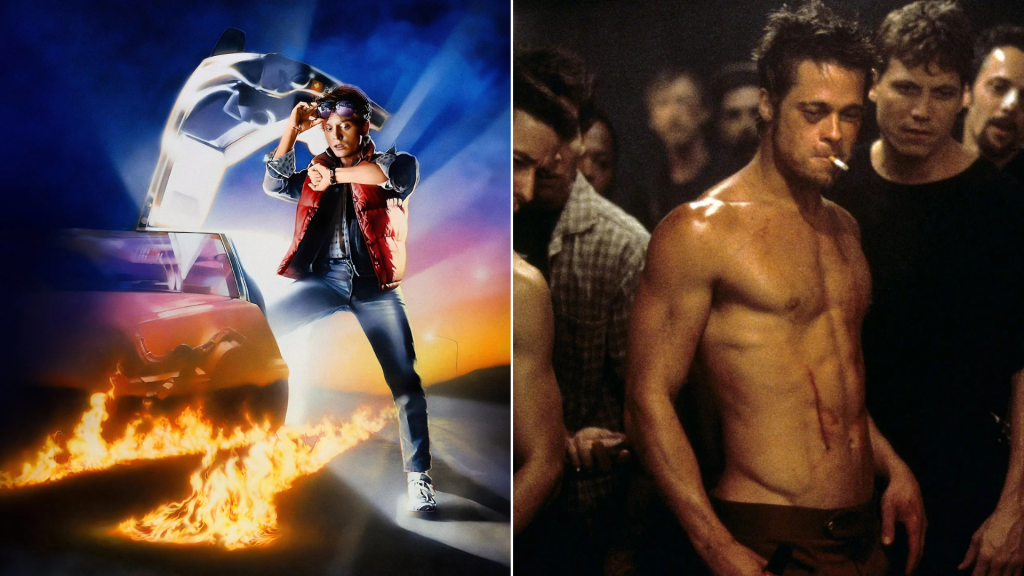
I have come to realize this recently while revisiting some 80’s classics like The Terminator, Robocop and Back to the Future. These are movies many Gen-Xers would consider formative as they were around when they were young or adolescent. Their main cultural touchstones were Star Wars, E.T., Indiana Jones movies, SNL and The Simpsons. Now, where I come from, big Hollywood blockbusters would still make an appearance under communism, only with delays and likely censored. But access to VCRs or cable TV was scarce in the 1980’s, partly because of the forced cultural sequestration from the “evil imperial West” and partly because people were too poor to afford such luxuries like a colour TV, let alone a VCR. They became more abundant in the 90’s.
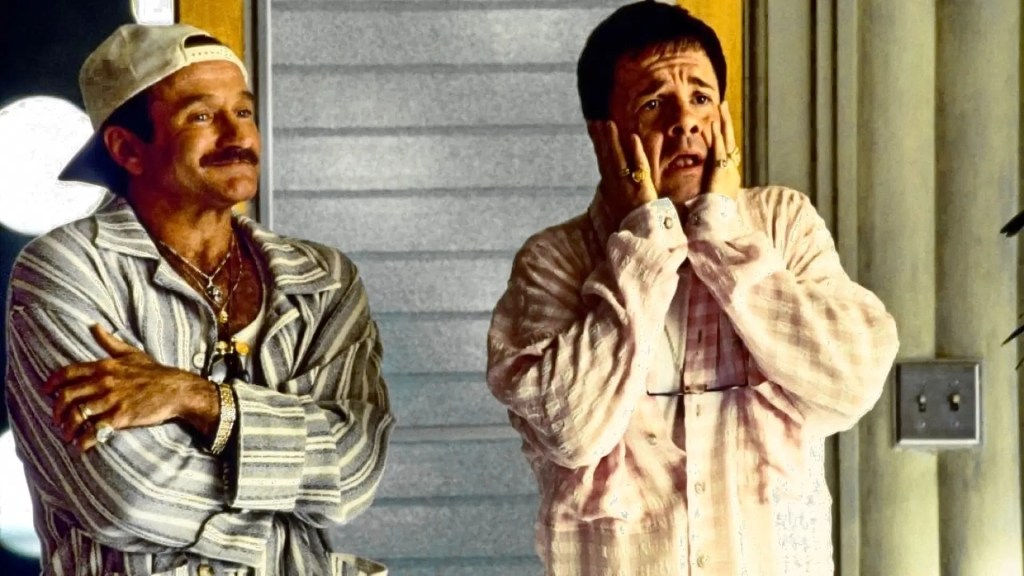
Therefore, my Xennial experience was quite a bit more culturally discombobulating because I remember ingesting all the highlights of the 80’s culture whose penetration was made possible thanks to the country opening its borders at the same as new stuff was also around. While American kids my age would have been accustomed to CDs and VCRs, as they made their appearance where they lived in the 80’s, they appeared in my orbit in the 90’s. CDs, tapes, VHS rentals, pirated movies and broadcasts all circulated concurrently. I used to play games on my Commodore C-64 and then watched Super Mario Bros rented from a video store. I’d go to see Jurassic Park at the cinema and then rent Mr Mom, fresh on the shelves as a catalogue release. The Simpsons, MacGyver, The A-Team, The X-Files and Friends would be on TV at the same time and they would be equally new and fresh to me. And it all came with trade-offs that only now I’ve been able to notice.
Because my own personal Xennial experience involved essentially ingesting two decades-worth of culture simultaneously and perceiving it all as novel, I wasn’t able to form as many firm connections with some of these cultural touchstones as other Western Xennials. When I watched Back to the Future for the first time, it was already a classic. Also, I’d watch The Crow or True Lies right around the same time. And it also meant that because I was busy watching new stuff while catching up on the culture that had been artificially held back for political reasons, choices had to be made. There’s only so much time during the day and the capacity of human mind to ingest new content also has a ceiling. This meant that some 80’s classics or cult items I just missed because I was busy doing other things. Equally, some 90’s classics ended up sidelined.
On top of already belonging to a generational hinge cohort that had very limited overlap with its neighboring counterparts, my formative experience was completely warped. It was full of gaps I have spent years filling in and left me with an understanding of the time when I was becoming culturally conscious that’s a little bit more shallow than that of my Western comrades. Because of experiencing the onslaught of new 90’s culture in addition to that 80’s backlog, I often find that when my friends can easily recall and reminisce key touchstones, I draw a blank. My cultural upbringing is a swiss cheese: fragrant—pungent even—and toothsome but full of holes. Which means that the cohort of people I truly have a lot in common with is considerably smaller. It comprises mostly Xennials who grew up and came of age in the same country and even Western Xennials will find it hard to identify with my experience.
But it’s not all doom and gloom. Sure, growing up where and when I did meant that I now sometimes feel like a venture capital guy with a vast but shallow understanding of many things. But it also exposed me and those like me to movies, books and culture from a wider range. Aided by the fact that Polish Xennials enjoyed that unsupervised latch-key upbringing, we had access to stuff Gen-X found defining at a much younger age. Because nobody cared too much about age restrictions at that time, I ended up latching onto Bret Easton Ellis as a fifteen-year-old, watched Tarantino’s movies taped off TV when I was twelve and adopted The Matrix, The Crow and Fight Club as defining texts while also readying myself for the imminent arrival of pivotal 2000’s items like The Lord of the Rings adaptations and the Star Wars prequels.
Therefore, I see my experience as unique: full of Gen-X grit that nobody cared to filter, equally saturated with 90’s staples and also stuffed full of 80’s touchstones. Sure, I missed out on a lot and I will probably go to my grave not having filled all of those gaping holes, but I think I’m singularly positioned as a product of an intersection of two decades. I entered the 21st century freshly packed with ideas and connections to both 80’s and 90’s because as far as I was concerned, these two eras happened simultaneously and that’s an experience impossible to replicate elsewhere.

 Flasz On Film
Leave a comment