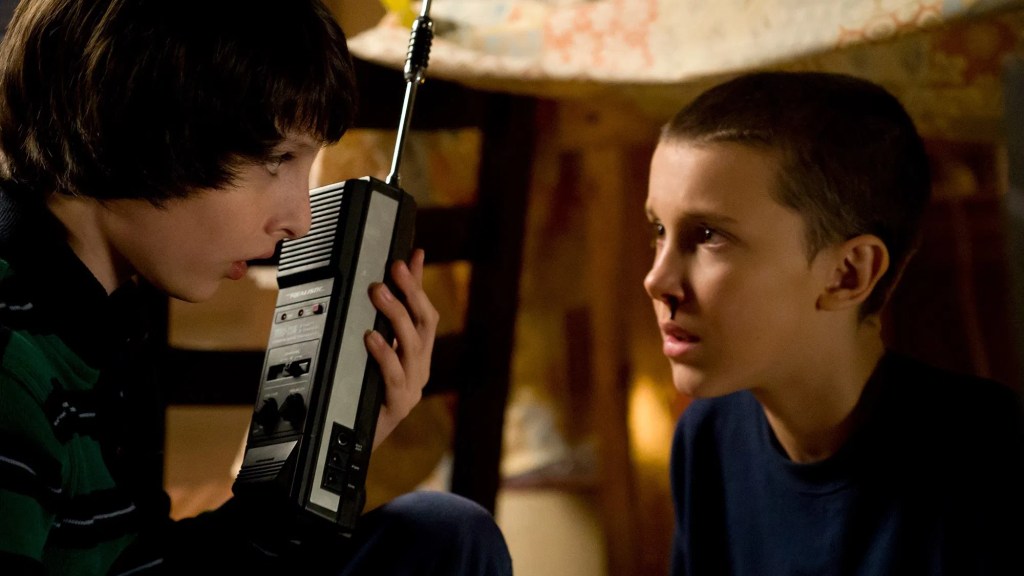
I have a few pet peeves when it comes to movies, most of which I find chuckle-worthy rather than anything else. Like, when people don’t say goodbye before hanging up the phone, leave their front door unlocked, or when they exhibit atrocious chopping technique while preparing food in a way that clearly indicates they have never held a knife in their hand or cooked anything that required more effort than piercing the plastic film and placing the meal in the microwave for a prescribed amount of time. But if I had to choose one that has always annoyed me the most, it would be when characters in movies would exercise terrible radio discipline and say “over and out” when finishing a radio exchange.
Anyone who has ever had to use radio communication in any real context will be able to attest to the fact that there are rules to how this communication is performed and they are mostly homogenous across many different organizations. You raise someone by stating who you are and asking someone you want to speak to to pick up the radio and say something and then you say “over” to indicate you finished speaking and await their response. And that’s because in a typical radiotelephony procedure, you must press the “talk” button to engage the microphone which also disengages the speaker. You won’t hear anyone when you talk. You may request a radio check, exchange information and then, when you have deemed the conversation complete, you say “out.” Well, you state your handle and then say “out” to indicate to anyone who’s monitoring the channel that you are no longer engaged in conversation. Not “over and out.” Just “out.” The terms “over” and “out” are mutually exclusive and this phrase would mean that you’re awaiting response while not awaiting it, simultaneously.
What is quite interesting is that the adoption of “over and out” in popular culture (and among some completely untrained CB radio users, too) can be squarely blamed on TV and movies. Although it’s nearly impossible to accurately pinpoint the earliest examples, it has been out there at least as early as the 1960’s in episodes of The Twilight Zone, cop shows and escapist war movies, where this phrase entrenched itself, perhaps because it sounded better to actors and filmmakers. Like “thank you and goodbye” or something. And with the decisive shifts towards visual verisimilitude and procedurality in movies over the course of, I don’t know, the last thirty years, you’d think that the use of “over and out” in movies would slowly die off and end up replaced with proper adoption of radio discipline, as exemplified in such movies as Lone Survivor, Zero Dark Thirty, Warfare and myriad others.
But then, here I was, sitting down and slowly catching up on Stranger Things ahead of the release of its fifth and final season and I kept hearing the boys use walkie-talkies and end each of their exchanges with “over and out.” Which is totally incorrect and mildly annoying. And also probably culturally accurate because—as my mind started to wander—these boys were never trained in the correct deployment of radio discipline. What they were doing was aping what they watched in movies and TV shows where this abomination originated. If they had communicated correctly, the entire show would lose some of the authenticity that it was mostly built on. You wouldn’t expect tweens to use radio speak correctly if all they knew were movies like Where Eagles Dare and episodes of Airwolf and The A-Team, would you?
However, at the same time, thanks to the incredible popularity of Stranger Things, viewers might end up convinced that using “over and out” is in fact the correct procedure and then both adopt it in their own lives and expect to see it in movies and TV shows. Somehow I don’t think that general audiences pay attention to this phenomenon or care about it as much as I do, so chances are that Dustin, Mike, Lucas and Will from Stranger Things will bring “over and out” back in from the cold and inspire more artists to perpetuate this misuse in other shows because it looks culturally appropriate (which it might be in certain contexts) and procedurally correct (which it isn’t at all, ever).
Therefore, I now expect the cultural abundance of “over and out” to adopt a mutually competitive relationship with the correct term “out,” where artists bent on realism will fight for elbow room with artists inclined to perpetuate something that’s incorrect but feels right because it’s in the movies. And hence it will be in more movies, so it will feel more correct to others and therefore those who care about it will feel more animus towards correcting the record, so maybe we will see more realistic war films directed by Alex Garland and Pete Berg fighting for hegemony with 80’s nostalgia porn where “over and out” feels most at home. It’s a self-propelling, auto-catalytic cultural vicious circle, which is as bizarre as it is fun to think about.
And just like this, a whole episode of Stranger Things unfolded on the screen while I paid no attention to it because I put myself in a semi-catatonic state in which I thought about nothing but radio discipline and how it will spell the end of the world as we know it.
“Is There a Column in This?” is a series in which I stare at one of my intrusive thoughts until I find a way to write 800 words on the matter, if only to prove that it is possible.







Leave a Reply