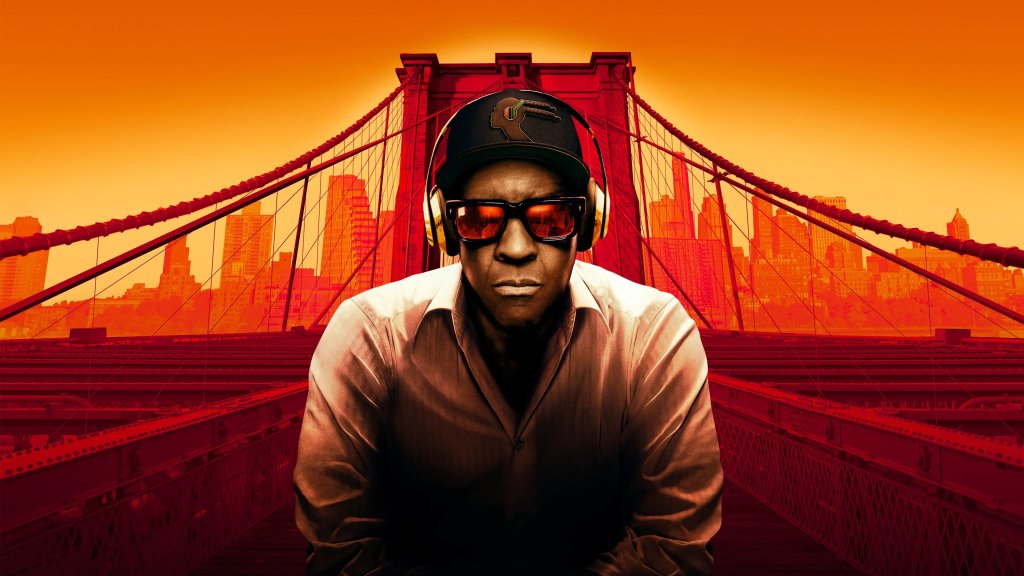

Synopsis: A powerful New York music executive is forced into a moral crisis when a kidnapping meant for his son ensnares the child of his longtime driver instead, jeopardizing both a critical business deal and his carefully built public image. As police close in on the culprit, he’s compelled to confront the cost of his success, the people he’s overlooked, and the fraught loyalty owed across lines of class, ambition, and family.
Akira Kurosawa’s 1963 masterpiece High and Low stands among the most well-regarded and influential movies ever made. It managed to function both as the apex of Kurosawa’s cinema of humanist neorealism and as a blood-curdling procedural at the same time. Interestingly, even though it is described with deference and high acclaim by filmmakers and critics alike, High and Low has resisted a straightforward American remake—though it did sprout a Bollywood treatment and a re-imagining as a Japanese TV show—and instead its legacy is mostly found in specific thematic or visual references found in the works of David Fincher, Martin Scorsese and others, or more recently, in The Batman and the Oscar-winning Parasite.
And now along comes Spike Lee, a filmmaker who is on the record as a great admirer of Kurosawa’s sprawling legacy and a brave artist himself, with a mission to bring this masterpiece into the twenty-first century. Or at least so it would seem. And this is because Spike Lee’s Highest 2 Lowest is not so much a remake as it is a remix of Kurosawa’s work, which is even hinted at at the level of the title alone. Granted, the idea of a remake of High and Low that successfully captures the unparalleled complexity of the subject matter and finds the right balance between building and releasing tension and weaving an intricate tale of morality that serves to critique a class-based society rooted in ruthless capitalism is at the very least a difficult assignment. However, I don’t think for a second that Spike Lee was ever interested in looking holistically at Kurosawa’s movie and instead looked for an opportunity to use it as canvas upon which he would paint in his favourite colours, or a soap box from which he could preach. And that’s exactly what he did.
Lee’s Highest 2 Lowest effectively dispenses with the entire procedural angle to the story, which occupied the latter half of Kurosawa’s movie. While some elements of it still remain—such as the ransom exchange sequence, which is transplanted from a train to the New York subway system and then unfolds into an elaborate chase scene—Lee’s predictably more interested in the delicate class dynamic the first half of the 1963 classic was mostly focused on. However, instead of a shoe executive played by Toshiro Mifune, Lee employs his longstanding collaborator Denzel Washington (reuniting after a nineteen-year break following Inside Man) to play a record mogul who has built a career discovering young black talent and helping them out of obscurity and into the limelight, all the while building a fortune on the back of their success.
This is by far the only major point of interest for Lee, who uses Kurosawa’s narrative template to revisit the kinds of conversations he has always tried to have with his audiences, both in his earlier masterpieces like Do the Right Thing and later on in Bamboozled, Summer of Sam and others. In fact, a close examination of Lee’s entire catalogue will easily reveal that he has always and consistently come back to themes of class division and inequality, profiteering off the back of the black community and its woes and the way capitalist sentiments have always served to exacerbate already existing divides. And to this extent, Highest 2 Lowest is perhaps best interpreted as a best-of compilation of these conversations, abridged and heightened stylistically, exactly as it is expected of a movie adorned with “A Spike Lee Joint” at the front.
It is quite clear that Lee’s filmmaking has always eschewed the age-old rule of “less is more” and instead leaned heavily on “more is more,” so when an opportunity presented itself to effectively excise the entire half of Kurosawa’s story, Lee filled it with even more commentary on more issues with more nuance and more definition. Therefore, you’d be excused if you felt that Highest 2 Lowest is quite a bit intimidating as it traverses freely through comments on class, black culture, ideas about fatherhood, fatherlessness and communal responsibility. In fact, this is where Lee spends the most time—as it is Kurosawa’s major point of interest, too—as he carefully presents the central moral conundrum of the movie: the idea of having to pay a ruinous amount of money in exchange for life of a child that is not your own; better yet, a child of someone who is a good few rungs lower in the societal hierarchy.
In a strange way, Highest 2 Lowest would have been a much stronger and better defined piece, had it been a tad less packed with thematic messaging. It’s quite possible it would have been a stellar film if Lee had adapted the first half of High and Low, left the rest alone and resisted the temptation to add more flavours and textures to the narrative. Consequently, his movie is both powerful and overstuffed, stinging with its critique and somehow unfocused, intellectually inspired and impenetrably dense. It is clear as day that the filmmaker cares deeply about it all, as he had proved time and again throughout his prolific career, but this movie proves unequivocally that sometimes less is indeed more and restraint should have been the virtue he had taken on board after examining Kurosawa’s body of work.
In the end, while it is always great to look at Spike Lee movies and engage with their oftentimes baroque opulence and operatic elevation, Highest 2 Lowest requires a bit too much of the viewer. It is a movie intended to be dissected academically rather than resonated with emotionally. Visually precise yet occasionally alienating and impenetrable with its hyper-stylized storytelling, Spike Lee’s newest movie requires considerable prior knowledge and experience without which the viewer will have no other choice but to emerge confused by what looks like a tonal mess. But it is a tonal mess with a lot to say that can and should invite those who did their homework to see through the layers and textures Highest 2 Lowest is made of. Though, not without effort.



 Flasz On Film
Leave a comment