
The dynamic between filmmakers and film critics has always been somewhat strained and in many ways adversarial. After all, it is a case of one group of people effectively electing to engage in marking the homework of another, which immediately invites pushback from the latter.
If I were to dig a little deeper, animosity against those who choose to critically evaluate artistic output of others is probably already well-established in many of us during our schooling years, when teachers implicitly assume the role of a critic of our own creative output and also assert authority over the interpretation of the work of others. It is typically a teacher who would insist that the use of the word “blue” in a poem most assuredly telegraphed the emotional turmoil of the poet who wrote the text while the student would swear that blue could have just meant blue and that there was no reason to read into the text this much. After all, we can’t go back in time and ask William Shakespeare for comment.
Therefore, the worlds of critics and artists tend to exist separately to one another for the most part, even though they are mutually dependent on one another. Critics need creatives to supply material for them to analyze and creatives need critics to both challenge them and to hopefully increase the exposure of their world to the public at large. But funny things begin to happen when people choose to switch lanes and jump from one bubble to another, so to speak.
Now, for the most part, people tend to stay in their lanes, as there are various reasons why some of us gravitate towards expressing ourselves analytically while others choose to do it synthetically by creating art that we then get to think and write about. Skill profiles are completely different for critics and artists. However, as far as the world of movies goes, it probably wouldn’t take long for anyone to rattle off a list of filmmakers who started their careers as critics. Think of Peter Bogdanovich, Jean-Luc Godard, Francois Truffaut or Paul Schrader and you will be able to convince someone that it is after all possible to cross over between these two worlds and enjoy some success. Equally, you might be able to name a good handful of renowned filmmakers who are particularly skilled in film analysis, like Quentin Tarantino, Martin Scorsese or Spike Lee.
However, for every walking encyclopedia like Tarantino or Scorsese you might find a filmmaker who prefers to spend their time on a set shooting a movie, as opposed to sitting on a sofa to watch one. Furthermore, for every critic-turned-iconoclast like Godard, we can also find one who tried their hand in the kitchen and came away burned and humiliated, like Pauline Kael, who had a brief dance with film production when Warren Beatty hired her as a casting consultant and script doctor, and Roger Ebert, who wrote the critically savaged Beyond the Valley of the Dolls. They both quickly found that their strengths were better aligned with commenting on and dissecting artistic output and not with producing it.
What’s particularly interesting, though, in this dynamic is that when a critic does change teams and attempts to put their money where their mouth should be, we implicitly expect more from their artistic produce. After all, someone who knows intimately what makes a good movie should be able to at least avoid making the kinds of mistakes that they are the first to point out and lambaste in their critical work. Which is at the very least a bit unfair because—as I remarked already—making movies and talking about them come with different requirements as far as skill sets are concerned.
Therefore, I choose to avoid the kind of hey-you-should-totally-know-this criticism when discussing Shelby Oaks, a movie written and directed by Chris Stuckmann, who also happens to be one of the most prominent YouTube critics with an audience of two million subscribers and many years of activity in this space under his belt. Having directed a few shorts and smaller indie projects, he had signed on a few years ago to make a “real” movie with a “real” cast , a “real” script and a “very real” budget. By the way, Shelby Oaks ended up becoming one of the most expensive crowdfunded projects out there with its tally of nearly one million dollars amassed in a Kickstarter campaign. I am also sure that having Mike Flanagan’s blessing and patronage must have have helped Stuckmann gather the funds to produce his movie. Which is great. I’m super happy with the fact these folks could use whatever leverage they had and pull on all the connections available to them to make sure they could shoot a movie they intended.
What I am not so happy about is the movie itself, which on one hand carries some promise but frequently displays such fundamental storytelling immaturity that whatever immersion it might be able to build over time melts away in a heartbeat like cotton candy on a rainy day. As even its marketing suggests, Shelby Oaks plants its flag somewhere between a tried-and-true found footage vibe of The Blair Witch Project and an elevated ambition of Hereditary. This is a complex combination to pull off successfully already and requires both an intrepid attitude towards the genre template and paramount mastery of the subtle art of conjuring mood and sustained dread out of thin air. And while I think Stuckmann was well-positioned to succeed with the former, he fell short on the latter.
This does not mean that only seasoned genre storytellers know how to make reliably scary movies. Far from it. John Carpenter was a young lad when he pulled off Halloween and even the aforementioned Hereditary was Ari Aster’s directorial debut. It’s not a matter of flight hours in the simulator and mileage on the odometer, but one of ineffable instinct. Stuckmann’s movie about a ghost hunter YouTuber Riley Brennan (Sarah Durn) going missing while on the job and her sister Mia’s (Camille Sullivan) quest to find her clearly has its moments where the filmmaker drips in elements of dread and mystery in a way that generates interest. Using well-worn found footage techniques he lures us into the movie, which itself is divided formally into a faux documentary from which a more conventional horror narrative emerges. Flashes of horror are hidden in pixelated backgrounds, sudden movements and diegetic scares and they all function effectively and built that pagan folk mystery vibe native to The Blair Witch Project.
However, the minute the film leaves its faux-doc format, it all falls apart at the seams. All of a sudden, those clever diegetic scare tactics step aside to make room for cheaper thrills underpinned by spikes of non-diegetic score, as though to cast doubt at filmmaker’s own conviction that the image on the screen would be able to speak for itself. This is also where the quality of dialogue deteriorates rapidly, as convenience and cliché creep into the operation. This could be partially explained by simply acknowledging that within the parameters of a fake doc characters are allowed and often encouraged to speak and behave in ways that well-written characters wouldn’t. Normal people flub their lines, say weird things, make stupid decisions and behave erratically. But when a “normal” movie starts, these choices stick out like numerous sore thumbs.
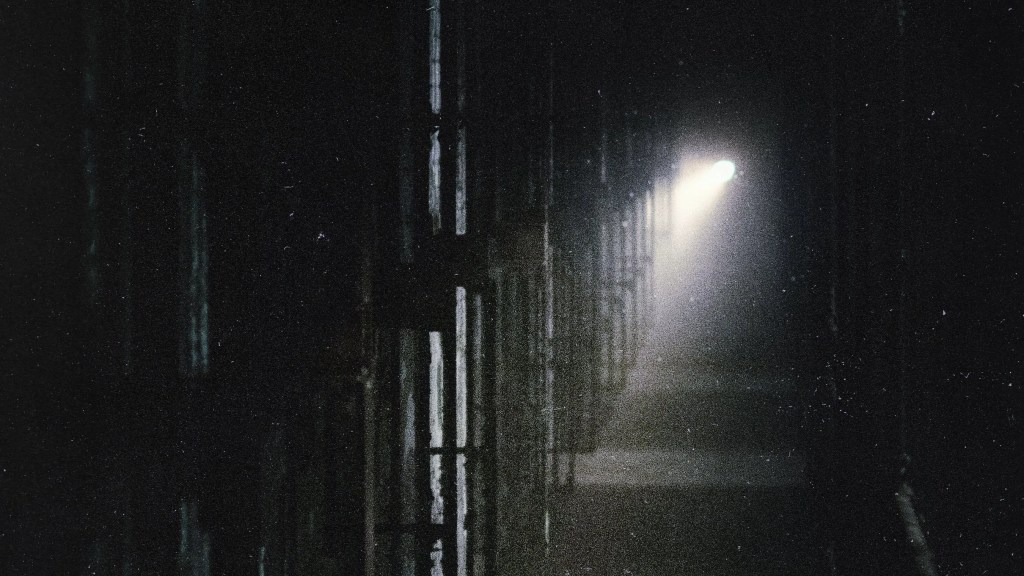
And that’s where Shelby Oaks falls prey to convention and reminds us that, after all, it is a work of inexperienced storytellers who didn’t have the mettle and wherewithal to set themselves apart from the baseline of indie horror. And just like that, the entire narrative spirals into self-parody when Mia leaves her house in the middle of the night to investigate an abandoned prison, finds a creepy house in the forest and meets its ever creepier inhabitant. All of a sudden, what Stuckmann had managed to keep hidden within the grain of the doc aesthetic in the first half of the movie, must be revealed for us all to see and evaluate and this is also where it takes immense talent to forestall viewer disappointment.
Granted, as far as the film’s thematic headspace is concerned, Shelby Oaks is likely an intriguing conversation starter, especially when we understand that the film’s premise is partially inspired by the filmmaker’s own life experiences relating to growing up in a cult, as a Jehovah’s Witness. This way, Riley’s disappearance and her eventual imprisonment by a cult of pagan demon worshipers gathers some much-needed resonance and heft. This is a clear indication that a lot of thought and emotional horsepower went into drafting this movie. Unfortunately, this principally intriguing idea simply did not translate into a compelling movie because people in charge of putting it together just didn’t know better and made a half-and-half pizza of a largely competent found footage mystery and thoroughly amateurish indie horror topped with all the clichés, cheap scare tactics and screenwriting conveniences you can think of.
And this is where I should insist that Chris Stuckmann should have known better because he is a guy who analyzes movies for a living, or that someone in his creative entourage should have had what it takes to suggest that what they were making was a very expensive student film; but I won’t. Once again, I am ecstatic that these folks got to make a student genre movie and had it screened internationally. But it’s not a good movie at all. In fact, it is quite laughably bad in places.
Nonetheless, I don’t want this filmmaker to retreat back to his lane. In fact, this might have been a one-way ticket for him because once you rub shoulders with filmmakers and experience first-hand just how arduous this process is, your ability to dish out tough love to other filmmakers might end up irreversibly compromised. So, I’m looking forward to seeing what Stuckmann does next and I hope that Shelby Oaks is a stepping stone towards greatness and not a swan song. After all, not everyone can be Tarantino or Soderbergh and put together Reservoir Dogs or Sex, Lies and Videotape on their first pull.


 Flasz On Film
Leave a comment