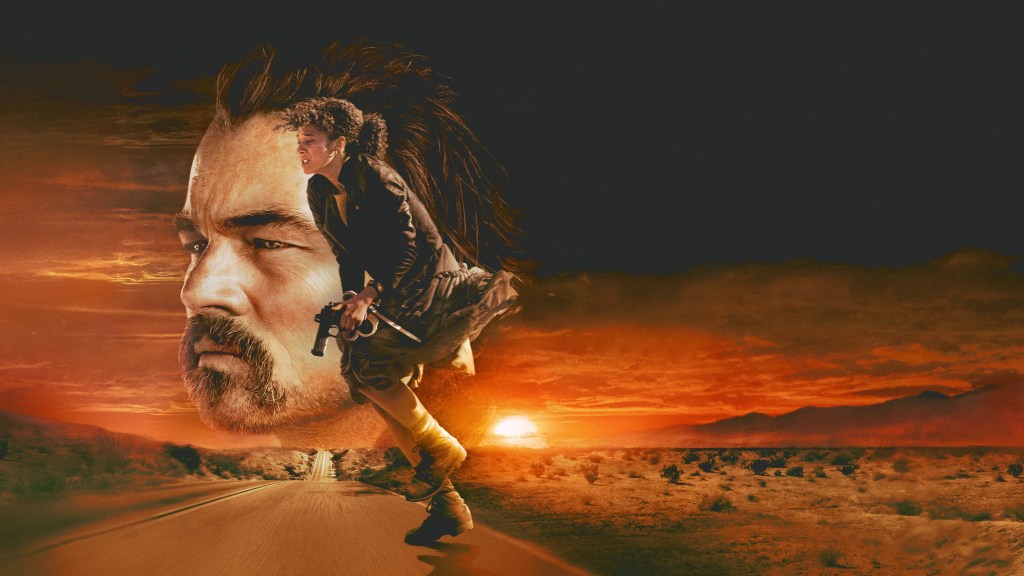

Synopsis: Pat Calhoun (Leonardo DiCaprio) and Perfidia Beverly Hills (Teyana Taylor) are members of a militant group whose violent campaign leads to betrayal and separation after Perfidia’s capture. Years later, Pat lives in hiding with their daughter Willa (Chase Infiniti), but their past resurfaces when the corrupt colonel (Sean Penn) who once pursued Perfidia hunts them down, forcing father and daughter into a fight for their lives.
Of all the prominent stalwarts of the 90s Indie Revolution, Paul Thomas Anderson remains its most intriguing oddball. While Quentin Tarantino carved a niche for himself and padded it in highly stylized self-homage, Wes Anderson slowly turned his style into a recursive diorama and the likes of Steven Soderbergh and Richard Linklater eventually assimilated into the studio system wherein they found a way to express themselves, Anderson consistently persevered. He has always remained able to bend Hollywood to his will and strongarm Tinseltown moguls into bankrolling his vision, no ifs or buts.
However, what remains quite extraordinary about his work is that in contrast to most of his peers, he remains elusive and difficult to pin down. He leapfrogs between Altman-esque epics like Magnolia and Boogie Nights, works of Kubrickian formalism like Phantom Thread, There Will Be Blood and The Master and joyous display of Scorsese-like love of the medium like Licorice Pizza. Thus, despite the fact he frequently revisits character archetypes of fraught fathers, solemn loners and magnetic villains, it is always a delicious surprise to find yourself in a theater when a new Paul Thomas Anderson movie is about to play. You might have a general idea about what to expect, but it will still remain a rather fresh surprise.
And One Battle After Another is no exception here either. Loosely based on a Thomas Pynchon novel titled Vineland, it is both a return to the well for the auteur and a structural and thematic challenge, a movie that is as timely as it is timeless. As relevant as it is quaint. And as entertaining as it is blood-curdling. Without a shred of a doubt, this sprawling epic spanning decades and weaving a story that is just as strange as it is compelling and hard-hitting, it is going to be one of the movies to talk about once the awards season gets off the ground and perhaps one that will warrant multiple revisits, if only to spend time with its central characters and to see how they relate and reflect our own reality using clever pieces of symbolism and visceral storytelling rooted in fundamental pursuit of dramatic catharsis.
Look, it’s a movie buff banquet that outshines in terms of form and execution, literally, anything you will see this year. Anderson once again deploys his vibrant visual storytelling and pulls the viewer along its journey that meanders and equally proceeds apace, as though driven by a rally car driver. Therefore, when it takes turns, it swings and drifts into them with appropriate bravura and so the idea of following an ex-revolutionary as the hammer of law enforcement separates him from his only daughter all the while an aberrantly brutish military man seeks his out to settle old scores becomes a riveting experience. Again, like nothing else around. Replete with cultural references and subtle nods to cinema’s most transformative auteurs and their works, One Battle After Another is hopefully going to be studied as a crucial piece of cinematic storytelling with strong thematic tethers to today’s political turmoil.
This filmmaker doesn’t ever leave much to chance, much like some of his idols like Stanley Kubrick and Orson Welles did in the past, and hence his latest movie can be trusted to be way more than a stylish nod to the visual toolbox of the 1970s. It is a thinking man’s critique of political divisions tugging at the fabric of the American cultural cohesion that personifies the emotionally resonant plight of many to live a life rooted in ideals of freedom from oppression and compassion to others. It is equally an anthem of opposition to well-oiled machinery of government that underneath organizational slickness hides truly hideous ideologies rooted in thinly veiled racism.
This is perhaps why this firework of artistic expression that hops between set pieces and elements of spectacle with the same maverick attitude that Boogie Nights did nearly thirty years ago should be seen as a phenomenal reminder that its author, Paul Thomas Anderson remains the strongest contender for the honour of picking up the torch Martin Scorsese has been carrying for the last six decades. Granted, he is an artistic bridge between Kubrick and Scorsese who also happens to make movies Robert Altman’s cheerleaders wish their god had made instead, but this intricate mosaic of adventure, political grit and film IQ that harks back to The Battle of Algiers and others is a sure-fire way to ensure he gets to be thought of as a worthy descendant of Scorsese’s legacy.
One Battle After Another is supremely entertaining, funny and thought-provoking with its puzzle-like nature, coked up attitude and a supple core of fatherly love that furnishes an outstanding underdog road movie experience that truly defies comparison. It’s undeniable that movies have been pushed out of the limelight by other media in recent years and the cultural nexus has moved closer towards serialized entertainment, but movies like this serve as a powerful reminder that there are still auteurs around who will keep that flame alive. One Battle After Another is simply phenomenal.

 Flasz On Film
Leave a comment