When I recently picked up Nora Ephron’s Heartburn, the experience illuminated a few things for me. I’d like to be able to say that I read this book in preparation for a great podcast conversation about the Mike Nichols-directed adaptation starring Meryl Streep and Jack Nicholson, but to do so I would have to lie. And I’m not good at it. I read the book only after we had recorded it.
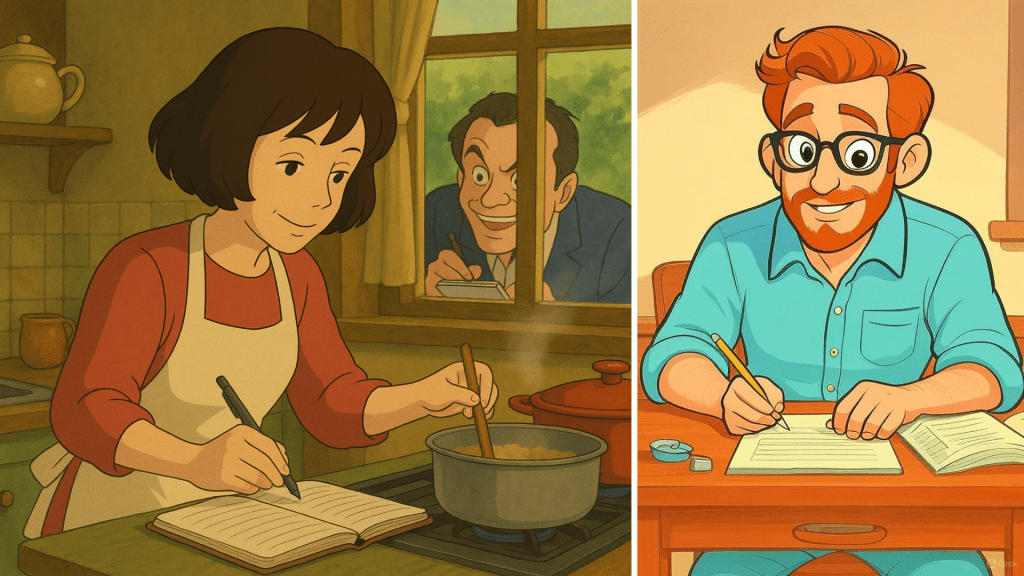
What I took away from reading this largely semiautobiographical novel about a crumbling marriage between a woman plucked out of her familiar environment and a cheating douche nozzle was that Nora Ephron wrote about food the way I like to write about movies sometimes. Tangentially. I suppose if you wanted to be shrewd and cruel, you could call her a food writer. And in a way, you could see Nora Ephron as Patient Zero in the pandemic of SEO-optimized food blogs that spend five hundred words and offer three and a half anecdotes about the author’s childhood memories before getting to the actual recipe the title of the article promised at the top, all in the hope that the reader would scroll through a number of ads and maybe even click on some and generate some AdSense revenue for the writer.
However, Ephron would go about it in a roundabout way. While a food blogger’s goal is functional—to share a recipe—and stories and anecdotes are the padding, Nora Ephron would treat food-related paragraphs as tangents and springboards and excuses to write about all those other things that sat anxiously in here subconsciousness like paratroopers waiting for the order to jump out of the airplane under the cover of night. Granted, if you read Heartburn, at the end of the book you will still find a recipe index, which makes the entire book functional as well. After all, having read all about that fancy potato recipe in between bouts of relationship drama, you might as well have the means to quickly go back to the relevant section and do some cooking. But that’s neither here, nor there. What mattered to me was that Ephron was brave enough to depart from the strict confines of what food writing should be in the eyes of the establishment, which gave me permission to write about movies in a similar manner, whenever I felt it was appropriate or necessary, like that time I spent two thousand words working out my childhood traumas under the guise of reviewing Speed for its 30th anniversary, or when I used Kelly Reichardt’s Showing Up to talk about my recent emotional work.
What I also found in Nora Ephron’s Heartburn was a permission to write about stuff that technically doesn’t fit my MO. And that realization came after reading how the cheating douche nozzle husband in the book, Mark Feldman, would find ways to infuriate his wife just a tiny bit more. As a total aside by the way, I say his name was Mark Feldman, but he might as well have been wearing tinted glasses and a fake moustache and introduced himself as Shmarl Schmerschtein; that’s how little it took to figure out who this character was based on. In fact, Ephron’s ex-husband sued her after the divorce and then went on to litigate the movie production as well to make sure he wouldn’t be portrayed negatively in it. Bless him.
At this point, I am not sure if it is ethical on my part to magpie this one extra insight from the book because for all I care it might have been what the guy did for real and if the book is anything to go by, he was not a standup guy. What he did though was poach little experiences from other people’s lives to give himself ideas to write columns about. He was contracted to write a weekly piece and, as Ephron describes it in the novel, he would frequently pause mid-conversation with friends or family and wonder if there was a column in whatever problem these people were facing. It didn’t matter if he was effectively appropriating other people’s biographies and exploiting their candor if he could put eight hundred words together out of it.
See, I don’t think I have it in me to steal other people’s personal anxieties and turn them into features. We have mainstream periodicals to do just that and supply longform essays unearthing how celebrities went to war with leaf blowers or, I don’t know, how biodegradable dog waste bags get sticky on rainy days. But sometimes I have weird fleeting thoughts, and ever since I read Heartburn, I began asking myself each time if there is a column in this.
It’s like a little challenge: can I sit down more or less consistently and find eight hundred words to describe a stupid idea that came to me in the shower? I don’t know. I guess I just did.


 Flasz On Film
Leave a comment