
While it might be difficult to comprehend now, there was a time when Stephen King was exclusively thought of as “that guy who writes those gross scary stories” like The Shining or ‘Salem’s Lot, even though he had been dabbling in other genres and modalities since he figured out how to use a typewriter.
In fact, as he likes to recount himself frequently when asked about what he writes and why, he was once accosted in a supermarket by a woman who wagged her finger at him and exclaimed out of the blue “I know who you are! You’re Stephen King! You write those horrible stories and that’s OK! But I like more uplifting stories like that movie The Shawshank Redemption!” King immediately replied, “I wrote that book,” which the woman simply could not compute. “No, you didn’t” she said shaking her head. “No, you didn’t.”
But he did. He wrote The Shawshank Redemption in the early 80s and published it together with another very-much-non-horror story The Body (later adapted by Rob Reiner as Stand by Me) in a volume titled Different Seasons. And when the 90s came around, King also tried his hand at more elevated literary writing, like Dolores Claiborne, Gerald’s Game, Rose Madder, and The Green Mile. And despite the fact that creepy vibes and supernatural elements ended up infiltrating his prose—perhaps by osmosis—even when he was trying to remain grounded, King has produced enough output to successfully challenge the mantle of “The Master of Horror” and staged a successful escape from the genre pigeonhole.
However, the same cannot yet be said about Mike Flanagan, a director who has not only never before tackled a story that wouldn’t have carried the “horror” label and who has recently become inextricably linked to King by dint of having adapted a handful of his books (Gerald’s Game, Doctor Sleep) and having worked on material that is explicitly King adjacent, like Midnight Mass (a series that pays due homage to King’s Salem’s Lot, among others). In addition, he is currently shooting a new adaptation of Carrie for Amazon.
So, what makes the guy who looks firmly entrenched in genre and devoted so passionately to King’s legacy as one of the living gods of horror pick up a little short story called The Life of Chuck—a tiny trifle in three puny acts—for cinematic treatment? Maybe there is no better answer to this question than a simple “because the story lends itself to a movie adaptation.” Or perhaps he’s attempting to lay the groundwork for his own eventual dash towards freedom from being labeled as “that guy who does horrors and who adapts King’s scary stuff,” which is a totally understandable pursuit. What matters here, however, is that Flanagan—even with his fully monocultural pedigree in horror—is perhaps the perfect filmmaker to take on The Life of Chuck, adapt it for the screen and direct a movie that would do for his image what The Shawshank Redemption did for King’s brand in 1994. And it just so happens that these two stories also seem to be in conversation with each other.
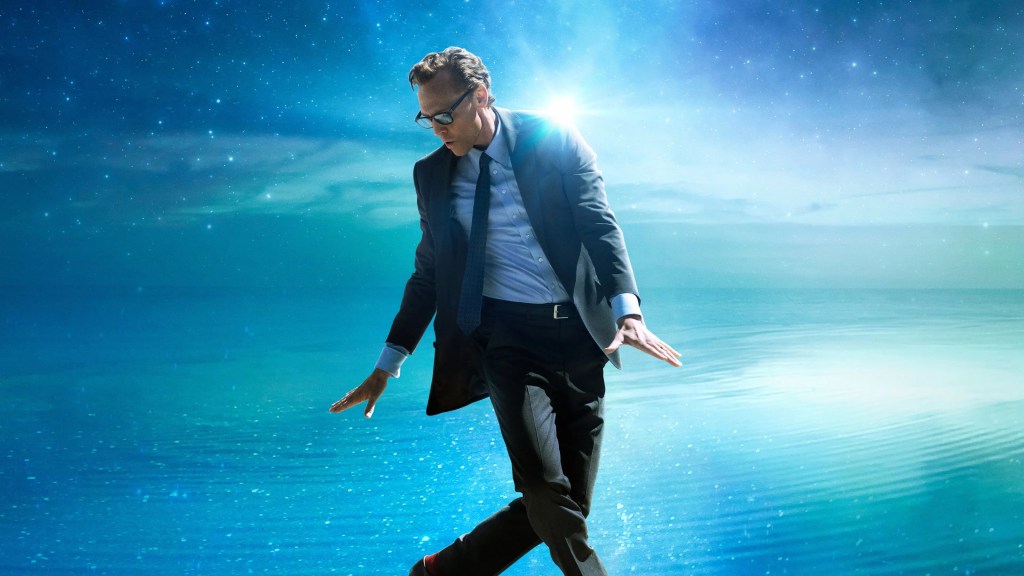
The Life of Chuck originated in a way that seems a little bit off-brand for King. It wasn’t a what-if scenario or an exploration stemming from imagining a character being exposed to something wildly unpredictable and orthogonal to our reality. It started as a duet of visuals: one of a billboard saying “Thanks, Chuck!” and the other of a guy dancing as though nobody was watching on the street, much in the vein of that iconic Christopher Walken dance in the Fatboy Slim’s Weapon of Choice. He didn’t necessarily know what these images meant; only that they rolled around in his subconscious like a solitary bottle of water rolling around in the boot of a car cruising around town. To solve this riddle, King wrote the third part of the story that provided necessary context for the other two.
Thus, a reverse-chronological etude in three mini-acts was formed in which we are dropped into a crumbling world only to find out it is in fact an imagination of a man dying of cancer. We then follow the same man just a few months before finding out he’s terminally ill as he bursts into dance in the street. And then we find out what this dance means to him, what his signature moves represent and how it all connects to the idea that a mind of a single person is a veritable universe of infinite possibilities, a collection of people, imagined and real, and a repository of thoughts, memories and opinions unique to his individual.
Even though The Life of Chuck did not originate as a poignant exploration of what it means to be human and how important it is to live the life we want to live as opposed to the one someone else thinks would be good for us, it became one. It was a riddle. An enigma King stared at until he figured out how to put it together. And riddles tend to have this magical quality about them that they usually have a solution. Some have many, sure. But this one definitely had one elegant answer to that question of how a billboard saying “Thanks, Chuck” and a dancing businessman could fit together in a story that makes sense and says something about anything. In fact, how the story came together made everything look as though it had been engineered to fit this way from the get-go.
However, adapting it to the screen is a whole new challenge altogether, especially for a filmmaker who seems to have been lubricated with different kinds of storytelling sensibilities. A story like The Life of Chuck is a very delicate flower that in the wrong hands could leave itself open to accusations of sappiness or even of downright pretentious self-aggrandizement. Quite frankly, even the story itself—buried in between two markedly different short stories in the If It Bleeds volume—can easily repel an unprepared reader because it requires one to come at it with their heart in the palm of their hand and at least with a rudimentary understanding that King underneath the trench coat of genre nastiness is a real softie. Anyone interacting with this story needs to understand that Stephen King has never been a respect-craving blowhard. He has always been a guy who loved writing stories and took incredible pleasure in following imaginary characters down rabbit holes to see what they’d find.
And The Life of Chuck is no different in this regard as it follows Chuck Krantz down a reverse rabbit hole, through an elevated imaginary universe falling apart like a house infested with termites, an outwardly cringe-inducing experience of watching a guy give it his all in front of strangers and then towards a resolution in which we see how it all comes back to what Stephen King has always cherished the most—the supple embrace of apple pie Americana, memories of youthful awkwardness, dreams of liberated independence quashed by conservative norm, a journey through life marked by knowledge that one day it will all come to an abrupt end. This revelation alone—that Chuck’s journey through life unveiled to the reader in reverse is a conveniently engineered affirmation of life punctuated by moments steeped in perfectly fitting postcard clichés—is an open invitation to dismiss the writer and accuse him of losing his edge. It’s an exercise in pristine earnestness that will send shivers down the spines of too-cool-for-school edgelords, empower critics with an axe to grind to punt vitriol at the writer and accuse him of pound shop pomposity; but it will bless those who come prepared and send them home smiling from ear to ear, thinking about all the ways they’d want to get busy living instead of getting busy dying.
The perennial challenge behind adapting The Life of Chuck that Mike Flanagan faced was to display the requisite bravery and allow himself to be vulnerable in front of the viewer, the material and the cast he needed to direct in a way to get the message across. This movie did not need to be edgy, cool, intricate or formally audacious. This movie needed to be honest. An attempt at trying to be smart, self-aware or satirical about any element of it ran the risk of the entire narrative collapsing in on itself and becoming a de facto black hole of hamfistedness.
Therefore, from Chiwetel Ejiofor and Karen Gillan to Tom Hiddleston, Mia Sara, Jacob Tremblay and Mark Hamill, everyone needed to be on the same page to keep the magical soap bubble from popping into inexistence in front of paying audiences. The Life of Chuck needed to be uninhibited in its earnestness and fully devoted to believing its own story even if it becomes blatantly transparent to everyone watching as to what the puzzle is about twenty-five minutes into the movie. Solving the puzzle is not the point of watching the movie, just as it was not the point of reading the story. It was—as I remarked above—the point for the writer to understand how it all fits together, but the picture it formed and the emotions it triggered was the reason for it to come into existence and depart King’s imagination to be shared with souls willing to be elevated and consecrated with its inherent goodness.
Flanagan knocked it out of the park and managed to put together a movie that will absolutely move to tears those of us who know what it feels like to have spent a lifetime carrying dreams in our chests and to have never felt able to act on them because we weren’t “supposed to.” It’ll absolutely soar in the eyes of those who know in their heart of hearts that they live lives of other people’s expectations instead of their own, who remember their early mentors who showed them that life was about joy, who reminded them they were special before others stepped in with their rules and expectations.
Although there is very little factual connective tissue between The Life of Chuck and The Shawshank Redemption, Mike Flanagan managed to find a sympathetic frequency in this story and made it clear that the two stories have always been in conversation with each other and that King himself has always carried that life-affirming fire within him. Granted, The Life of Chuck is markedly more manufactured in terms of its structure, but the two stories share a plane of symmetry that only becomes obvious when we bring their respective adaptations into the conversation. Flanagan most assuredly saw how this little story resurfaces the themes King tackled in his iconic prison escape novella and made sure the viewers would emerge from watching his treatment of it feeling as featherlight as the viewers who watched The Shawshank Redemption felt when they saw it first.
Is The Life of Chuck corny and sappy? Sure. If you want it to be so. Nick Offerman’s offscreen narration is probably enough to send you packing and if that doesn’t do the trick, then Tom Hiddleston’s long dancing sequence (which is amazing, by the way) will do it. But it’s a movie we need to cut through the cynicism of our times, tribal debates and the doom and gloom of what the future holds for us. Flanagan’s take on this little story King wrote to tie two scenes together has the potential to become an icon of the caliber The Shawshank Redemption was thirty years ago and it most definitely gave its director enough of a push to reach the same escape velocity that allowed King to expand beyond his comfort genre.
The Life of Chuck is one of those movies that holds real magical powers and can momentarily whisk you away from your everyday troubles and give you the perspective you need to turn your entire life around. It won’t give you the horsepower to push what you’re currently struggling with over the finish line, but it will remind you of what’s important to you, even if you have long forgotten what it was. And then it’ll tell you it’s OK to break into dance in the middle of the street. It’ll tell you that you are special. That you contain multitudes. That within you lies an entire universe that will fall to pieces when you’re gone… and you will be gone sooner than you think.
And then, just like The Shawshank Redemption, it will send you home full of vigor and optimism. The Life of Chuck will remind you how important it is to get busy living.




Leave a Reply