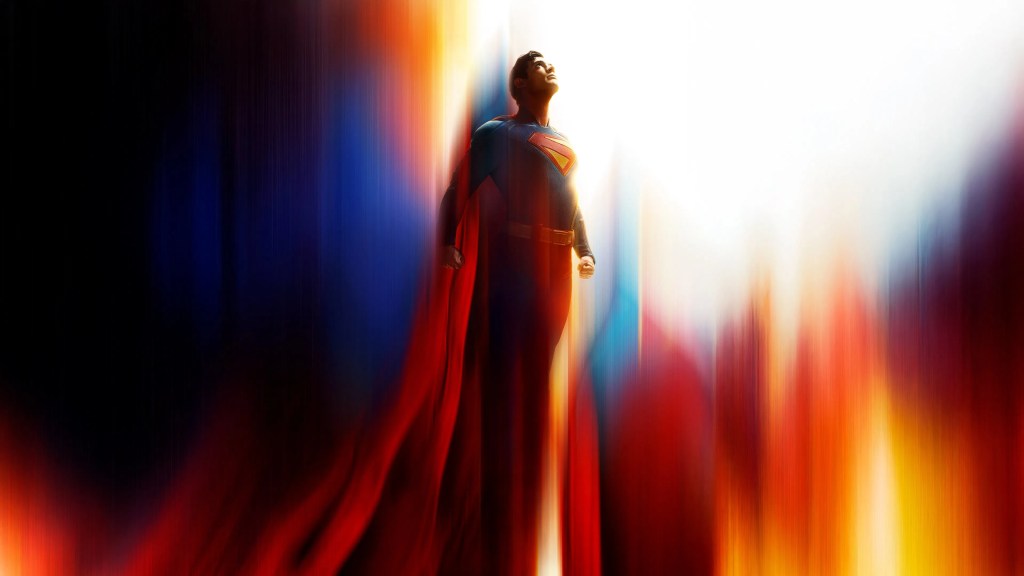

One of the guiding principles of what we now know as the Marvel Cinematic Universe was to recreate the movie equivalent of reading comic books. At what I’d call the steady state of operations—which is to mean such a time where the cultural entity of the MCU is widely known and predictably successful with using a robust formula—they have succeeded in crafting a viewer experience where multiple storylines that involved a number of characters would occasionally converge, then diverge, run in parallel, converge again and build towards sizeable singularity events.
You couldn’t just watch the Iron-Man movies, which kept their own storylines while meshing with the big-picture narrative, nor could you just go to the cinema to see the Black Panther or Captain America sequels. These movies were all interconnected and intertwined. Like an avid comic book fan, you were invited to partake in an experience where you needed and wanted to follow all your favourite superhero stories because they all somehow depended on and referred to one another. You could always ignore the ones you didn’t like or know, but this came at a cost of missing out on detail. Some important stuff would happen to Spider-Man in one of the Avengers movies and you’d have to infer what happened using logic or second-hand information courtesy of the Internet or that geeky know-it-all friend who watches everything. Alternatively, you’d have to go on living with weird gaps in the lore.
The gamble associated with building such an experience was that Marvel needed to start small and relied on characters that weren’t exactly known to wider audiences, like Thor, Iron-Man or Captain America. Comic book aficionados were perfectly at home following them, but for something of the scale of the MCU to be successfully pulled off, they needed the buy-in across all four quadrants. And it just so happened that the most well-known Marvel properties—Spider-Man and X-Men—were owned at the time by other studios: Sony and Fox, respectively. But the point is that they did it and, like it or not (and, boy, do I have things to say about how burned out I have become with the MCU), their work now stands as an incredible success story and an example of engineering a self-sustaining multimedia universe that has both impacted on the wider entertainment industry and has sequestered itself from it to become a genre unto itself. MCU movies are tentpole events with mass appeal that speak exclusively to the niche in-group of viewers who have invested their time and money in the experience of living amid an increasingly large multiverse of storylines and superheroes they follow simultaneously. It just so happens that the in-group niche is large enough to generate billion-dollar returns.
DC, Marvel’s main rival, has never had enough luck even though before the arrival of the MCU, the most successful and influential comic book movies came out of their stables. The 1978 Superman was the de facto originator of the subgenre, while Tim Burton’s Batman along with its 90s sequels (even the less respected ones helmed by Joel Schumacher) and the Christopher Nolan-directed trilogy set the tone for blockbusters of their time. For many reasons—cack-handed studio oversight, lack of big-picture vision, chronic indecision, trying to rush the glacial process of franchise-building and more—while the MCU was coming together in what looked like a logically-driven and perfectly controlled fashion, the rival DC universe was doing so in fits and starts. The closest they ever got to pulling it off was when the naturally self-contained and incredibly profitable trilogy of Batman Begins, The Dark Knight and The Dark Knight Rises propelled the production of Man of Steel; it is frequently forgotten that Zack Snyder’s movie was co-produced by Christopher Nolan’s company, Syncopy.
The rest is history. DC and WB folks wanted to have their cake and eat it and instead of taking their time to build organic foundations for that comic book experience of being stuck in a comic book shop and jumping between interconnected storylines, they rushed towards that singularity event. Or did they? After all, with a few deviations, they did follow the same playbook and introduced both new incarnations of Batman and Superman in addition to bringing a handful of new characters to the table, like Wonder Woman, Aquaman, The Flash, as well as a handful of lower-tier characters in David Ayer’s Suicide Squad. It is customary not to talk about that abortive Green Lantern movie that stood to the side of the DCEU initiative.
They had the line-up, the big picture goal of introducing the Justice League to cinema-going fans and a handful of intertwined storylines to keep the experiment together… and they still failed. And then as their cinematic universe was falling apart instead of cohering and gelling, they failed further by reactively changing the tone of their work (Wonder Woman 1984), reshuffling the leadership and eventually ditching the lot in favour of a hard reset with James Gunn at the helm, a man who seemingly came armed with ideas he gathered at the Marvel stable. Having rebooted The Suicide Squad in 2021 to very little fanfare—though, I presume one could sidestep any accusations by blaming the poor performance of the film on the still fresh post-COVID malaise—he has now come back with his take on Superman.
Instead of recounting, yet again, the origins of the Man of Steel, a story retold as many times (if not more) as the genesis of Spider-Man, Gunn and the committee of his backers and enablers decided to take a wholly different approach to the material. This new-and-improved reboot of the DC cinematic universe experiment spends precious few seconds reminding you about where Kal-El (David Corenswet) comes from and what his deal is before launching him into the frozen wasteland of Antarctica, having been defeated by a metahuman called Hammer of Boravia after stopping an attempt by the president of Boravia (Zlatko Buric) to take over the neighbouring country of Jarhanpur (a thinly veiled comp to the Israel-Palestine conflict). Aided by his loyal caped terrier mutt Krypto, he flees to his Fortress of Solitude, which conveniently appears out of nowhere—as it should—and where his small army of robots, one of whom is voiced by Alan Tudyk, give him an emergency tanning session hoping to restore his Superman powers pronto. Meanwhile, Lex Luthor (Nicholas Hoult) aided by another metahuman (Maria Gabriela De Faria) are trying to track Superman’s whereabouts, Superman finishes his tanning session and heads back to Metropolis, gets his backside whooped again and finds himself interviewed by Lois Lane (Rachel Brosnahan) who knows Superman’s secret and is already in relationship with him too. And that’s just the first fifteen minutes or so.
We immediately learn that the world of Superman is perfectly used to intergalactic monsters popping out of tears in the fabric of spacetime as they know that Superman or any of the handful of other superheroes like Green Lantern (Nathan Fillion), Mister Terrific (Edi Kathegi), or Hawkgirl (Isabela Merced) would take care of business while allowing all bystanders to come away unscathed. We also find out that Lex Luthor is doing shady business with the Boravian president, people keep prisoners in the fourth dimension, Superman’s status as a refugee is being questioned by the public after it is revealed that his parents allegedly wanted him to rule the Earth, and Jimmy Olson (Skyler Gisondo) engages in some unethical shenanigans with Luthor’s selfie-obsessed assistant transplanted from the original movie, Eve Teschmacher (Sara Sampaio). Or at least that’s what I think is on offer because as early as twenty-five minutes into the movie I began struggling to stay awake.
But why am I telling you all this? Why should I make a mockery out of what could have been a simple fifty-word-long synopsis and make it look like a needlessly convoluted piece of narrative diarrhea replete with superfluous characters and overloaded with subplots and half-baked ideas that look as though they have been picked up mid-stride by the filmmakers? That’s because it was not an accident. I think what they have done was supposed to work in the same way MCU movies have. As I said, Marvel have transplanted the experience of jumping between multiple comic book series and seeing them all interconnect and reference each other, thus organically forming a narrative constellation of previously unseen proportions.
Meanwhile, Gunn and his Superman movie managed to accomplish something wholly different. What this movie successfully conveys is the feeling of overwhelming helplessness I’d experience if I—a forty-year-old grown-ass man who hasn’t read a comic book in over two decades—went to a comic book shop right now and picked up a random issue of the Superman comic book with zero preparation.
“Who are these people?” I’d ask. “What is going on?” I’d follow.
Is the mineral man important? Am I supposed to be aware of Boravia? Why does Green Lantern look like Lloyd Christmas? Oh, because that’s what he looked like in the 60s, right? Is that so? Is Eve Teschmacher from the 60s too? No? Oh, that’s convenient. And who is that guy who looks like Professor X? Oh. He’s a classic character. Can we pause the film so I could google this up and see what’s what? The movie just assumes I know all this stuff and I think the ticket should come with a homework assignment, or a black label warning at the very least.
That’s what this movie successfully achieved—a sense of complete and unencumbered alienation experienced by those in the audience who are not in the know. For a movie that attempts to reboot and refresh one of the two main pillars of the DC comic book universe—and let’s be honest, they do have just two characters worth a damn flanked by an army of guys like Polka Dot Man—Superman is needlessly weighed down with excess adiposity of plot, interstitial storytelling, namedropped characters and sight gags only people who devour these comics religiously are positioned to understand. It’s a zero-quadrant spectacle aimed to alienate literally everyone but two kinds of viewers: diehard fans of Superman lore and James Gunn’s groupies. Strays need not apply.
I kid you not, this movie is a dense mess of tonal consistency of a rabid honey badger trapped in a wheelie bin. Supercharged with special effects that make Matrix Reloaded look like a timeless masterpiece of VFX craftsmanship (just think back to how odd the SuperNeo scenes looked like even then), the action set pieces in this movie look as though the movie was initially conceptualized as a videogame for PS5 and only at the last minute it was diverted to become a movie. Repellent, fake and overstuffed.
I suppose congratulations are in order because Superman managed to take the essence of what made Marvel movies so successful, flipped it on its head to obtain the exact reversal of the comic book effect and distilled all of the filmmakers’ signature idiosyncrasies into the finished product because apparently his fans would eat it all up. And judging by how well the movie is doing at the box office, I presume they were correct. Gunn’s brand of crass humour, brash spectacle and completely overloaded storytelling seems to be what the public demanded. All I can tell you is that the filmmaker has removed the training wheels from the experience and will happily send you down the steep hill of the quasi-Silver Age Superman mythos while quipping from the sidelines and hoping you’d notice pop cultural references laid down in various places while zooming past them in a cacophony of overacting courtesy of literally everyone. So, if you’re not sure about where you stand on it, wear a helmet at the very least. And a mouthguard. Safety first.
And yet again, it all ends predictably because—as the historical precedent dictates—Superman must always face off against a corrupt version of himself or be depowered to be vulnerable, such is the burden of the most overpowered comic book character in the history of everything ever. Cataclysmic danger ensues, stuff happens, heroes shout and groan and nobody ever gets hurt, all the while the movie also attempts to squeeze in clumsily a shred of conversation positioning Superman as a refugee or an immigrant (particularly timely right now with all the ICE raids and the relentless dehumanization of migrants in the Trumpian Ethno-State of America). But it might as well not have done so because after two hours of the ceaseless litany of exotic lore factoids and who-is-this-again characters that look as though they were invented at the last minute for the purposes of the movie but are in fact classic mainstays, all you will register is noise and more noise again. Before you know it, whatever energy this movie might have carried fizzles out with a whimper running on narrative conveniences and shut-up-it-was-like-that-in-that-one-issue-from-the-90s logical credulity.
I am sorry to say that but Superman is a completely overwhelming and ultimately alienating piece of blockbuster cacophony that tries to build an entire universe the way Chinese engineers assemble shoddy-looking apartment blocks in under twenty-four hours. Instead of inviting newcomers into its universe, it repels them with its density and needlessly brash appeal, while also underwhelming with its cookie-cutter set pieces. I can’t believe I’m about to say that but at this point I miss Zack Snyder’s take on DC comic book movies. Edgelordy dark fantasies as they were, at least they looked like movies and they treated Superman like a serious character. This on the other hand is a totally unwatchable disaster inaccessible to the uninitiated and downright infuriating to those who can only handle James Gunn in homeopathic doses.

 Flasz On Film
Leave a comment