I have recently come across an article decrying the rise of celebrity-authored children’s books and how authors without a platform of someone like Keira Knightley have struggled to get their work published and put food on the table. After all, is Keira Knightley’s book I Love You Just the Same an objectively better piece of storytelling than anything else written by people who have devoted their entire lives to a pursuit of excellence in writing for children? Or is her name what’s important here because if you display a book written by Jane Schmoesby at Waterstones, it’ll attract significantly less attention than a book written by Kim Kardashian or Prince Harry? And it doesn’t matter that Jane Schmoesby’s work might be better written or overall a more enriching experience, because once the money has been spent, there’s no turning back. In the publishing game, a book is better when it sells more copies. And a book written by a recognizable name will do more business, regardless of its quality.
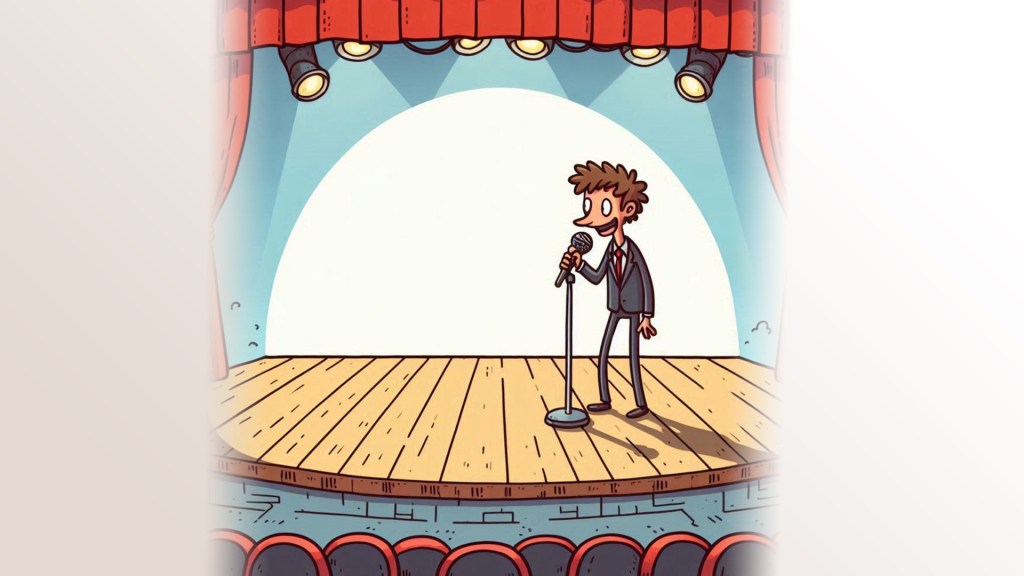
The same extends to the world of podcasting, where I at least partially dwell myself. There are at least four million podcasts out there in the world, roughly a quarter of which might be considered currently active. Which means there are many people out there who get together with their buddies on a regular basis, or lock themselves in their rooms on their own, and talk into their microphones about whatever it is they love talking about. True crime, history, music, movies, books, politics. You name it. If there is a hobby or a passion or a topic you can identify, there is a podcasting community centred around it.
At the same time, a lot of people listen to podcasts. Nearly fifty per cent of Americans listen to podcasts at least once a month and the numbers are only going up. This would potentially lead you to believe that we are, after all, living in the golden age of podcasting.
Well, we are and we aren’t, to be perfectly honest.
And that’s because the vast majority of those one million active podcasts see fewer than ten listeners per recorded episode. Which means that all those millions of people who have adopted podcast listening as one of the ways in which they consume information, all listen to something else. Sure, podcasts are the most popular form of user-generated content found in the internet, and the barrier to entry is significantly lower than that of video creation for publication on YouTube and other similar platforms, but most people who listen to podcasts are simply unlikely to listen to your indie show, or mine. They all listen to Joe Rogan, Andrew Huberman, Lex Friedman and I could bet a significant sum of money on the fact that the bulk of what’s consumed on platforms like Spotify and Apple Podcasts (the two biggest players out there) are confined to fewer than one thousand shows. ninety-nine per cent of podcast listeners are most likely all listening to just shy of one per cent of podcasts that are available to them.
Granted, the biggest and most popular podcasts are likely to be well produced, and they often offer great content because their significant platforms attract popular guests. However, at the same time there are thousands of fantastic shows you probably could find on Spotify (because all podcast-producing platforms distribute across all major listening platforms), if you knew how to look for them, that are just as well produced and whose content is just as engaging, if not more. But you will never ever find them unless you actively search for them, which means you need to be aware of them before you find them, so serendipitously stumbling upon a great indie podcast you would fall in love with on a platform like Spotify is next to zero. All you will see in the podcast recommendations curated by Spotify are the one per cent. The biggest shows, the most popular shows and ones branded with celebrity names.
Furthermore, if you listen to some of the biggest podcasters out there, like Joe Rogan or Marc Maron and others, you will frequently hear them tell their celebrity guests (who might be there because they wrote a book, or have a movie to push, or something) that they too should start a podcast because this is where the future is and it has never been easier to start one. And that once they do, their platform will go supernova and they’ll be financially independent. Which is what they often end up doing and immediately join the one per cent of most popular podcasters, while your buddy from work and his show about the Roman Empire that is impeccably sourced and delivered with stunning production value will continue hovering on twenty-one listeners per episode.
And that’s because nobody will ever know his show exists and at the same time, people who listen to podcasts, have their consumption ceilings too. They are most likely to listen while commuting, working out, cooking or walking so you are probably looking at maximum one or two hours of listening time per day. And that’s maximum, assuming they listen to podcasts daily, and only a small percentage of podcast listeners do. So, your buddy with his podcast about the Roman Empire or yours truly with a podcast about movies nobody really cares about must not only fight for exposure on podcasting platforms but also for the listener bandwidth. And this is a losing battle because just as in the case of Keira Knightley and other celebrities invading the world of children’s book publishing and pushing other authors out of this space because their name recognition is worth more than the potential quality of their creative output, a random comedian who appeared on Joe Rogan Experience and decided to use his platform (and the exposure granted by his appearance on the biggest podcast in history of the medium) to start a podcast himself will immediately attract more attention from listeners and platform curators, who will prioritize this content over anything obscure and independently created because it’s more likely to attract more clicks. And clicks equal money.
So, even though we live in the golden age of podcasting, we kind of don’t because to experience the goldenness of this phenomenon, you probably already need to be a known entity or be prepared to grind your way into obtaining a platform by shoving your content in people’s faces twenty-four-seven-three-sixty-five. And even that latter option never guarantees any success either. It’s one of those “stop being poor” prescriptions. If your name is Harry Windsor, you can easily bag a Spotify deal, get a team of professional producers to help you along and talk about whatever you want, and people will listen. Meanwhile, a nobody in the middle of nowhere in Louisiana talking into a Blue Yeti microphone with his buddies about movies from the 90s will never ever have a chance to speak to even a fraction of the audience celebrities transplanting their platform from elsewhere would attract without lifting a finger.
Now, how do you avoid looking like a rancid case of sour grapes and a whiny douche nozzle who complains that nobody listens to his podcast, meanwhile if Keira Knightley decided to produce one, even if it was total bag of dog poo, she’d speak to an incredibly wide audience and she’d get a pat on the back for joining the podcast revolution? You honestly can’t. As I said, a losing battle. You can push your produce onto people whether they want it or not, because as far as big podcasting platforms are concerned, they will never be interested in promoting niche content. Why would they? They get better returns from showcasing that brand new podcast started by an ex-politician-turned-political-commentator instead.
However, as a podcast listener and a podcaster myself, all I can do is encourage you to think outside the box. There are some independent podcasting platforms (where you can also find the big shows, don’t you worry) whose mission is to curate and emphasize independently produced podcasts, as opposed to relying on the big hitters you will inevitably find on the front page of Spotify. Platforms like GoodPods (my personal favourite), Pocket Casts, or Player FM are probably worth investigating as an alternative to the go-to big players we have grown accustomed to using. In fact, my own user experience is such that I use GoodPods and Spotify in tandem because I use one to discover new stuff and once I decide to stay with a given podcast for a little while longer, I tend to look for them on Spotify (where the show would never be organically recommended to me).
Therefore, as much as it is easy to lament the sad reality of Keira Knightley invading children’s authorship space and random comedians and ex-politicians starting podcasts and becoming wildly successful overnight, it’s much more productive to become a part of a grassroots listener awareness movement and learn that there are great shows out there run by people you’d love to hear from. But you need to look for them a bit more. They’re not exactly invisible either, just like non-celebrity authored books are still available at your local Waterstones. But you have to walk past the pile of Keira Knightley books on display and do some browsing.
Equally, it might be in your interest to download GoodPods on your phone and give some random indie podcasts a chance. Because chances are that many of them are cool to listen to and they are just as good, if not better, than the one per cent stuff everyone clicks on when they feel like listening to a podcast. And if you like that indie podcast, tell someone. In fact, do me a favour and tell two people about a podcast you like and then tell them to recommend it to two more people if they like it. If we all did that, many more great podcast creators would see their listenership go through the ceiling in forty-five seconds flat.
And hence, that grassroots indie podcast revolution starts with you and me.

 Flasz On Film
Leave a comment