One data point is just what it is—a data point. Two data points can only form a straight line and equally they can only be what they are. The magic begins at three because any given three points no longer form a simple straight line but can indicate a trend. There is a reason we say, “third time’s the charm” and unbeknownst to everyone, this reason is rooted in fundamental mathematics.
For young Stephen King, the third time was indeed the charm as his third published novel, the 1977 The Shining came to solidify his ascending trajectory and proved he was more than just a genre writer. In fact, the man was surely aware of this mostly unspoken rule that if he hadn’t followed up Carrie and ‘Salem’s Lot with something more ambitious, he’d be forever pigeonholed as a horror novelist. Therefore, he poured himself into The Shining and fashioned a story that rode the line between literary and genre fiction, became his first hardcover bestseller, and earned its place among the most important literary works of the twentieth century.
It was also a matter of time before it was picked up for cinematic treatment and it just so happened that Stanley Kubrick, who was at the time processing the failure of Barry Lyndon and coming to understand his work needed to be both artistically engaging and fundamentally entertaining enough to be a profitable venture, found himself engrossed in King’s novel and decided to adapt it for the screen. This is where matters become at the very least a little bit more interesting because Stephen King had adapted The Shining into a screenplay himself, presumably because he felt particular kinship with it and wished for certain aspects of the story to remain safeguarded against potential meddling at the hands of those who’d come from the outside brandishing knives, ready to gut his work, turn it inside out and forfeit its essence.
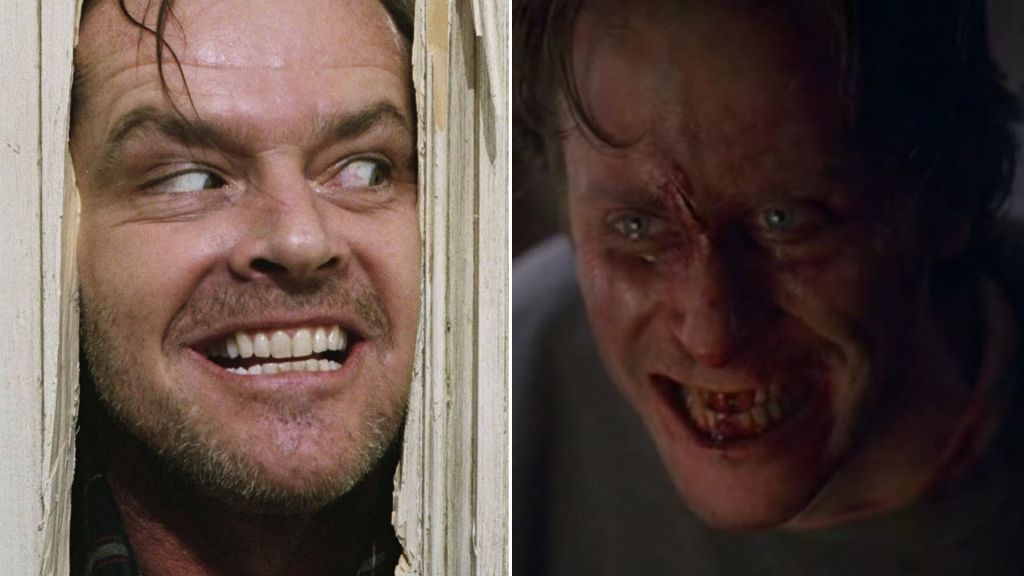
Sadly, that’s just how life goes, especially when an auteur of Kubrick’s calibre takes interest in your work. And it just so happened that he saw The Shining as a meditation on madness where he could exploit the twilight zone between reality and hallucination and subject the viewer to a terrifyingly lucid dream where both the characters and the audience would slowly lose their grip on reality. He took The Shining and turned it into an experiential vehicle for his own interests, which famously drove Stephen King up the wall. King has remained dismissive of Kubrick’s adaptation to this day, although he may have mellowed over the years; partly because he was bound contractually to tone down his vocal criticism in order to take back the rights and adapt the book again into a three-part miniseries in 1997. He was allowed only to remain critical of Jack Nicholson’s performance, which he saw as a dead giveaway of madness to come given the fact Nicholson was well known for his portrayal of McMurphy in Milos Forman’s One Flew Over the Cuckoo’s Nest.
I think it is fair to say, and others have remarked on this already, that The Shining was “kubricked” a bit too much and King just didn’t like the notion of others meddling with his material, which is what led him to take back the reins and, together with Mick Garris (a filmmaker who had adapted The Stand and directed King’s original script Sleepwalkers) concoct a vision of The Shining that would fall a bit closer to home. They turned in a three-part miniseries starring Rebecca De Mornay and Steven Weber where the narrative follows the book much more closely. What Kubrick excised completely, like subplots involving the criminal past of the Overlook hotel or hedge animals coming to life and threatening the Torrances, King and Garris brought back to the table. The iconic axe Jack Nicholson wielded in the Kubrick film reverted into a mallet. Wendy became a blonde, as described in the book. All work and no play no longer made Jack a dull boy.
But does it mean the 1997 miniseries The Shining can be seen as a true depiction of what the novel was getting at? Only to an extent because sometimes even the author may be partially oblivious to the message his work conveys. Therefore, I find it both instructive and immensely enriching to look at both movies, the Stanley Kubrick-directed piece widely regarded by many as one of the foremost masterpieces of the genre and the 1997 miniseries seen by King fans and the author himself as a faithful adaption of the novel, in an attempt to find the essence of The Shining. Having thought about this subject for a while now, I can only say that it is to be found in neither of the two filmmaking attempts, but, at the same time, the existence of both illuminates where exactly this essence might reside. If that makes any sense at all.
What I think drew Kubrick to the material in the first place was the overwhelming sense of isolation the book exuded, which is likely a residue of the author’s own experience at a Colorado-based hotel at the end of the tourist season. In fact, the same hotel was later used as the shooting location for the Garris-directed miniseries. I can only imagine how Kubrick mentally stripped away everything he deemed superfluous to the story he latched onto most profoundly, which was the story of a down-on-his-luck author, his fight against addiction and his slow descent into madness exacerbated by solitude. What he also did was remove the character underpinnings defining both Jack and Wendy because their personal dramas would have likely interfered with the mission to turn a dense novel into a purely visual experience aiming to upset the viewer viscerally in the moment as opposed to having them engage with the story intellectually.
Therefore, Stanley Kubrick’s The Shining is an incredibly simple and lean piece of storytelling, essentially freed from its own relationship with the source material. In fairness, it didn’t matter to Kubrick why Jack was driven to madness, what triggered his demonic turn and what led to his eventual salvation. In fact, as far as Kubrick’s script was concerned, Jack Torrance wasn’t delivered from damnation at all and perished as a human icicle after a beautifully mesmerising chase through a snow-covered hedge maze. All that was important to Kubrick was that Jack Torrance was a recovering alcoholic struggling with writer’s block and hence the movie turned into a study many creatives would be able to identify with on some subconscious level.
However, the idea of using Jack Torrance as an avatar for writer’s struggle against creative constipation running out of road and turning into a full-blown mental meltdown wasn’t something Stephen King was primarily interested in exploring. Sure, it was always in the book, but the simple process of overlaying the Kubrick movie over the novel and remembering how visceral King’s distaste was for what Kubrick did to his work will allow you to interpret at least what King was not interested in that much and what The Shining wasn’t instead of what it was.
Now, looking at how the Mick Garris miniseries treats the novel becomes a bit trickier because you must remember that in 1997 it already came to exist in a world where Stanley Kubrick movie was a revered masterpiece of cinematic expression, so it is only logical to assume it was at least partially informed by the 1980 movie… despite the fact Stephen King would have wished it hadn’t been the case. It’s quite simply inescapable, so even the scenes Kubrick took a hatchet to, like many sequences in the hotel bar, Jack’s conversations with the hotel “management,” his prolonged chase after Wendy or even the many scenes involving the topiary coming to life would carry at least a smidge of reverence to Kubrick’s work.
What is also incredibly difficult to overlook (pun intended) is the shift in emphasis between Kubrick and Garris. While the former was pre-eminently intrigued by the horror of isolation and the anatomy of madness itself, the Garris-King collaboration places its focus on the family dynamics and the chemistry between Wendy, Jack and young Danny, as though to suggest that this was after all what the author intended for his book to be about. Naturally, this aspect Kubrick excised almost completely from his interpretation of The Shining and you could successfully argue that since King was utterly angered by Kubrick’s movie and since he also made sure the family drama became front and centre of the script he penned personally, it was after all what The Shining was supposed to be about. And he is mostly right.
Mostly.
However, at the same time I strongly contend that something is still missing from that miniseries too and I wonder if it is a result of the many constraints the movie medium would have imposed on the narrative or if there’s something else one needs to account for. It could simply be that had the book been adapted verbatim page-for-page, it would have produced a much longer miniseries which would have ended up completely unwatchable because it couldn’t have been punctuated with enough organic cliffhangers to be broken down into chapters of TV-friendly size and shape. Or maybe the worry was that the result wouldn’t have been engaging enough for the viewer to stick it through to the end at all. Nevertheless, what happened was that King and Garris sacrificed elements of the book which elevate it way beyond its statutory genre affiliation into the realm of inspired literary fiction.
What’s missing from the 1997 The Shining is the idea that the book carried an introspective analysis of the Torrance family life and delved deep into the fears, regrets and suppressed traumas both Wendy and Jack carried through life, all of which related to their upbringing. At its core, Stephen King’s The Shining wasn’t really a piece of horror fiction about a haunted hotel, even though its relationship to Edgar Allan Poe and Shirley Jackson remains noticeable, but rather a detailed and subtly woven story of intergenerational trauma, ripples of childhood abuse and the titanic efforts on behalf of the book’s two protagonists, Wendy and Jack, to break the cycle and make sure their son would be spared a childhood of the kind both of them endured with clenched fists and gritted teeth. That’s what truly stands behind the idea of fleshing out the family relationship whose omission King lamented in the Kubrick adaptation of his seminal novel… and which the miniseries didn’t include either.
Well, it did and it didn’t. Someone who did read the novel and then proceeded to watch the Mick Garris miniseries would be able to connect the dots and fill in the blanks to make sense of it all. This is not to say that reading the novel is a requirement, but it nevertheless helps to contextualize why this incarnation of Jack Torrance refers to his son as a pup (which he does in the novel too), what taking one’s medicine means, why Wendy has serious trust issues when it comes to her husband or why she is so protective of her son.
King spends considerable time taking the reader back to Jack’s childhood and relaying the trauma he experienced at the hands of his alcoholic father, which included receiving regular beatings and witnessing the abuse his mother received as well. We learn not only that he was fired from his teaching position at a reputable prep school, or even why that was. We learn what led to Jack hitting rock bottom and how his entire life had been a struggle against the spectre of his childhood abuse and a fight against the looming monstrosity of his father’s violent legacy.
King also sketches out the many reasons why Wendy feels trapped in her marriage, unable to escape because she cannot come back to her abusive and toxic mother. Thus, both Wendy and Jack have nobody but each other as they find themselves snowed in at a haunted hotel in Colorado. In fact, as far as the book is concerned, the Overlook hotel might not even be haunted at all, because all those demons and ghouls roaming its corridors might just be literary manifestations of the subdued and repressed trauma of the book’s protagonists, slowly boiling over and spilling upon their innocent and hyper-sensitive young son Danny. The Garris miniseries only hints at many such ideas and brushes against those themes, as though the filmmakers assumed the viewers would be intimately familiar with the book. But the point stands that they do leave out what seems to be key to comprehending the genius of the novel which smuggled intricate psychological drama under the epidermis of a canonical haunted house narrative. It leaned heavily into the mechanics of how this trauma originated and manifested itself while unfolding its primary story regarding garish ghouls in bathtubs, exploding furnaces and psychic connections between Danny and the hotel cook.
That—not creepy twins, waterfalls of blood, mallets, axes, animated hedge animals or heresjohnnies—is the beating heart of The Shining, which ostensibly remains to be translated to the screen because neither Kubrick nor Garris with the help of the author himself were able to achieve. It has always been a supple story about a family held together by nothing but hope they could all beat the odds and defeat the spectre of their upbringing and without a detailed focus on its central characters, the novel’s veritable essence was likely to perish in translation. Who knows, maybe the third time will be the charm…
Sure, the Garris miniseries recounts most of the events in the way King did in the book. At the same time, Kubrick managed to capture the claustrophobic dread the novel instilled in the reader while removing most of its narrative core. But none of those adaptations carry the punch King’s novel did, nor do they force the viewer to pause, think about their own life struggles and wonder how much of their own repressed hurt will they impose on their children. Stanley Kubrick’s The Shining cannot do that. Neither can Mick Garris’ adaptation. The essence of Stephen King’s The Shining thus remains exclusive to its literary form and available only to those who pick it up from the shelf and immerse themselves in the world Stephen King captured on the page.



 Flasz On Film
Leave a reply to SPEAK NO EVIL, The Price of Luxury Beliefs and Complementary Modes of Nihilism – Flasz On Film Cancel reply