As much as it may be a bit of a dog whistle deployed by middle-aged denizens of the Interwebs, often collectively referred to as boomers by those young enough to think that Google has always been in existence, disgruntled by their ensuing march towards irrelevance, we live in an era where the life expectancy of an average cultural microtrend has significantly decreased. I don’t think it is necessarily a mind-blowing discovery either as the concept of our own attention span shortening considerably in tandem with media moving to accommodate increasingly shorter formats is well described.
Cultural moments have become more fleeting, which is especially true for film and entertainment in general. In practical terms I am more familiar with, these downstream effects translate into simple questions. Is what I am about to post online even relevant? How long after the US premiere is it OK to write a film review? Do I even bother sending out a tweet about a movie I just saw? Will anyone care about an essay I’d like to write about a film that has been out for a while, which nobody is currently talking about?
One interesting concept that has emerged from this veritable sea of relevance-guided anxiety is the idea—dare I call it a meme—of “the party,” a non-descript yet ever-shortening window of time when it is acceptable to post opinions, write articles and record audio or video content about a movie, usually tethered to its day of release, its anniversary or an event related to it in some other spurious way. Curiously enough, when we’re within the parameters of “the party,” we never refer to it You don’t talk about “the party” when you’re at “the party. You can just do what you like: write your takedowns, listicles and such to your heart’s content. However, after enough time has passed (and how much time it is exactly is anyone’s guess), you may begin to feel you’ve missed the boat a little bit and hence doubt if it is even relevant anymore. Consequently, you may be left with one of two choices: (1) decide not to voice your opinion thinking it will no longer be of cultural significance, or (2) post it anyway, prefacing it with a suitable magical spell, such as “A bit late to the party but here’s my take on [insert whatever it is you feel you should have voiced your opinion about quite a bit earlier but for some reason didn’t].”
And here I am asking if the party is even a thing? Are we blindly beholden to a completely manufactured concept instead of creating and voicing our opinions as though it didn’t matter?
Here I am chuckling a little bit internally because I honestly believe it doesn’t matter for most of us. “The party” is certainly of no practical use to me and in fact accepting its existence, let alone relevance, only detracts from my own personal mission of writing about stuff I personally feel the urge to write about. Seriously, unless you write for The Guardian, The New York Times or any online outlet with a massive reach or a significant cultural footprint, “The party” is a completely redundant concept and we ought to consciously stamp it out. Your opinion on Babylon matters just as much now as it did two days after the movie was released. So, you might as well voice it without having to act as though you have missed the cultural boat and, apologetically with your tail between your legs, you’re here now anyway with your opinion, review, video or a podcast.
I refuse to be limited in terms of what I can and cannot write about if I want my stuff to be read. I don’t want to be held hostage by arbitrarily set dates and—again, arbitrarily and opaquely determined—timeframes tethered to them. And the simple reason for why that is has to do with the blatant and often overlooked fact that what goes into the Internet, stays there for ever. Whether it is a tweet, a blog post, an essay, a podcast or a video (and so long as your behaviour and reputation do not warrant wholesale deplatforming), your output will be available for others to interact with indefinitely. Therefore, instead of optimizing for shallow engagement and settling for your work being briefly liked and immediately forgotten, you might as well put some real effort into your craft, opine on stuff you personally care about whenever you so choose and let the nature take its course. Seriously, unless it is an obituary or an article specifically pertaining to a date, you don’t have to feel hamstrung by this completely fictitious anxiety of missing the cultural boat and arriving at “the party” after all other guests had left or passed out ingloriously in puddles of their own sick.
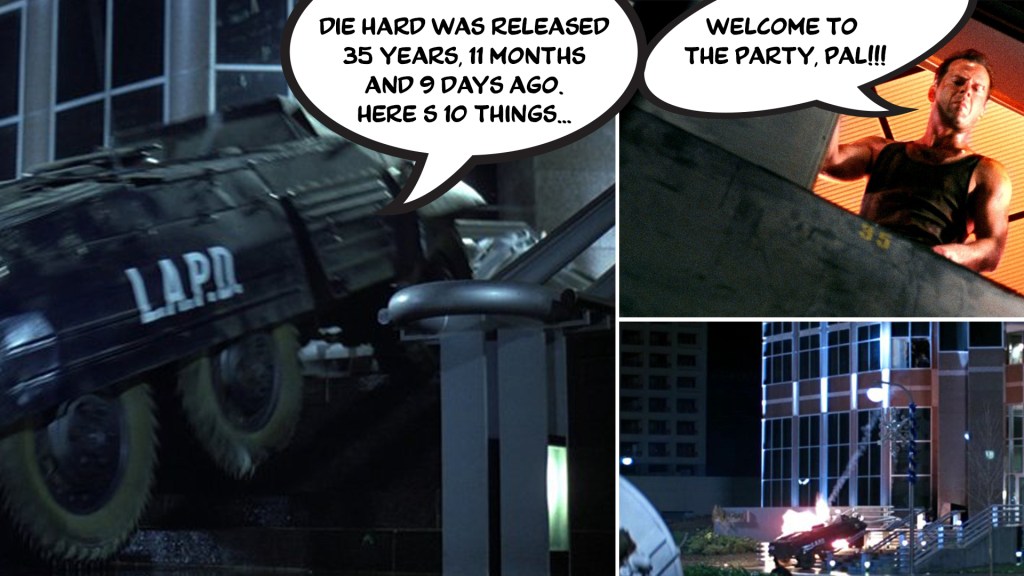
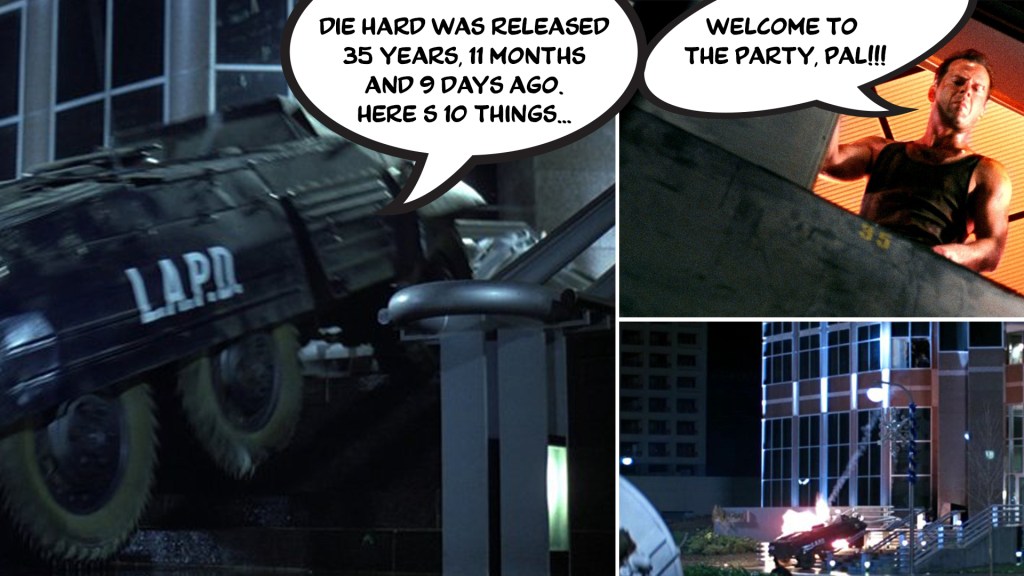
Now, what I find quite funny and annoying in equal measures is the fact some creators have engineered solutions to being inadvertently late to “the party” by manufacturing illusions the party is still going or announcing their own parties only they are allowed to attend. Call them counter-parties. You’ve seen these posts before, now, have you? “[Insert random movie you’d like to talk about] was released exactly [insert a random number of years which isn’t divisible by five]. Here’s seven things you didn’t know about this masterpiece.” Pathetic attempts at farming engagement.
Consequently, we are now ceaselessly inundated by pundits and creators with posts suggesting—nay, conjuring—fleeting faux cultural relevance of whatever they would like to talk about. Granted, these patterns have been additionally bolstered by the fact we tend to embrace memes and equally look for excuses to participate in cultural moments collectively, so you might as well wait until April 26th to watch and/or create content relating to Alien, just as you might time your piece on Star Wars so that it would see the light of day on May 4th. Again, unless you write for The New Yorker or you are a massive online personality yourself, it honestly doesn’t matter and I can guarantee that whatever you create will see more engagement completely randomly later, than it can ever generate on release day. But it may take years for this engagement to compound sufficiently for you to notice.
And that, my Dear Reader, is how I assuage my own cultural anxieties. Hard as it may be at times, especially since everywhere you turn you see other people desperately trying to create culturally relevant moments and generate fleeting clout for themselves, I try to stay focused and write about things I care about because I do what I do for my own amusement. Therefore, if I want to write about Close Encounters or Insomnia, I don’t need to wait for a round anniversary to do so, nor do I have to invent a manufactured reason to convince whoever comes to visit that it is in the best interest of the world to read what I have to say right now and not a second later. At the same time, like a complete hypocrite, I am carrying a piece about The Crow in my cerebrum that I have specifically thought about of pushing out to mark the film’s 30th anniversary. Now, the anniversary has just passed. Does it mean I should bin the idea of writing about a movie I care deeply about? Hell no. Should I chastise myself for not finding enough mental resources to complete it in time for the actual anniversary? Absolutely not. I am fully aware that I’ll see people click on it even years later.
Sure, use the calendar to structure your work. Let an anniversary influence your creativity on occasion. But if you feel like writing about Piranha 2, just write about Piranha 2. At least that’s what I do. Because writing these pseudo-intellectual opinion pieces is supposed to be fun for me and somehow fun goes out the window the minute I try to force myself to write about a topic I wouldn’t otherwise write about just because it is appropriate for me to do so. Somehow, staring at a blank screen with a constipated expression is not how I’d like to spend my evenings.
“The party” doesn’t exist and I’m not going to throw one either, even if for myself alone. I’d rather dance all by myself. Dance like nobody’s watching. Actually, the Internet is an ocean vast enough that it is safe to assume nobody’s watching anyway.




 Flasz On Film
Leave a reply to 2024 in Review: 10 Articles I Wish More People Had Read – Flasz On Film Cancel reply