“Watching John with this machine, it was suddenly so clear. The terminator would never stop. It would never leave him, and it would never hurt him, never shout at him, or get drunk and hit him, or say it was too busy to spend time with him. It would always be there. And it would die to protect him. Of all the would-be fathers who came and went over the years, this thing, this machine was the only one who measured up.”
As Sarah Connor’s voiceover still echoes in my head and slowly extinguishes into silence, I am nixing the idea to write about Terminator 2 as an opus on fatherhood where I could project myself somehow onto young John Connor and look at James Cameron movies the way he looked at Arnie’s T-800. I don’t know if I have enough to go on. What I do know is that I have been carrying this stuff in my chest long enough.
For a second I was toying with the idea of opening with admitting I grew up without a dad. But then, it would have been too dramatic and factually tangential to the truth of the matter. I had a father. Still do, actually. But equally, I never had a dad. The memories of my youth are an ever-so-slowly-fading slideshow punctuated evenly with fights, arguments, rows and not a whole lot of support I know now I most assuredly needed and didn’t know I deserved.
Waking up on a Saturday morning to sounds of a morning argument between my parents was normal. Coming back from school and hearing my father’s screams from afar was not uncommon. On some occasions I would turn around and wait things out, knowing full well that I wouldn’t be able to bypass whatever was coming my way. Maybe I left a tape in the VCR. Maybe I did remember to eject it and put it away where it belonged but failed to rewind it. Maybe I left an empty glass on the table. It honestly didn’t matter.
Movies were my main escape. For me, that machine who was the only one who measured up was cinema. Arnold was always there for me whenever I needed someone to look up to. He turned a whole island nation of Val Verde upside down to save his little kid. Somehow, I could never be sure if my own father would come to save me. And if he did, I’m pretty sure it would have somehow ended up being my fault for getting kidnapped.
Oh, come on. Don’t be this harsh. I’m sure he meant well. He worked hard to put food on the table. Think about all the sacrifices he must have made for you. He didn’t have all the resources available to him that you have access to.
Like what, common sense?
Sure. I work hard too. I put food on the table as well. And yet, some weekends I spend more time with my daughter than he would with me for a whole year. And she doesn’t emerge threatened, fearful or anxious because one false move—even when he was in a good mood—was enough to send him ballistic. He taught me chess; I’ll give him that. Though, I wouldn’t be surprised if my mother told him to do it. To find a way to spend time with me. Though, was it worth all those tears when I couldn’t remember how the knight moved? I was only six or seven. Later, I preferred practicing with other people or losing against the computer. I remember one occasion when I accidentally won. He had someone over, they were talking, and he got distracted. So, he made a mistake and lost. He shouted at me for winning because apparently it was unfair to use my opponent’s mistake to my advantage. I was ten or eleven. I never played chess against him again. In fact, I don’t like chess any more at all.
“We’re all just winging it, you know?” Says Ethan Hawke in Boyhood. My father was winging it too, I can only imagine. I’m winging it myself. I have no other option, honestly.
Why don’t you cut him some slack, then?
Yeah, I used to think that. Even to this day I have been wrestling with this internally and somehow, I feel I’m going through this turmoil all by myself. He doesn’t seem to understand why I don’t call. Sometimes he rings me and starts with accusations. Why don’t I call? Why don’t I stay in touch? He’d like to have a relationship with his granddaughter, the only one he has. Problem is I did tell him. Several times. Yet, I am now convinced that in his head he’s the victim. Because he tried so hard to make sure we had clothes on our backs and food on our plates. Sure. He did. The terror, the gaslighting, the manipulation, they were all free of charge. On the house. He had plenty of time and energy to dish those out daily. Not enough left over to kick a ball. Or to ask me how I was doing. Or what I liked. You know, just to get to know me.
He didn’t need to, though. He had it all mapped out in his head and needed me to put my head down and do as I was told. That one time—and it often comes back to me, either in dreams or sometimes just casually, when I am doing whatever—he shouted me down for admitting that I’d wanted to become a writer. Took me decades to get over it. I tell a lie. I am still getting over it, at the age of thirty-nine.
Never got an apology from my father either. Not a real one. He was a man you apologize to. Not the other way around. And if you somehow got him to say he was sorry, you’d hear a politician’s apology (“I’m sorry you feel that way”), a self-deprecating victim apology (“I’m sorry that I’m trying so hard and sacrifice so much”) or a deflection apology (“I’m sorry but it’s not my fault that…”), followed by an obligatory embrace and admission, on his part, that it’s all over and we should move on. He was frighteningly good at this, come to think of it. Parry this, you filthy casual.
I don’t think I’d ever heard him admit to a mistake without somehow blaming someone else, or otherwise shirking responsibility for his own inability to behave like a civilized human being. Everyone was a shitty driver. Not him, though. Car rides in a box of screams. Because the light turned red and in his mind he would have totally made it if it hadn’t been for that car in front of us that drove slightly below the speed limit. Or maybe it was my mother who distracted him. Or maybe it was me, or my sister. It didn’t matter. It was always someone else’s fault. A litany of curse words would follow, to make the intimidation feel more festive.
You recognize the type by now, I hope. If you don’t, count yourself blessed. I had a frustrated narcissist for a father. A petty tyrant with a knack for being charming and bubbly when he wanted. A man who couldn’t apologize or admit to not knowing something. A man who would start a global conflict over spilt milk. A man who would fly off the handle if the butter you brought back from the shop wasn’t of the right kind. Because it has to be from that one particular place where they don’t cheat, or something. A guy who only drank one specific kind of mineral water and would be very disappointed if you brought him anything else. Still water is for horses. Corn in a salad? What am I, a rabbit? A man who would go on a rampage if someone had the audacity to sit in his armchair, even when he wasn’t home. And he would always find out somehow. A man who always had an opinion and never admitted to not knowing something. When fact-checked, he’d contest that the leather-bound encyclopaedia was most assuredly written by no-good morons with their useless degrees in arts and humanities. Without blinking. You couldn’t win. Try and argue, I dare you. Getting to finish your sentence in my father’s house was a feat of strength.
This is the example I looked at. How do you learn to apologize when you don’t know what it looks like? How am I supposed to know I am making the right moves and decisions if I have never witnessed such moves being made in my direction? How am I supposed to be good enough at this to make sure my own daughter doesn’t leave my house all broken? How do I make sure she wants to call me sometimes when she’s all grown up? Not because she feels it’s her duty to check in on me, but because she wants to talk to her daddy.
“He may have been your father, boy, but he wasn’t your daddy.” Yondu knew what’s what.
On a day like this—every year, without fail—I wonder if I am a father. Or if I am good enough to be a daddy. Because I don’t know. My only frame of reference is negative feedback bolstered by a decade of feeling my way through this in the dark. Supported by my wife without whom I would have given up long ago.
I fail a lot. I don’t know what I’m doing. But I know that what I am doing is for that one person whom I just kissed goodnight. Maybe that’s why I latch onto movie dads like nobody else. Dads who are almost always portrayed as fractured and imperfect men. Deep down I hope to have what it takes to turn Paris upside down if someone put a finger on my little princess. Do I have the chops to turn Val Verde into a communal cemetery? Can I dismantle a terrorist plot at an ice hockey game? Probably not.
But I’m going to be there for that pageant come hell or high water. I get what Channing Tatum’s character goes through when he hears his daughter belt out John Denver in Logan Lucky. I’m there with him when they are fixing the truck together. No screams. She’s not holding the flashlight wrong. Nor does he call her a useless fucking idiot. He goes on to make some really terrible life choices, though. But his heart is in the right place. At least I think it is. Again, I don’t think I have a good enough frame of reference.
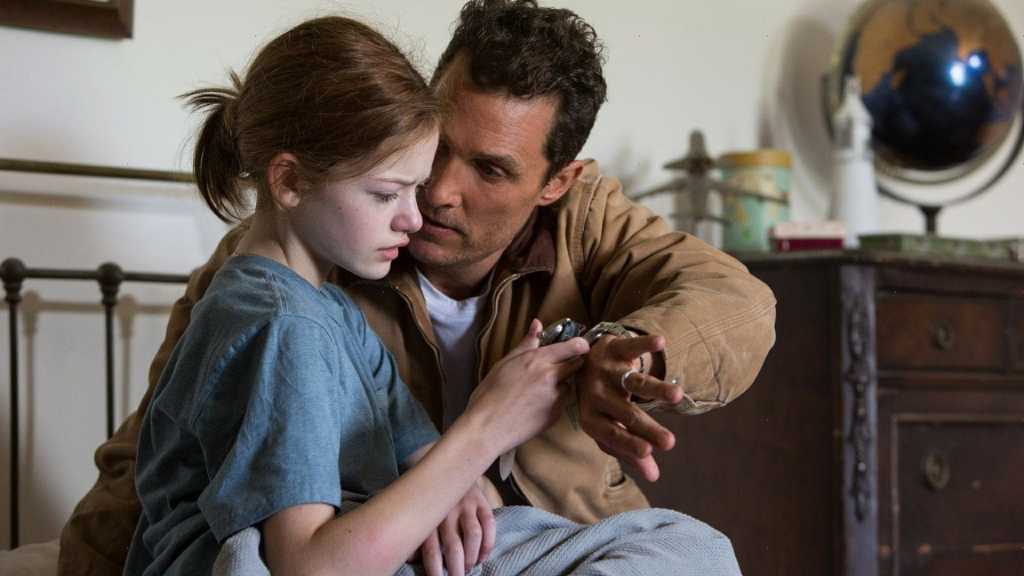
That’s where I am. It’s Father’s Day and I don’t know. I can only cross my fingers and hope I’d be referred to as a daddy when she grows up to be my age. I don’t want to be a father. Fathers make promises. Daddies keep them. And I promised my little girl on the day she was born that I’d do everything in my power to be a good daddy to her. I’d go to the end of the universe and jump into a black hole for her. Like Cooper. With whom I weep every time I watch him watch his princess grow up without him.
“Nobody believed me, but I knew you’d come back.”
“How?”
“Because my daddy promised me.”
I intend to keep my promises. I feel that’s what a daddy should do.



 Flasz On Film
Leave a reply to The 1.4%: Top 7 Pieces out of the 500 I Wrote – Flasz On Film Cancel reply