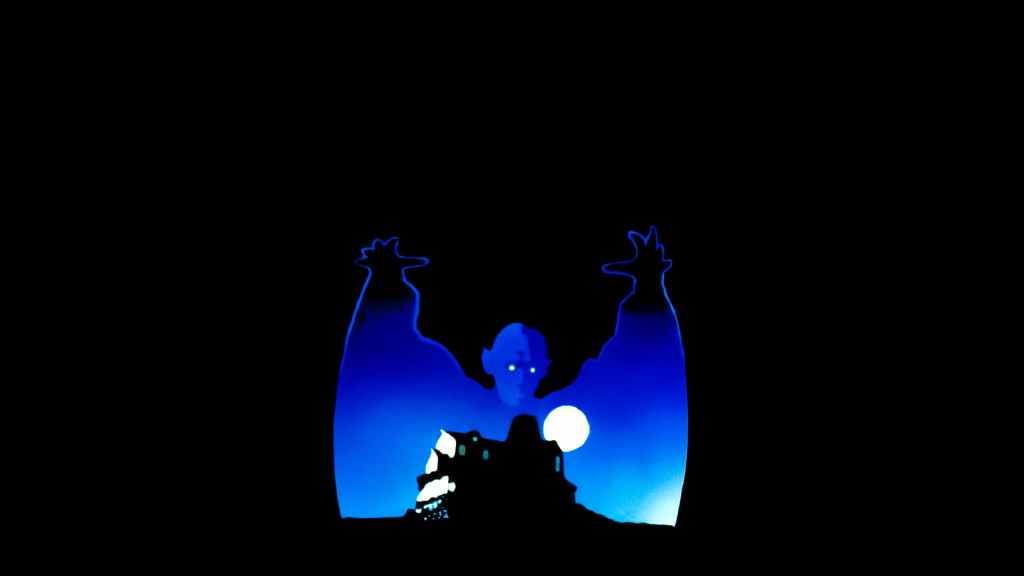
Having flown off into the stratosphere with his remarkable debut Carrie, Stephen King followed it up with a novel he frequently contends is his favourite, the 1975 ‘Salem’s Lot. Not only did it elevate King beyond a one-hit wonder status with its incredibly immersive and visceral storytelling, but also became an important touchpoint for the genre of vampire horror, which saw movies in particular take inspiration from the novel and its seminal adaptation by Tobe Hooper aired on TV in 1979.
It all began with a simple what-if scenario, which is how many of the most iconic King novels commence. What if that bullied girl could movie objects with her mind? Carrie. What if your car was possessed? Christine. What if you could raise people from the dead? Pet Sematary.
In this case, King was teaching students about Dracula, a book he was intimately familiar with already, and wondered what it would be like if Count Dracula travelled to a little town in Maine instead of London. How much different would the Dracula narrative be if it were set in modern-day America (for the time) instead of late nineteenth century England?
Without a shadow of a doubt, this was the catalyst that got King’s juices flowing and sent him on a writing campaign in which he brought to life a cast of incredibly lifelike characters, one of them a writer with whom he most assuredly identified, and fashioned them into a contingent of The Fearless Vampire Killers ready to fight against an ancient blood-sucking demon who settled in what could have been King’s own neighbourhood, a sleepy town in rural Maine.
The novel became an overnight success and showed that King had the chops to operate in a complex landscape of multiple story strands weaving together simultaneously, or that he was more than capable of fleshing out an entire ensemble of complex human characters all interacting with each other and with their environment in an organic manner, indistinguishable from reality. He also showcased his unique ability—one he’d frequently revisit—to have that intricately woven reality populated with lifelike characters invaded by a supernatural force, thus sending the reader onto a journey into the veritable mouth of madness.
At this point I think it is a good idea to take a moment. To pause for a second and appreciate what Stephen King’s ‘Salem’s Lot achieves because, for all the plaudits and critical recognition it has received over the years, this book’s true genius has gone vastly under people’s radars. And you don’t have to look any further than its cinematic adaptations (reduced to practice in 1979 by Tobe Hooper and again in 2004, aimed directly at the TV audience on both occasions) to notice what the novel’s footprint consists of and what went almost completely unnoticed.
Both adaptations of ‘Salem’s Lot take liberties with the text. In fact, it is quite a task to adapt King verbatim, especially a novel of this size, as he indulges in character work in ways that even the more patient televisual format would render unfilmable without completely forgoing the idea of pacing and structure. What these adaptations do, however, is they leave the central conceit—borrowed from Bram Stoker—almost completely intact. They focus on the extremely powerful idea of sketching out a pastoral landscape and then proceed to paint all over it in dark tones, so as to reinforce the notion that King’s idea originated with that reductive what-if scenario of what would happen if an ancient vampire moved to that creepy old house up the hill from where you lived.
Tobe Hooper’s adaptation took a few choice liberties in addition and the miniseries as a whole took the shape of a Hammer Horror-esque venture replete with references to classic horror movies, the most glaring of which was the decision to change Kurt Barlow’s visage into an homage to Nosferatu, as opposed to a play on Bela Lugosi, which is how he was described in the novel. Consequently, the narrative focus of the entire venture was placed on this genre experiment and turned ‘Salem’s Lot into a more overt play on Dracula an average viewer could recognize if they found themselves in front of the TV when the film was being shown. Thus, one of the more interesting aspects of the novel—the idea of a writer Ben Mears coming back to the town he grew up in to face his childhood traumas and investigate the story of the ominous Marsten House looming over the titular Jerusalem’s Lot—got effectively sidelined.
This idea was picked up a bit more decisively in the 2004 re-adaptation of the novel starring Rob Lowe and in fact most of the thematic drive was channelled through there. However, neither of the two attempts at adapting King’s sophomore novel grasped what I believed was the soul of the narrative and instead zeroed in on (1) the idea that Dracula is moving to that scary-looking house in your neighbourhood and (2) that it was somehow woven around Ben Mears’s personal journey towards finding some kind of closure and bury some long-forgotten personal demons. Arguably, it has to be acknowledged that the world at large may have embraced these ideas. But the why of it all got effectively sidelined.
Though I cannot be entirely certain, I think it is reasonable to assume that the 80s vampire horror revival was in no small part influenced by the success of King’s novel, even if its 1979 adaptation left something to be desired. For all intents and purposes, vampires moved next door in many other narratives popping up in the entertainment space, with movies like Fright Night or The Hunger (an early directorial effort by one Tony Scott) functioning as prominent examples. ‘Salem’s Lot also saw its own ill-fated continuation with A Return to Salem’s Lot. In fact, the concept of bringing gothic horror icons into a modern-day setting got broadened (think of The Howling or An American Werewolf in London) and you may be reasonably excused for identifying the wave of bringing horror next door (The Exorcist, Rosemary’s Baby, Halloween and King’s early work too) as partially responsible for this effect.
Moreover, as the 80s rolled on the canonical vampire horror was infused with societally-relevant anxieties of the time. You don’t have to look very far to find examples of how The Lost Boys or Near Dark equated vampirism with the raging drug addiction epidemic (the 1995 Abel Ferrara’s The Addiction adds immensely to this theme by the way), or how Lifeforce tapped into renewed awareness of just how easy it would be for any extra-terrestrial threat to penetrate our earthly defences and sow destruction. Think of Vamp which leaned into conservative anxieties of the do-you-know-where-your-child-is-at-10pm variety or how Once Bitten espoused similar fears relating to the idea of sexual initiation. In fact, Vamp gets there too.
This isn’t new, by the way, and only harks back to the genre progenitor, Bram Stoker’s Dracula, which is often seen as just a stencil for a cast of characters like Professor Van Helsing, Jonathan, Mina, Lucy, Renfield and, naturally, the Count himself. At the same time, this piece of incredible epistolary fiction was in its own way an expression of fin du siècle anxieties and perhaps a reaction to the nascent of the Industrial Revolution, or even The Enlightenment itself. After all, it was at its very heart a story about people coming to terms with the fact that logic and science stood no chance against a foe of supernatural provenance. They had to put away their rational thinking or trust in the fundamental laws of observable reality and instead root their fight against an ancient demon in rank superstition.
However, none of these observations—as far as I could tell—even brush against what I think is the real engine of ‘Salem’s Lot. Between the onslaught of 80s vampire movies, the renaissance of gothic horror and even the many adaptations and tangential works to King’s sophomore piece there is very little conversation about what Salem’s Lot hides underneath the epidermis of its genre affiliations. There is a reason why King continually claims it is his favourite novel and he even spells out himself that it is because ”[…]of what it says about small towns. They are kind of a dying organism right now.” In the what-if scenario of what if Count Dracula moved into your small town, the key ingredient isn’t the vampire, but subversively enough, it is the titular town of Jerusalem’s Lot.
King paints on wide canvas here and spends incredible amounts of time sketching out characters that are almost completely inconsequential to the narrative. It’s not needed for anyone to learn anything about the Glick brothers, both of whom meet their end early on in the book. It is probably superfluous to the main thrust of the plot to spend time with Susan and to understand her family dynamics, just as it is a de facto distraction to indulge in the drama within the four walls of the McDougall trailer. After all, there’s a vampire out there and where the story means to go is to convert Ben, Father Callahan, Susan, Mark Petrie, Jimmy Cody and Matt Burke into the Fearless Vampire Slayers. This is where the genre inertia wants us to look because it is where the overlap between ‘Salem’s Lot and Dracula seems the strongest.
But Stephen King is not Bram Stoker and although he draws immense inspiration from his work, in addition to a slew of movie adaptations he most assuredly grew up watching, his attention is elsewhere. He’s interested in what drives Ben Mears—you can always trust to find a kernel of the author’s interest in what the writer character symbolizes or does, because it is the one they are most likely to care about the most—which is understanding the evil looming over the town. He moves back there to come to terms with his trauma and to perhaps investigate if there is something more primal and ancient lurking in the town itself.
And it is.
Between exhilarating scenes of dead coming back to life, Barlow and his familiar Straker slowly but surely draining the townsfolk of their lifeforce and snippets of great genre awareness from the author, ‘Salem’s Lot presents itself as a story about a town already infested with evil and only additionally invaded by a foreign agent of chaos and destruction. People King describes are frighteningly real. They look like people you might know or know of. And at the same time, he reminds us that these very people—the soul of the town—can be despicable too. They cheat. They abuse. They hurt each other. There is a scene in this book in which a defenceless baby is beaten by its mother. There are allusions of brutal rape and marital abuse happening behind closed doors. There’s a priest who loses faith in God—like Father Karras in The Exorcist, no less. You can probably get a good idea of the kind of a conservative dad Susan’s father is or how fractured her relationship with her mother might be. It’s all there… in the background… while we are all busy looking at vampires taking over the town and as we keep our fingers crossed for Ben and his Fearless Vampire Killers to defeat Kurt Barlow and his vampiric acolytes.
This, in my opinion, is what makes ‘Salem’s Lot an intriguing, dare I say special, novel. It is because it is a piece of pastoral storytelling depicting an edifice of small-town serenity hiding an evil that we all know lurks behind closed doors, within bar conversations, in little looks of jealousy and conniving plans of little people populating those equally little townships. Even the insidious history of the Marsten House—alluded to have been connected to some truly heinous crimes—eventually moves into the background because King’s evil is one you can touch. The reason he is so damn great at sending shivers down your spine has a lot to do with his ability to bring you up close to grim stuff you can recognize. You may not know what it’s like to live next door to a house where a murderer lived. Hell, it’s downright impossible to know what it feels like to have a vampire move in across the hall. But King knows you know what it feels like to know that your next-door neighbour abuses his wife every time he comes back home drunk, or to know that the girl from your high school you all used to laugh at hanged herself eventually, probably as a result of being a social outcast. Or that those freshly healed bruises you notice on the face of your son’s best friend are not there because he fell down some stairs, like he says he did in a learned automaton-like manner.
Yet somehow, none of the adaptations seem to get it right. They get the vampires moving next door. They get the Bram Stoker connection. But the horror next door seems too much for them to handle and–knowingly or otherwise–they skim right over it. Which I find both oddly terrifying and wildly disappointing. Thus, the spirit of ‘Salem’s Lot remains elusive. Maybe the upcoming remake will set the record straight.


 Flasz On Film
Leave a comment