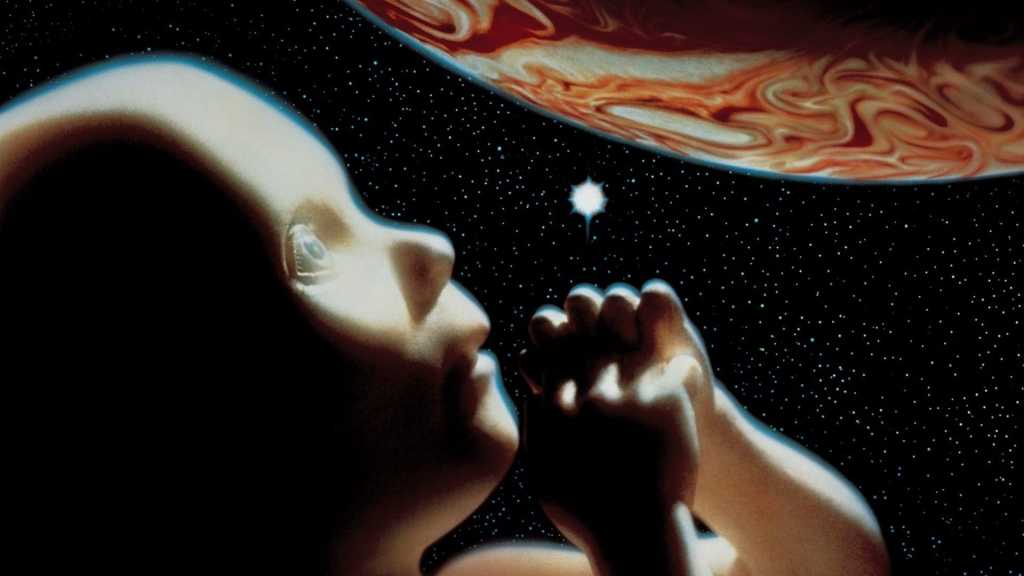
In the eyes of many cinephiles, 2001: A Space Odyssey stands as an untouchable masterpiece. Directed by Stanley Kubrick and adapted from a concoction of short stories written by Arthur C. Clarke, who simultaneously worked on a novelization of the film, it is a singular piece of science fiction that both pushed the boundaries of the medium and became a bottomless well of thought-provoking conversations about our place in the universe, the origin of organic life, the nature of consciousness, the limits of humanity and more.
All these heady subjects were packed into a neat vehicle reliant on minimal exposition and committed to purely visual storytelling in most places as it took the viewer on a voyage both to the end of space and to the limits of their rational comprehension, which arguably is a lot to inject into an otherwise mainstream piece of filmmaking intended for mass audiences. Therefore, it shouldn’t be surprising that some viewers may find Kubrick’s masterpiece impenetrable.
Granted, because the film carries the gravitas of “one of the most important movies ever made” it may be difficult to admit, but even though I think I get a lot out of the film, I can honestly say it requires the viewer to do a lot of the heavy lifting. 2001: A Space Odyssey is an experience you don’t just subject yourself to willy-nilly. It’s a movie that requires some mental preparation and post-processing as well. Which isn’t necessarily what some viewers are simply prepared to do. In many ways, Kubrick’s film is designed for a critically minded viewer, someone who walks into the cinema expecting to have an intellectual experience, as opposed to simply seeking escapism. Don’t get me wrong: even if you switch off your mental processing powers completely and watch the movie passively, 2001: A Space Odyssey remains a spectacle full of wonder and a pinnacle of achievement in the field of “movie magic.” But it smuggles so much more under the epidermis of superficial spectacle than meets the eye and the implicit assumption is that the viewer can and will do the necessary legwork to appreciate the film in full.
I don’t think I’m alone in thinking that 2001: A Space Odyssey may be a bit much, though at the same time I don’t know how many viewers—even those who see themselves as film fans—would ever admit to being lost or having to resort to detailed video essay explanations found on YouTube to get the hang of what Kubrick and Clarke wanted to convey in their movie. If you watch the film and emerge scratching your head thinking what this Monolith actually is, how these extended vignettes are connected to each other and how it all relates to those cerebral concepts people “skilled in the art of film criticism” seem to be throwing around with glee, you’re not alone.
However, instead of heading to ask Doctor Google for advice or looking for answers in video essays laden with ads, there is a better way to decode aspects of 2001: A Space Odyssey. It involves sitting down to watch the 1984 follow-up to this film directed, written and lensed by one Peter Hyams, 2010: The Year We Make Contact.
This little-known film came about in the aftermath of Arthur C. Clarke penning a literary sequel to 2001, titled 2001: Odyssey Two. And apparently the story goes that he jokingly told Stanley Kubrick during a phone conversation it was his (Kubrick’s) job to stop anyone from making it into a movie, so he wouldn’t be bothered. Well, that’s not exactly how life works, and MGM quickly smelled an opportunity there and commissioned an adaptation. Which is where Peter Hyams came on board. Long story short, Hyams and Clarke corresponded for a while using the then brand-new medium of e-mail and a movie came together. It starred Roy Scheider, Helen Mirren, John Lightgow and Bob Balaban and became a mild success. Big enough to ensure Peter Hyams would still have a career afterwards but mild enough to be almost instantly forgotten by the mainstream audiences at large.
Now, there are many conversations that could be spun from simply looking at what 2010 is about and how it fits into the grand landscape of the science-fiction genre evolving through time. I find it personally fascinating that so many movies—indirectly or otherwise—pay it due homage either on an aesthetic, thematic or narrative levels. You don’t have to reach very far to see how James Cameron’s The Abyss reflects the basic concepts of the Hyams’ movie and dabbles in the Cold War-related anxieties in a strikingly symmetrical manner. Equally, it is blatantly obvious how Paul W.S. Anderson’s criminally underrated Event Horizon and James Gray’s Ad Astra reference this movie in more ways than one. Sure, they all reach back to Kubrick’s audacious original, but it is quite simply undeniable that the narrative framework, thematic headspace and the aesthetic palette of 2010 continue to reverberate in other people’s movies too.
However, what I personally find the most intriguing about 2010 and its alleged raison d’etre lies in its relationship with Stanley Kubrick’s film. Now, Hyams himself first sought approval personally from Kubrick before he even signed on to direct it, which only serves to underscore how important it must have been to him to either do it right or not do it at all. Therefore, the man knew what he was embarking on. Or maybe he didn’t. After all, how is one to follow up one of the greatest movies ever made? You can’t just accost a studio executive in the lift and pitch him with Citizen Kane 2 or Vertigo 2 without potentially endangering the legacy of what you’re about to meddle with. Equally, it is both certifiably insane and professionally unsavoury to reach back into the 1968 masterpiece, re-heat its most potent and visually arresting ideas and graffiti over them with one’s own stylistic ideas, quirks and half-baked narrative concepts.
What Hyams and Clarke have done is in my opinion both incredibly respectful and quite simply ingenious because they never tried to recapture the magic of the original film in the most outright sense. For this you can always watch 2001 and be done with it. Instead, they concocted a narrative that takes stock of Kubrick’s work largely reliant on visual storytelling and decided to add colour in negative spaces with subtlety and care. They added context the original movie dispensed with completely.
Metaphorically speaking, the journey of Heywood Floyd and his team of scientists onboard a Soviet spaceship to investigate the abandoned Discovery One casually orbiting Jupiter is a trip to investigate 2001: A Space Odyssey itself. Where you, the viewer, are Heywood Floyd—a blink-and-you-miss-him character in the 1968 original—and Discovery One is Kubrick’s movie. Left to its own devices and kept at arm’s length. Orbiting in space. Minding its business.
Consequently, what the characters engage with isn’t so much trampling over the legacy of Kubrick’s outstanding achievements in set design, special effects and resplendent visual storytelling, but it is rather a piece of detective work aimed at giving viewers who may be familiar with 2001: A Space Odyssey some answers to the many questions Kubrick has left completely unanswered. Interestingly, they mostly refrain from spelling things out either and place enough trust in the viewer’s intelligence to connect the dots while also making it too obvious to miss. They’re pulling a Nolan in Interstellar… which arguably also owes a lot to Hyams in its own particular way.
Therefore, when Roy Scheider, Bob Balaban and John Lightgow enter Discovery One and inspect the sets you have no other choice but to immediately recognize, they’re not desecrating a church, but they’re attempting to help you contextualize elements of the film that may have gone right over your head. They power up HAL 9000, the AI that “went rogue” in the original film and find out what its reasons were for doing what it did. They demystify some of the key scenes where some viewers were bound to ask questions and wonder what was happening. They give us a clear idea what the Monolith is without necessarily launching on a pompous tirade.
Thus, the narrative of the film itself makes 2010 function as a de facto companion piece—a decoding crib sheet of sorts—to 2001: A Space Odyssey that doesn’t detract from the original movie. It doesn’t pauperize its status. In fact, it doesn’t even have to be watched because some more astute and critically primed viewers are more than happy to decode 2001: A Space Odyssey on their own terms. But it is nevertheless there and it’s yours to use as a crutch, should you wish to do so.
Hence, if you’re wondering what the space iPhone was all about and what those men in ape costumes were all angry about, Hyams and Clarke are there to assist you and hold your hand as you figure out yourself that the Monolith is a chaperon to organic life left behind by a civilization much more powerful than ours, perhaps one that mastered using time in ways we use the three-dimensional space, like those aliens from Arrival. This movie is here to help you understand the nuance underpinning the conversation about artificial intelligence Kubrick was illuminating in his film. They’re here to help you contextualize the entire final act of 2001 and maybe at least partially understand why Keir Dullea was wearing an old-man make-up and what it meant in the grand scheme of things. And they also happened to weave it around a historically relevant (and pertinent at the time) concept of civilizational annihilation the humanity needs to stave off if it is ever to pass “the great filter” and escape its home planet.
And they’re doing all this handholding while delivering a bona fide spectacle with its own identity and personality. 2010: The Year We Make Contact is therefore a truly underappreciated gem of Hollywood cinema—perhaps one of the first legacy sequels ever—that adds context to one of the greatest movies of all time, thus elevating its accessibility. What is more, Hyams ensures the movie can stand on its own within science-fiction ranks as anyone who chooses to give it a shot now will see how much Sunshine, Event Horizon, Ad Astra, Interstellar or The Abyss owe to it in addition to the Kubrick masterpiece.

 Flasz On Film
Leave a comment