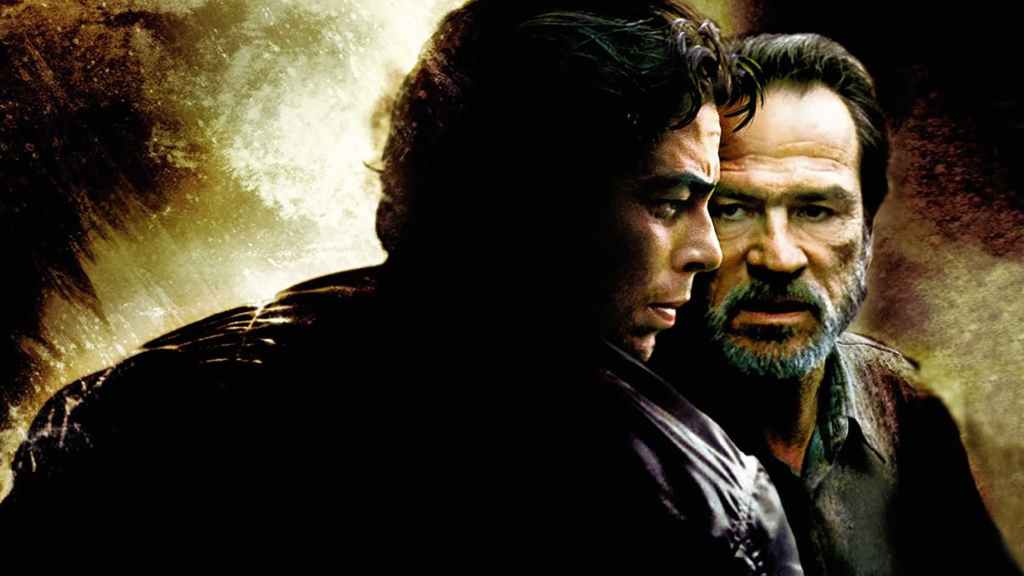
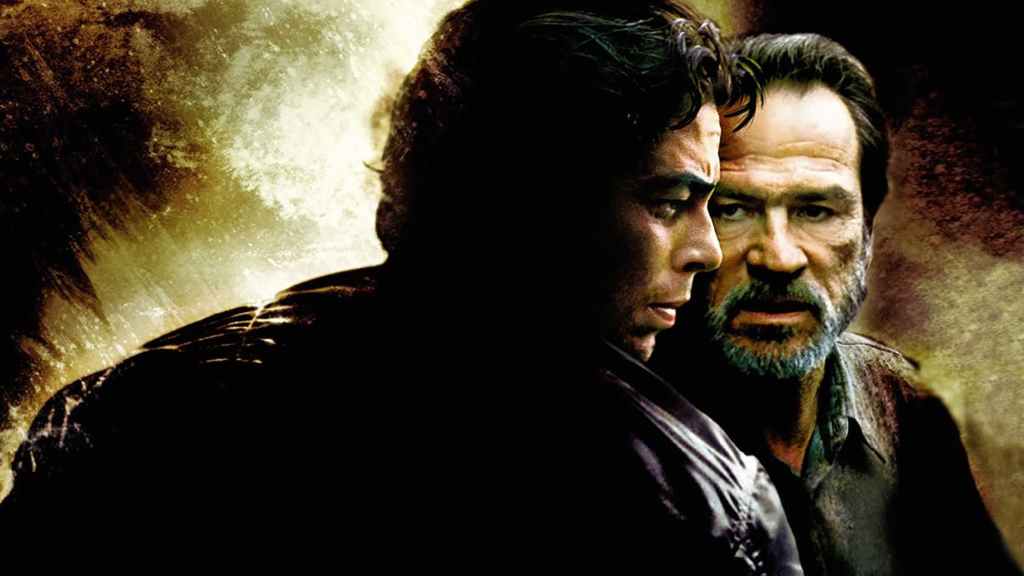
William Friedkin’s transition from the small screen and the documentary scene, which resulted in the world bearing witness to The French Connection and The Exorcist (and later Sorcerer, which took a few decades to cultivate its well-deserved appreciation, too), left a mark on Hollywood. Together with guys like Arthur Penn, John G. Avildsen and later the Movie Brats, Friedkin helped to reshape the landscape of how movies were made because of his seemingly simple – yet difficult to grasp – philosophy, which stated that if you wanted to make great movies, you had to grab the camera, go outside, do great things and film them.
Friedkin’s car chases were iconic. The bridge scene in Sorcerer is one of a kind, too. There is a good reason why The Exorcist is as terrifying as it is and a good chunk of it had to do with Friedkin’s uncompromising style and a downright reckless approach to filmmaking. He made movies you could smell, that’s how tactile and organic they were. And naturally, his work inspired many other filmmakers to do their work and pushed the needle in Hollywood towards more elaborate stunt-based spectacle filmmaking, while Friedkin moved on to do other things. He got to direct Nick Nolte in a sports drama Blue Chips (which is amazing, by the way, and you should watch it if you haven’t already); he made an erotic thriller Jade with David Caruso in 1995, and later Rules of Engagement with Samuel L. Jackson. He was clearly interested in pursuing other avenues and looking holistically at his filmography, Friedkin seemed to gravitate towards completely different directorial challenges as he got older. In fact, his last movies (Killer Joe and The Caine Mutiny Court-Martial) were essentially chamber dramas, almost completely devoid of the kind of rogue spirit permeating Friedkin’s early work.
Which makes his choice to direct The Hunted at least a little bit intriguing. The script to this movie, written by David Griffiths, Peter Griffiths and Art Monterastelli, was considered a hot commodity in the early 2000s, though it only got the green light from Paramount the minute William Friedkin decided to direct it. And at this point I am asking, why. What did he see in a modern-day reimagining of First Blood?
Now, I don’t have any exact data on the matter so you have to squint a little bit to bear with me, but I feel that Friedkin jumping on to direct this movie must have happened around 2000-2001, most likely before the 9/11 attacks, and I am basing this assumption on the simple fact that the character of Aaron Hallam (played in the film by Benicio del Toro) is positioned as a special forces operative who’s gone completely doolally after his deployment in the Balkan theatre, most likely Kosovo. In the immediate aftermath of 9/11, this movie would have been either severely pushed back or changed to reflect the new reality where the US was at war in Afghanistan and gearing up to invade Iraq. In fact, The Hunted was released just a few days ahead of George W. Bush issuing Saddam Hussein an ultimatum and deploying US troops to topple the Iraqi regime. I can only assume the movie had already been shot by then and probably had it not been so, we wouldn’t have seen it until much later, if at all.
After all, it saw the light of day at a time when its target audience – men aged between twenty-five and forty – was on average more likely to rally around the flag in support of the War on Terror, rather than enjoy a movie which was openly critical of the American foreign policy and which was re-heating the continually valid accusations that First Blood levelled at its society and leadership in the aftermath of The Vietnam War. That America, which was happy enough to train her men to become effective killing machines and to deploy them in war to do her bidding, was equally happy to cast them aside once they came back and to pretend they never existed while they struggled to reintegrate.
Therefore, in a way it is a miracle The Hunted exists in the first place, because it honestly belongs in the 90s as a wonky bridge connecting the legacies of The Fugitive and First Blood. Though, it couldn’t have been released at that time because it would have looked almost too similar to U.S. Marshals. And as I outlined just a second ago, the movie would have to be severely rewritten to accommodate the post-9/11 mores if it were to be shelved temporarily to become a part of the post-Iraq commentary together with The Hurt Locker or Green Zone.
But The Hunted exists nonetheless and the reason why it is intriguing is two-fold, though somehow coalescing into the same conversation: it has to do with the timing of its release against the backdrop of other movies coming out at the time, and the fact Friedkin chose to direct it while his directorial interests were pointing him elsewhere.
I believe William Friedkin saw in this movie an opportunity to do what many filmmakers tend to do when they hit the precipice of what the German language describes as their Lebensabend, the twilight of their careers, which is to prove to themselves and to the world around them that they still have it. A solid example of just that philosophy plucked from the very recent memory would include David Fincher’s The Killer in which he is clearly attempting to recapture the style and tone of movies he made when he was young and full of vigour; and I believe The Hunted fulfils this desire for Friedkin.
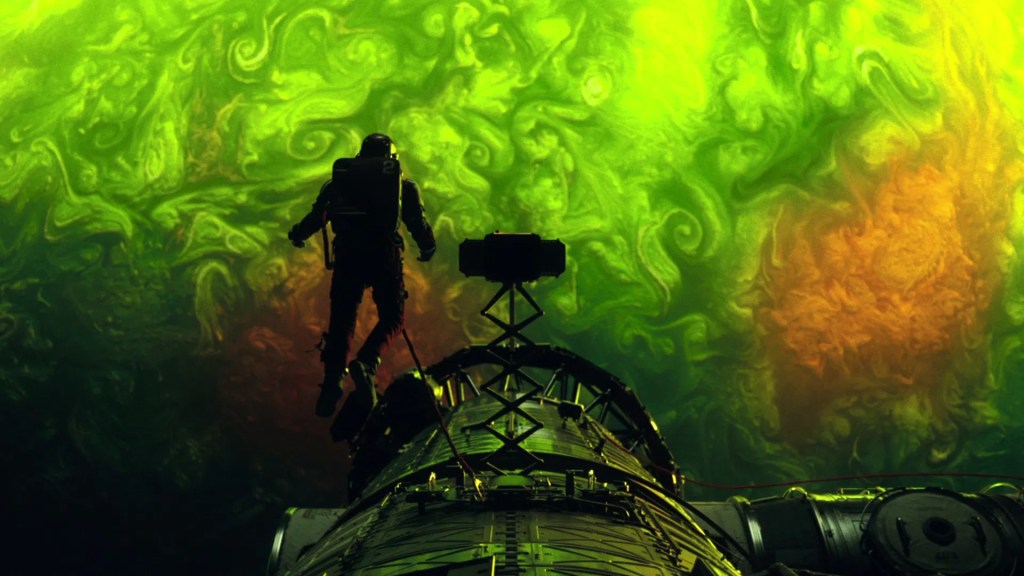
However, it may be possible that Friedkin jumped on this opportunity to go back out there and do cool things and film them because he felt that the medium he helped to shape had moved away from the philosophy he personally espoused. 1999 saw the release of The Matrix, an action movie like no other, but stylistically oceans apart from the kind of action Friedkin would film in The French Connection or Sorcerer. It was all choreographed, stylized, heightened and … divorced from the kind of reality Friedkin could recognize. The Phantom Menace made a killing with its green-screen spectacle, notwithstanding the upheaval surrounding the character of Jar Jar Binks (or that he might or might not have been a Sith Lord all along). The Lord of the Rings trilogy was taking swathes of fans onto dreamy trips into faraway universes. Spider-Man and X-Men were laying foundations for what was to become the era of comic book movies in few short years. Transformers were already lurking around the corner.
The world had long moved on from the kind of tactile organic filmmaking Friedkin recognized and maybe The Hunted, a movie set in real-life environs and reliant on localized set-piece driven spectacle that is small in scale but still high in octanes, was his way of checking if audiences could still appreciate the type of action filmmaking where real cars had to be crashed for real, real actors and stuntmen had to be squibbed and if you wanted to shoot a scene in a forest, you’d have to go into a real forest to do it. Want a movie on a green screen? I’ll give you a green screen. A natural one. Organic and grass-fed. That’s what I think Friedkin must have been thinking while gearing up to direct this movie after it had fallen into his lap.
In a way, I also believe he must have seen himself a little bit in the character of L.T. Bonham, played by Tommy Lee Jones, who by the way was inspired by a real-life outdoorsman Tom Brown Jr. (who also – again, by the way – advised on the film) who once was tasked with tracking down his former pupil, an ex-Special Forces sergeant who had gone rogue… just like Aaron Hallam. Bonham’s character is a man of nature. He’s at home surrounded by shrubbery. He feels kinship with wildlife. He’s suspicious of technology and feels uncomfortable indoors.
Is it too much of a stretch to see this as an evocation of Friedkin’s unease at the state of the box office? What do you think he felt when watching The Phantom Menace or Spider-Man? L.T. Bonham in an indoor setting – frazzled and completely incapable of finding a safe space to exist in – is what Friedkin must have felt like at the cinema at the turn of the century. He could barely recognize the world around him and, more importantly, he wished he had been elsewhere. In the woods. Outside. Holding a camera while a stuntman was busy driving a truck across a flimsy-looking bridge.
Therefore, The Hunted can be viewed metaphorically as Friedkin’s autobiographical account of squaring off against what he must have realized was his own legacy. Because those filmmakers who have now embraced the green screen and CGI-laden spectacles probably grew up watching Friedkin’s movies and the movies of Friedkin’s peers. The Hunted was Friedkin taking it personally and seeing if he – an old wolf – could put those young whippersnappers in their place… and immediately finding out that his decades of experience were easily matched by the younglings’ stubbornness, youthful determination, and energy levels.
This movie is a showdown. Old versus new. Teacher versus pupil. Practical effects vs CGI. Tactile, rogue take-the-camera-to-the-woods filmmaking vs film-it-on-the-green-screen-act-against-air-and-fix-it-in-post philosophy. And you can see, just as Tommy Lee Jones’ Bonham, Friedkin still has it. His action set pieces continue to have the oomph and energy a fan of his early movies would recognize and cherish. He may run out of breath easily, but he can still deliver. Bonham is an old teacher and still jumps out of a window with enough pizazz to keep Hallam on his toes. He is still a threat to him, and – in the final confrontation – he can still deliver lethal force. But… at a cost.
That climactic knife fight between the teacher and the pupil is both a perfect encapsulation of Friedkin’s eternally fresh acumen for organic action filmmaking and the realization it may have been his last rodeo. Bonham comes away victorious from the showdown but suffers terribly for it. Slashed, punctured and stabbed, he survives barely, by the skin of his teeth. He proves that experience eventually outmanoeuvres youthfulness but in doing so he renders himself completely incapacitated and unable to come back to the fray once more. If another Hallam surfaced in the woods, there wouldn’t be The Hunted 2. Bonham would have chosen to stay in his element knowing full well that this next encounter would likely be a kiss of death. Or maybe he would do it anyway, who knows? Maybe Bonham’s machismo and a sense of duty would prevail, and he’d come out seeking a new adventure despite knowing it would definitely be his last…
Problem is that audiences didn’t turn out for Friedkin’s tactile action on an organic green screen. They chose CGI and Spandex. Thus, The Hunted stands as both an achievement and an admission that times had changed. And that Friedkin was no longer a part of the zeitgeist. Viewers wanted different things and this movie proved it to Friedkin. People who cared about the kind of movies he was good at making had all grown up and were too busy grinding at the millstone to go to the movies. The baton had been passed and youngsters scoffed at the kind of stunt work The Hunted had on offer. It was all too small, too local.
But the old wolf still had it then. Billy “The Hurricane” Friedkin made his own take on First Blood work. It is an honestly solid film and perhaps one of the last of its kind because nowadays, movies like The Hunted go straight to streaming. They are rarely seen in cinemas and only show up when nothing more attractive is available. It’s a dad movie through-and-through and it only goes to show once more – because the same lessons can be drawn from pitting The Equalizer against John Wick – that what was once primary entertainment becomes the stuff of dad entertainment within the span of two decades.
In the immortal words of Abe Simpson: “I used to be with it, but then they changed what it was. Now what I’m with isn’t it, and what’s it seems weird and scary to me. It’ll happen to you.”
I strongly believe that 2003 was the year when William Friedkin realized he had a lot in common with Abe. But he made a killer movie while figuring it out.



 Flasz On Film
Leave a reply to Uncut Gems Podcast (April 2024 Round-up) – Flasz On Film Cancel reply