Over ten years ago at this point, Steven Spielberg and George Lucas both participated in an event where they were asked, among other things, about the future of Hollywood. Spielberg audaciously opined, and Lucas agreed, that there would come a day when the paradigm would shift as a result of a string of three, four or even up to six massive blockbusters all failing at the box office in close succession.
Naturally, the press ran with these comments and spun them into sensationalizing headlines suggesting that Spielberg was a Cassandra spelling the end of Hollywood; which wasn’t exactly what he said. But he wasn’t wrong either. What Spielberg meant – and he clarified his statements on many occasions (especially because he keeps being asked about it a decade later) – was that what he saw as the current model of big studio betting exclusively on massive tentpole blockbusters at the expense of literally dismissing smaller productions with awards appeal came with incredible risks to the studios themselves. What is more, he lamented the simple fact that his Lincoln nearly landed on HBO instead of in cinemas. Little did he know that what he saw as early signs of a potential disaster waiting to happen would only become exacerbated over time. After all, if Lincoln was released today, it would go straight to Apple or Netflix, without anyone even thinking about bothering any of the big studios for money. Because big studios went from disliking risk all the way to avoiding it altogether.
Therefore, it should come as no surprise to anyone remotely interested in the movie industry that Hollywood studios have become ever more hesitant to greenlighting (a) projects that carry a substantial risk of failure and (b) projects that do not immediately promise an entire industry of movies and TV shows tied into a cinematic universe that could become as self-sustaining and profitable as Star Wars or the MCU… even though it is hard to think of any other example which comes anywhere near these two in terms of success.
In 2009, in the wake of the massive financial crisis that brought about a massive global recession, we thought we were living in the age of sequels and prequels then.
Look around now.
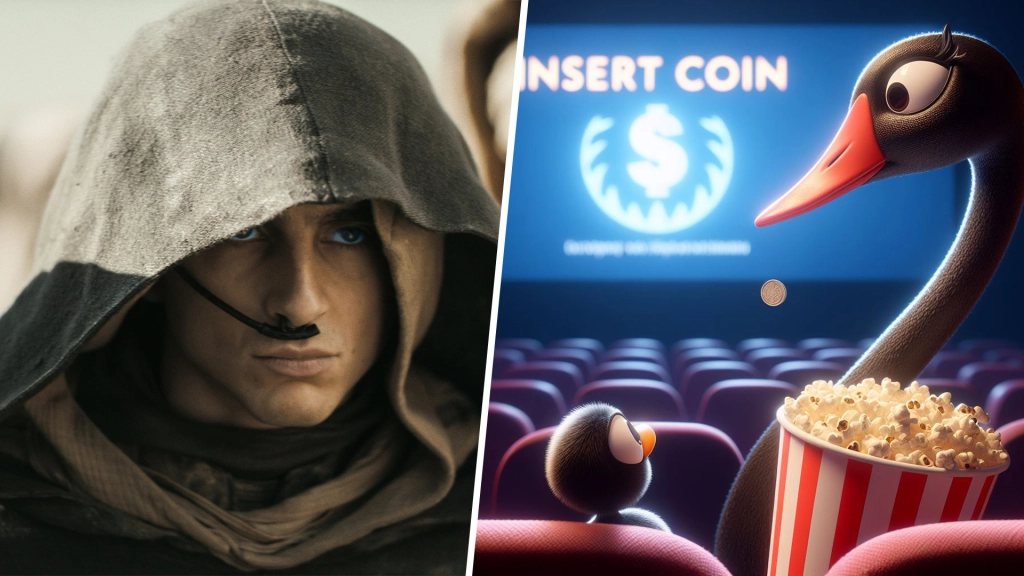
We now live in a world where a massive blockbuster that currently sits as the most financially successful movie of the year, and which also ends on a cliffhanger, has yet to receive an official go-ahead from the powers that be to follow-up with a sequel. Even though Denis Villenueve has almost finished writing his adaptation of Dune Messiah, the fate of Dune: Part Two remains unclear. And in fact, this is almost exactly what happened at the time Dune: Part One was released. Not only did the studio forget to mention the movie was officially titled Dune: Part One instead of Dune, as written on the poster, they held back from announcing a sequel would be greenlit until they saw enough money trickle into the studio coffers. And it didn’t matter the movie had “Part One” in the title, which – last time I checked – blatantly suggests it is a part of something that is as of yet unfinished.
Twenty years ago, especially in the aftermath of the stunning cultural success of Peter Jackson’s The Lord of the Rings, it would have been a no-brainer to give Villenueve whatever he needs to make Dune into a trilogy by adapting at least two of the many Frank Herbert’s novels based on what Dune: Part One looked like and how it was generally received by audiences worldwide. And it wouldn’t have mattered that the lore becomes progressively more esoteric and outlandish as the series unfolds. In fact, Dune would have been proactively greenlit as a trilogy in the first place, especially after Jackson blazed that trail… the same trail he then re-blazed once more in the post-Recession landscape where he turned The Hobbit, a tiny junior novel, into a trilogy, each instalment of which grossed a billion dollars at the box office.
But we seem to no longer live in this world. Quite frankly, if Peter Jackson were to make The Lord of the Rings today, he would either have had to go straight to Amazon and turn it into a series, or his movies would have ended up released like Dune in a manner seemingly inspired by the way many triple-A video games are typically released. Even though everyone knows a trilogy is planned, only one of the chapters will be produced and the following additions will be greenlit and bankrolled only if enough people have paid in pre-order equivalents, thus removing or significantly reducing the financial risk of putting up large amounts of money upfront for a production that may or may not produce a revenue. If viewers have already partially pre-paid for it, it makes the studio less hesitant because they seem to be fully aware of the possibility that only a handful of large enough failures is what separates them from losing trust of their Wall Street backers and finding themselves bankrupt and unemployed. And a massive billion-dollar trilogy flop would bring them dangerously close to the brink.
It is almost as though Steven Spielberg was correct in his assessment of the state of play in the movie industry in 2013. Even though he wasn’t necessarily intending to kick the hornets’ nest and all he was doing was both channeling his apparent frustration at the struggle involved in getting a mid-budget biopic over the line (which, in agreement with what he predicted, has become an impossibility without the backing of streamers) and cautiously opining over the dangers involved in backing progressively more expensive tentpoles, while outlining those risks.
Now, I don’t know if the powers that be had their ears to the ground, or if they simply made similar observations, but they clearly drew different conclusions. In order to decrease the risk of random black swan events potentially posing an existential threat to their entire business model, they opted to ditch small-to-medium budget movies with large ROI potential (10-20x budget) but likely to generate a loss, and instead placed all their money in large-budget tentpoles unlikely to make a loss but capable of maybe of generating revenue on the order of 2-3x of their production costs. Low-stakes gambling. If all you do is bet on red, the odds are always 50/50. Therefore, it is easier to bet larger sums. If you lose, you need to double your money and bet again on red because probabilities compound. All you need to have is enough money to bet with because the probability of the ball not falling into a red slot five times in a row is extremely small. Though, it’s not zero… which is what Spielberg suggested without necessarily invoking mathematics.
Also, don’t try this at home because this (a) assumes the casino does not mess with the probabilities of stuff happening and (b) casino owners are well aware of this, and you might end up punched in the face and thrown out the back door. With your pockets emptied beforehand.
Nevertheless, the example of Denis Villenueve’s Dune sequels and how they are being greenlit and rolled out with an extra layer of caution suggests that WB might be unwilling to take any risk at all here. These movies are incredibly expensive to make, and the studio cannot afford to make gargantuan losses anymore, it would seem. It makes me wonder whether this is still the ripple effect of how much of a financial failure Tenet ended up being with its iterative marketing pushes, a bloated budget to begin with and a curtailed release, courtesy of the COVID pandemic. Or maybe it is a conglomeration of factors including a handful of serious flops of WB’s DCEU tentpoles, Tenet and the accrued risk-averseness on behalf of the people in charge, who know exactly what it feels like to be slapped in the face, so they flinch prematurely before the slap lands on their cheeks.
It just goes to show that Dune, the titling debacle surrounding the release of Part One and the outright refusal to commit to officially greenlighting a trilogy or even an entire extended universe of movies and TV shows given the fact both films end on a cliffhanger indicate that times have changed. We’re now well and truly into an age where big studios only agree to produce stuff they know will generate substantial profits and where everything else that looks remotely original and risky (which are interchangeable in studioproducerese), is either passed on, shelved indefinitely or redirected to streaming platforms, at least the ones willing to take risks. We now live in a world where The Lord of the Rings, The Matrix and Star Wars (all inarguably iconic pieces of cinema) would have found it difficult to secure financial backing, because Dune – a veritable classic of the genre with a massive cultural footprint – can only be released in drips and drabs like a video game with expansion packs, and not as a space fantasy epic capable of making ripples throughout the movie industry and the culture as well. In fact, by refusing to take such risks, Hollywood is rendering itself obsolete and may be working against its own survival interests.
Because how on Earth are you supposed to make a mark on this world if you’re afraid to put your foot down?


 Flasz On Film
Leave a comment