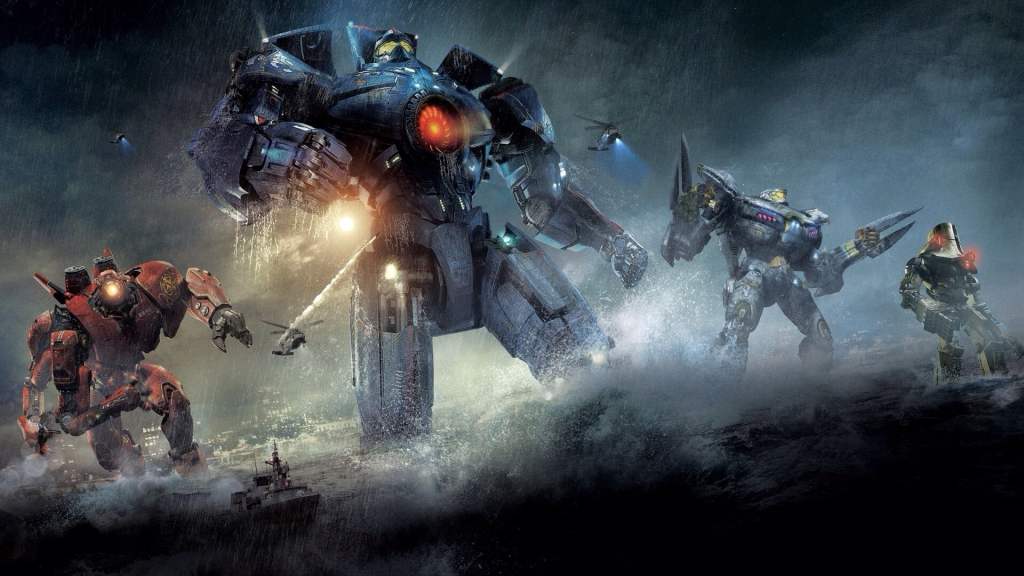
2013 was a big year for movies, there is absolutely no debate about that. It’s probably hard to conceptualize now, but the Marvel Cinematic Universe had just about established itself only a year before with Joss Whedon’s Avengers making well in excess of a billion dollars at the box office, which was then followed by a similar score raked in by Iron-Man 3 in May of 2013. We may have only felt it at the time, but the comic book movie era had just taken hold and cemented itself with the arrival of Man of Steel, which also – and expectedly so – made considerable bank.
However, the “era of comic book movies” is, especially if you zoom out a little bit, merely a natural extension of what I choose to see as an era of risk-averse franchise filmmaking that began in the early 2000s and got turbocharged by the financial crisis of 2007-2008. This is when the top-scoring box-office juggernauts all began wearing numbered jerseys, from Transformers and Pixar productions to Fast and Furious, Despicable Me and The Hangover. Naturally, 2013 sported a few exceptions to this rule because Alfonso Cuarón’s Gravity earned its share of the box office spoils, among others. But it doesn’t change the simple fact that original (read: non-franchise) movies found it hard to elbow their way into cinemas. And when they did, it only took one weekend of underwhelming receipts for them to be supplanted by more profitable titles, because it just made financial sense for theatre owners to run Man of Steel, Fast and Furious 6 or Iron-Man 3 on another screen instead of Elysium, 2 Guns or… Pacific Rim.
Guillermo del Toro’s eye-candy spectacle about giant robots fighting interdimensional monsters became an unfortunate victim of circumstance, as despite considerable fanfare surrounding the run-up to its release in July 2013, it failed to gain enough traction to stand toe-to-toe with the year’s biggest financial successes. In fact, you wouldn’t be wrong if you called Pacific Rim a box office bomb because on a budget of nearly 200 million dollars, it only brought home 400 million in ticket sales. I know – the rule of thumb states that doubling the production budget is an indicator of breaking even, but some thumbs are different in girth. And a blockbuster thumb in the era of expensive and relentless marketing needed to secure the needed facetime from your prospective patrons is just a bit thicker. So, Pacific Rim ended up completely overshadowed by Man of Steel, the sixth instalment of the Toretto saga and even Despicable Me 2. And if you really want to pour some salt into the wound, imagine that Grown Ups 2 out-earned Pacific Rim during their opening weekend by four million bucks. Such was the power of a sequel. Or maybe it’s the Adam Sandler factor. I can’t honestly tell you.
Therefore, Pacific Rim became a bit of an oddity and a weirdly financially successful cult classic. It’s difficult to rationalize but 400 million in box office receipts equals quite a lot of moviegoers, even if from the big picture perspective assumed by studio bean counters it might look like a bit of a flop. Del Toro’s movie connected with some audiences, and it specifically found its way into the hearts of those people who grew up watching Voltron, Power Rangers and Toho-produced kaiju movies. In fact, the movie seemed genetically engineered to capitalize on a specific brand of nostalgia all the while brewing the kind of a spectacle fans of Michael Bay Transformers movies wouldn’t object to either.
If you ask me, I fell in love with Pacific Rim specifically on the back of the fact it reignited my childhood memories of watching Tosho Daimos, Robot Jox, and Godzilla movies, and it didn’t hurt that the filmmakers spared absolutely no expense when it came to building their movie into a neon-washed spectacle festooned with a combination of impressive production design and immensely memorable set pieces underpinned by wonderfully resplendent CGI effects. Pacific Rim was simply beautiful to look at, even if its narrative was held together by butcher’s twine and good intentions which made a bog-standard Roland Emmerich movie look nuanced and thematically rich in comparison.
It’s inescapable: Pacific Rim didn’t leave much of a cultural footprint (though, unlike Avatar it spawned a sequel that took less than a decade to come to fruition), even though it cultivated a large enough fanbase to sustain a cottage industry of toys and merchandise centred around Jaegers and Kaiju. Perhaps it was a few years ahead of its time and would make a much bigger impact today. After all, Kaiju movies have come back into the mainstream with Gareth Edwards’ Godzilla paving the way for the MonsterVerse taking hold in Hollywood only a little while after Pacific Rim came out. And if you look closely, you will probably notice the distinct visual symmetry between the neon-lit Godzilla v Kong (and the upcoming Godzilla X Kong) and Guillermo Del Toro’s underrated spectacle, which leads me to believe that – much like Robot Jox had to fail because it took literal years for mainstream filmmakers to figure out how to make live-action cartoons – Pacific Rim had to come out when it did to become a lynchpin connecting the Michael Bay-directed Transformers movies to the currently live universe of monster movies elbowing their way into the forefront of popular culture dominated still by the MCU and its many imitators.
Pacific Rim is the missing evolutionary link between two well-known franchises based on entrenched intellectual properties that somehow got lost in the shuffle because it didn’t have any measure of pre-existing cultural footprint. It was wholly original and completely void of extended cultural lore the Hollywood machine could tap into with ease, which immediately put it at a disadvantage because it takes considerable risk (a naughty word in the post-2008 era of low-risk-high-reward franchise entertainment) to invest in a string of movies, TV shows or comic books on the back of a fully original blockbuster and build its cultural footprint. Again, Avatar – the biggest box office hit of all time – found it hard to generate a lasting ripple in the fabric of popular culture, so how much could a comparatively small blockbuster like Pacific Rim eke out with its sub-billion-dollar receipts? Especially in a world where Marvel movies make in excess of a billion dollars as a matter of course, so studio moguls are naturally more inclined to look for pre-existing properties they could MCU-ize, as opposed to going long with a decade of property development the Pacific Rim franchise would require to build a sustainable cultural image.
Nobody cared enough to make Pacific Rim a successful franchise and it seems that its sequel Pacific Rim: Uprising was more of a “fine, we’ll finance this, but if it doesn’t win big, we are canning all your plans, Guillermo” project. And indeed, the sequel didn’t endear enough people. Consequently, what could have been a genuinely interesting and completely original franchise of big blockbusters replete with big robot fights and destruction porn, all of which seemed like safe bets conceptually, fizzled out prematurely and ended its existence with a short-lived Netflix anime series titled Pacific Rim: The Black (which in itself is an interesting enough specimen).
And it’s a real shame because it seems that whatever energy Pacific Rim had in spades (in addition to its wholly original narrative roots) would have made it a success if it hadn’t been released right after MCU consolidated its position as the box office king. But at the same time, I don’t think we’d see Godzilla and its multiple sequels come to fruition without Pacific Rim blazing the trail. Its failure was required to even attempt a mission of giving Disney/Marvel a run for their money, however improbable it might be.
It just goes to show that occasionally a great movie will see the light of day and immediately take a bullet to the forehead because the world isn’t ready to embrace it and to give it a chance to make a lasting cultural impact. Sure, sometimes those movies tend to be marred with flaws. Sometimes they’re too camp. Too childish. Too out there. Pacific Rim may be all those things – too camp, too anime, too outlandish and childish. Too simple. Too cliché. Too on-the-nose with its storytelling. Too shallow. Take your pick.
But it’s awesome and especially in 2013 it is like nothing else surrounding it. Pacific Rim’s spectacle is unique thanks to Guillermo Del Toro’s quirky idiosyncrasies and the fact he also seems strongly connected to all those seemingly disparate elements of the popular culture many of us find nostalgic. Pacific Rim didn’t have to have a life as short as it had. It could have become Star Wars of its time, had cultural conditions been there. But they weren’t. Instead, it did its part and pushed the needle just a few inches towards a world where the MCU box office supremacy may one day be successfully contested.



 Flasz On Film
Leave a reply to Huilahi Cancel reply