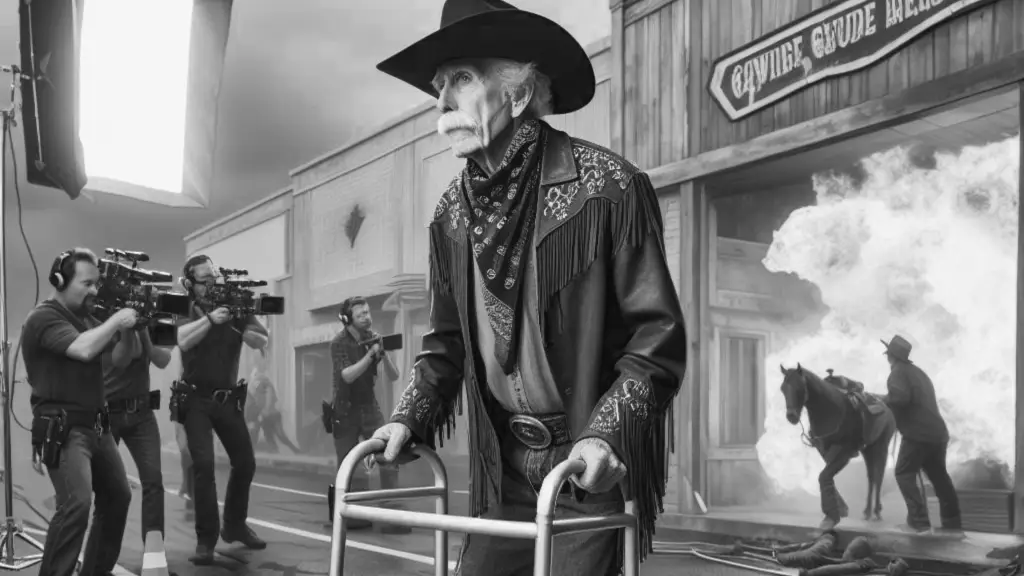
The retirement years: One doesn’t always consider the challenges that accompany the Golden Years while approaching them, but they’re there. Of course, there are the financial pressures of losing the reliable income of employment, but there are also the needs of feeling useful, staying active, and maybe even continuing to work in some scaled-back capacity. Sure, the next generation has taken over the labour market, the political establishment, and the economy, and that’s fine because the times are changing, and the youngsters are probably better equipped for it anyway. However, seniors and aging workers, even though they may not be the community bigwigs that they once were, still have a lot to offer. And sometimes, these folks need a bit of help transitioning into the late autumns of their lives. Traditionally, this is where grown children come in, even though they themselves are already working and raising their own kids. Yet, they still step up to help the parents who guided and supported them once upon a time. But what about aging Hollywood stars?
Not sure about today, but one apparent retirement plan ‘bridge package’ in the 1970s was the emergent disaster film genre. Universal Pictures’ film Airport was made at the beginning of the decade as a bit of a gamble by the studio who hoped people might gravitate toward a Hitchcockian wannabe film about a bomb on an plane. And audiences did. They loved it. Airport was one of the biggest film releases of all time, becoming one of the first films to cross the $100 million mark. The George Seaton film initiated loads of water-cooler conversations among middle-aged working folks and nabbed plenty of end-of-year accolades including ten Academy Award nominations—and a big part of that success lay in its tapping into nostalgia for pre-1960s Hollywood.
Airport was celebrated as having a mega, star-studded cast. Not all the cast were senior citizens, but some were, and others were arguably quite a bit past their prime, sentries of a previous Hollywood era. Upon a closer look at Airport’s recognizable cast, the 1970 hit film feels like a production constructed by a studio looking to take care of its elder statesmen as much as exploit their celebrity appeal. Times were changing in Hollywood, and the writing was on the wall for the old-school escapist musicals, sweeping westerns, and sword-and-sandal epics of the 50s and early 60s. Furthermore, the industry was in a recession, and the young, indie filmmakers surfacing were the ones making the films that audiences and critics were responding to. Butch Cassidy and the Sundance Kid, Midnight Cowboy, and Easy Rider were three of the four biggest films of 1969 (were it not for Herbie’s adorable antics in The Love Bug, all three dark horses would have medalled). These films were light years away from the heroics of Hitchcock’s leading men, cheesey Disney family comedies, or John Wayne tough-guy archetypes of the Western. As such, studios were watching closely and finding sage investment in the up-and-coming John Schlesinger, George Roy Hill, and Mike Nichols types. Meanwhile, Universal quietly snuck in a bet that there was still a market for nostalgia and familiarity. Catastrophe films were an unusual commodity at the box office (A Night to Remember being one exception), but familiar Hollywood faces could potentially draw attention while providing interesting roles for aging actors.
From the very early stages of the script-writing process, Airport was purposed—at least in part—to give older Hollywood stars something to do, i.e. stars who either were approaching or had already eclipsed their best-before dates. The role of a quirky serial stowaway was written for an aging starlet who still had comic chops. Producers cast the 69-year-old “First Lady of American Theatre” and Hollywood legend, Helen Hayes. The film’s protagonist—a noble, everyday American hero—fights all kinds of logistical and personal challenges. He takes on the aviation industry, local protestors, unreasonable family members, and the rugged realities of Mother Nature herself. He’s the manager of an airport, but in terms of leading men, he’s essentially written as a cowboy—the level-head, Gary Cooper kind. Thus, the character needed to be played by a classy, aging hero from the era of the Western. Burt Lancaster, in his late 50s at the time, was a perfect fit. Reception to Lancaster’s films had fallen notably since his early 1960s work with John Frankenheimer. Universal felt that casting him came with the marketing power of an established marquee name, but at the same time the disaster flick met the needs of an aging star. Because the film was written as an ensemble piece, Lancaster wouldn’t be asked to be in every scene, and he wouldn’t have to do all that crazy physical activity that leading men used to do in the 1950s, like ride horses, perform stunts, or drive two hours from the hotel to the Monument Valley set. Even though the exterior scenes were shot in Minnesota in winter, it’s not a film that comes with a tremendous amount of heavy lifting. Airport provided a way for studios to lean on older stars’ bankability while providing easier gigs for former A-listers.
Airport’s formula helped it become a surprise hit, and a massive one. Its critical legacy is highly debatable, but its influence on business practices in the 1970s is much more measurable. If studios were looking for a new action-oriented genre to get the audience’s adrenaline going and to replace the old-school Western while Butch, Sundance, and the Midnight Cowboy were busy reconceptualizing it, here it was: the disaster film. Furthermore, the Airport template came from within the studio itself, not one of those avant-garde types like Robert Altman. It was something relatively easy to dismantle, reverse-engineer, and mass-produce for audiences. The studio could do it themselves via their long-standing relationships with a stable of corporate writers, yes-men directors, and on-staff production personnel. They could carve out one corner of their changing business to do things the old way without having to rely on the emerging ‘New Hollywood’ hotshots. Besides, those kids had their gritty location shooting, naturalistic acting, and fancy editing. What did they know about shooting on soundstages or working with actors of the 40s and 50s—the stars who arguably built up the studios’ wealth during the 1950s heyday to begin with?
As a result of Universal’s success with Airport in 1970, the following decade would feature new disaster films cut from the same Airport cloth every year. From 1971 to 1974, these films were hugely profitable. The Poseidon Adventures and Earthquakes went toe-to-toe with the mega-successful, more naturalistic hits of William Friedkin and Francis Ford Coppola. Although the disaster genre had a five-year bull market (from 1970 to 1974), these films were produced regularly through to the 1980s as dozens of films were made based on the big cast/big devastation model. As part of the template, these productions provided decent, high-profile, and oftentimes satisfying work to a stable of stars from yesteryear. They became smaller jobs for older, well-known actors to pursue as side projects during their career denouements. None of the actors could ‘open’ a film based on their popularity any more, but collectively in an ensemble cast, they could still turn heads, so it was work that could make them feel productive again, and maybe even appreciated once more.
The Hollywood studios were undeniably watching closely as the talents of young filmmakers like William Friedkin and stars like Dustin Hoffman were making money by appealing to a younger generation of filmgoers. But in 1970, they had discovered older audiences really liked disaster film ensemble pieces. Even though the stars were a little less shiny and certainly slower-moving, the older moviegoers enjoyed watching highly identifiable stars from their youth. The Hollywood studios themselves were a ‘sandwich generation’. On the one hand, they were investing in the success of the youngsters while on the other, they were building a new genre to help care for the grandparents. The star-studded casts that the disaster films happily bragged about in their promos rarely included the hot up-and-comers like DeNiro, Hoffman, Scheider, Pacino, Caan, Sutherland, Gould, or Redford. Instead, they starred leading man staples from the 1940s and 1950s and older established actresses of honourable repute. There were some prominent examples of actors who dabbled in both the studio disaster genre and the New Hollywood stuff (guys like Michael Caine, Paul Newman, and Gene Hackman). However, there were two prominent assemblies of famous actors within the Hollywood star system at the time: the New Hollywood under-30s and the old-Hollywood over-50s.
Some of the over-50s crowd rediscovered a lost mojo courtesy of the 70s’ catastrophe films, in part because the productions were tailored to them. One element that the disaster genre featured was elaborate subplots or colourfully written characters specifically tailored for older stars—and the nostalgic audiences who adored them. Helen Hayes won an Oscar for her cutesy old-woman felon in Airport. Shelley Winters was nominated for The Poseidon Adventure. The great Fred Astaire received his only Oscar nomination for his work on The Towering Inferno. In The Swarm, Slim Pickens has an emotional scene where he breaks down over the loss of his child. Emotional substance was not Pickens’ regular acting territory during his 35-year career. Scripts for disaster films regardless of their overall quality (and boy-oh-boy, the story problems of disaster movies are their own separate conversation) catered in an understanding way to the wishes and needs of older performers who wanted to prove that they ‘still had it’.
For example, in The Swarm, 63-year-old Olivia de Havilland is part of a love triangle subplot with Ben Johnson and Fred McMurray. That’s right, The Shaggy Dog himself co-starred in a mini-romcom at the age of 71—all within the runtime of a movie about killer bees. These scripts must have appealed to aging stars at least in part because they provided older characters with interesting stuff to do. It’s completely understandable how such quirky characters could ‘jump off the page’ to a retired actor looking to get out of the house and take a job that’s not just playing a ‘grandpa’. This work allowed older actors to have their moment on screen while also probably being able to get home in time for the 6:00 news. And besides, even if these films were blatantly using the older stars’ celebrity to sell tickets, the older cast frequently got to contribute their own character ideas. Producer Irwin Allen allowed Red Buttons have a speedwalking scene—not once, but twice (in The Poseidon Adventure and When Time Ran Out). He also allowed Ben Johnson to wear his cowboy hat and allowed Fred MacMurray to wear his bowtie while courting de Havilland in The Swarm for no other reason than it appeared to be those actors’ own input. It sort of makes sense, too. If a knowledgeable, experienced 70-year-old employee is willing to go into the Home Depot for a shift at the paint counter because it makes him feel valued, then why would anyone enforce a strict dress code?
Then there are the former leading men of the 1950s. Lancaster didn’t care for the quality of Airport, so he didn’t really come back to catastrophe cinema. However, Charlton Heston was like an aging pitcher on a baseball roster who discovered a new pitch. He was able to elongate his career as a leading man for another decade courtesy of the reinvention and did six disaster films in the 1970s, at least. The new genre offered a casting appeal to men’s egos. Although studios wanted some name-recognition for their sales, they also seemed to understand that men—especially the older dudes—still wanted to feel valued and that they can still do everything they could do when they were younger. This isn’t just an actor thing, of course. It’s a natural. Newman and Hackman were going to look ‘cool’ in their forays into disaster productions anyway because they were in their prime. However, for the older male stars who signed on to these films, they got to stick out their chests and hammer away like young Tarzans. Producers appealed to their aging stars’ wishes to remain industry-relevant and youthfully virile. Jack Lemmon got to play against type as a serious hero in Airport ’77. Meanwhile, Dean Martin and William Holden are both given young, gorgeous, talented Jacqueline Bisset as an on-screen love interest (Martin in Airport, Holden in When Time Ran Out). Both men were over 26 years her senior, but on-screen being a romantic lead with a young co-star is like declaring in the mirror, ‘you’ve still got it, old boy’. When you’re not a romantic leading man who can open a movie at the American box office anymore, and you’re closer to being a retiree sifting through offers to play grandfathers and gray-haired mentors, disaster film characters must have been satisfying throwbacks to a bygone age. Playing characters with confidence and swagger opposite young love interests probably made appealing job offers—a great reason to get out of the house. Furthermore, giving actors physical and heroic feats also played into stars’ desires to feel useful and younger, too. Older stars Burgess Meredith and Lorne Greene were given impressive physical acts of heroism in their small roles in When Time Ran Out and Earthquake respectively. Such performances could make a 60-year-old actor feel 40 again. Slim Pickens and Jack Warden got to go scuba diving in Beyond the Poseidon Adventure. To some, that’s a fun day at the office.
Hollywood studios are big business. They are now. They were in the 1970s. However, the success of the disaster film—particularly how the genre relied on a Golden-Era ensemble of aging stars to capture a nostalgic audience’s attention—forced producers, for a little while at least, to take care of seniors. Most of these stars were winding down their work prospects, but so long as the Airport and Poseidon money was good, there was a brief period when Hollywood was motivated to make the disaster film experience into at least a somewhat comfortable retirement outing for some of its founding citizens. And if that meant giving the nearly 70-year-old Jimmy Stewart a super-easy role as the richest man on the planet, shooting his scenes in a day, and then take him for a ride on a navy vessel to watch some open-water military exercises—as happens in Aiport ’77—it makes sense. In fact, it could possibly be seen as halfway decent eldercare.




 Flasz On Film
Leave a reply to Roland Emmerich’s 2012 Was a Premonition of the Post-Pandemic Bedlam – Flasz On Film Cancel reply