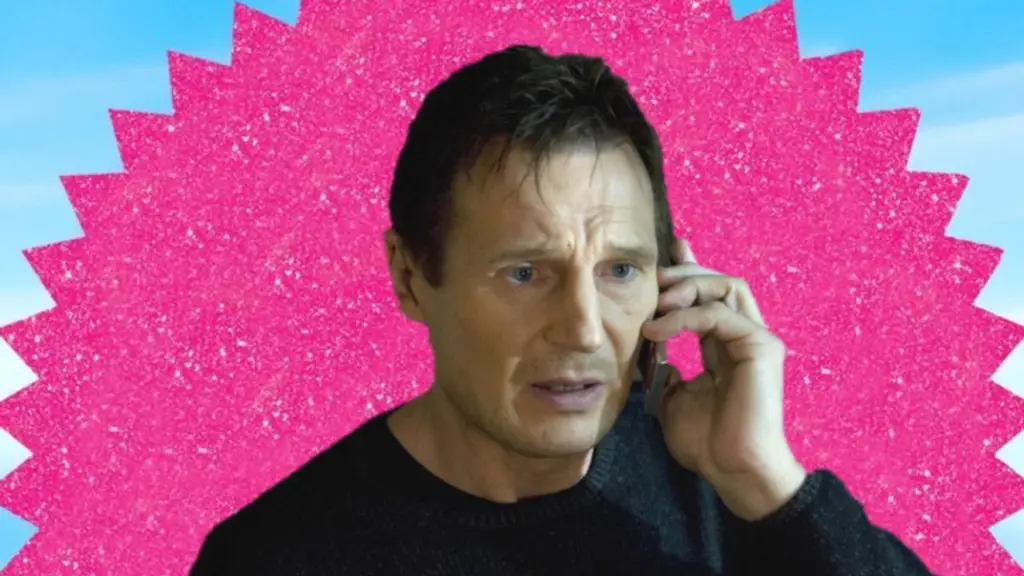
Back around 2008 when Pierre Morel’s Taken was being made, no one really expected it to be a sizeable hit. One look at a film’s budget is an indicator of the production company’s financial forecasting, and Taken was greenlit at a modest $25 million. With films needing to earn about three times their production costs, generally speaking, to see a profit after marketers and cinemas take their cut, one can surmise that the partnership of companies that patched the production together was hoping for a $50 million to $70 million payback from its theatrical run. After all, on the spec sheet, Taken was a simple action thriller rooted in domestic life. Liam Neeson had signed on, but at that time in his career, he was a distinguished, well-known supporting actor not a sought-after or trusted leading man for a genre film. He was Qui Gon Jinn or Ra’s Al Ghul. As a leading man, he was periodically cast in smaller but higher-shelf, prestigious awards hopefuls—think, Kinsey, Rob Roy, or Nell.
In short, Liam Neeson’s starring as Bryan Mills in Taken—were it more of a studio release—would have been more of a Harrison Ford or even Brad Pitt affair. However, the beginnings of Taken were decidedly more modest. Even with a script from successful internationally accomplished filmmakers Luc Besson (Leon, La Femme Nikita) and Robert Mark Kamen (The Karate Kid, Lethal Weapon 3), the project was a modestly sized production, and no-one involved early on ever imagined that it was a financial slam dunk. A safe investment, perhaps, but not the big hit it would become. Neeson himself figured it would not be particularly successful. He signed up as a 56-year-old character actor—respected though he was—wanting to play a hero in a genre film. Presumably having hit the twilight of his physical years, how many more opportunities would he have to play the Tom Cruise role? As it would turn out, Neeson would have plenty of opportunities to play such roles in the years to follow Taken, and in fact, the Taken-type of protagonist would no longer be identified as a Cruise, Pitt, or Ford role. Such roles would become Liam Neeson-type roles as Taken became an enormous international hit, making nine times its production budget and spawning both a successful franchise and a cottage industry of small-scale action films that would become an important subset for streaming companies’ programming in this, the age of content.
Fast forward fifteen years or so, and a live-action Barbie production finds itself finally getting underway with Warner Bros. Pictures after decades of going through development hell as well as on-again, off-again funding. Again, a quick look at the production budget reveals a glimpse at what the accounting department at Warners thought of the venture. Funding to the tune of $130 million probably indicates that Warners was crossing its fingers for $300 million or so from box office receipts. At this level and with so many different stakeholders involved, this assessment is probably a bit naïve. Besides, the merchandising potential with Barbie is also an element of the financial planning that could mitigate some of the original risk. Even if the film failed, the high-profile release would certainly serve as half a year or more of advertising for Mattel’s toy line.
However, Barbie most certainly did not fail. The Greta Gerwig film became the highest-grossing film ever directed by a woman, earning $1.45 billion from box office ticket sales. It was an unmitigated victory, smashing through the ground rule of profitability that ‘three-times-the-budget equals the break-even point; Barbie had a box office return-on-investment multiplier of about eleven. Plus, Margot Robbie, Ryan Gosling, and company also created a merchandising boon for the curvy plastic doll and provided the Warner Bros.’ Max video service in the US (and its international partners) a significant wave of reinforcement in the ongoing streaming wars—for the time being, at least. In short, Barbie was a financial and cultural sensation, against the early predictions of the industry’s own analysts and soothsayers.
But how on earth do the successes of Barbie in 2023 and Taken in 2009 interconnect? The fact is that no-one can really predict when some seemingly commonplace commodities will simply explode into sudden popularity. Taken’s success just happened when it was released in January 2009 in North America—the box office’s slowest season. And it wasn’t until weeks before Barbie’s July 2023 release—well into the summer movie season—that industry pundits began tracking the Mattel Studios film as something potentially special. Best laid plans in business and filmmaking may safely guide a film to profitability according to a blueprint using established branding and hundreds of millions in marketing (e.g. Avengers: Endgame), appeasing the shareholders, but the unforeseeable successes are relatively rare. They’re like earthquakes. One realizes a pop culture phenomenon only upon its arrival while one’s in the middle of the ground-shaking of the zeitgeist. Films or elements within films once in a while will unexpectedly connect meaningfully with an audience without the creators ever seeing it coming.
A live-action Barbie film was planned back in the late 1980s but was shelved rather quickly when Mattel’s collaboration with Cannon Group on Masters of the Universe bombed at the box office. In all likelihood, a Cannon Films Barbie movie in 1988 would have been equally as big a disaster for Barbie as it was for He-Man. For a film to be a sensation, the timing has to be just right. Greta Gerwig’s Barbie, just like Pierre Morel’s Taken, was released following six years of ongoing anxiety from divisive political and social commentary. World-shaking new stories followed by years of media coverage and loud, chirpy (and sometimes divisive) public opinions had left people’s minds marinating in unease for a long time. This was true of Taken, and it was true with Barbie as well. Each of these two movies swooped into the pop culture sphere at the perfect time to relate to audiences, articulate their feelings for them, and embody their values. This is how Taken and Barbie bust through their forecasted revenue ceilings and went beyond their perceived value to audiences.
Firstly, Liam Neeson’s heroics arrived in cinemas in 2008 in some countries while it was released in 2009 in others (notably in the US where its box office would take off). Taken’s release happened on the heels of six-plus years of the American-led War on Terror. After reeling and regrouping from the 9/11 attacks, the public in the West was readily engaged in debate on the best ways to flush Al Qaeda out from hiding and rid the world of extremism. Years of public discussion revolved around the military operations and the foreign affairs policies of world powers. However, all the discourse stemmed from the very personal feelings of vulnerability and violation that came from 9/11.
Enter Liam Neeson’s Bryan Mills in Taken who, within the story, is simply a family man minding his own business when his daughter is abducted in a random act of violent crime. Probably unbeknownst to the filmmakers, Neeson’s fatherly character embodied the precise American wish fulfilment of a generation grappling with the stressors of the September 11 attacks and ensuing feelings of insecurity. In the film Taken, Bryan Mills is able to save his daughter and restore her future, which was briefly taken from her. He also has the skills to surgically slice into the shadows of unfriendly territories abroad, extract the bad guys and dole out justice without the nuisance of either wasting time or navigating judicial process. It’s a natural, knee-jerk reaction—the revenge fantasy—that one would reasonably experience after being a victim. Liam Neeson, via Bryan Mills, became the All-American parent, connecting instantly with adult theatre-goers. The early 2000s created fear, and Neeson in Taken became a role model for making his own family safe. And, because it was well-known Liam Neeson who bore the anxieties of a nation on his shoulders, he presented a beloved and relatable actor to audiences—one whose distinguished accent and a Shakespearean-trained poise didn’t hurt. In short, Taken found a much larger appeal because Neeson embodied the role of ‘protector’ at a moment in history when America needed one. Taken—the movie itself—didn’t necessarily possess an original or clever script, but with its protagonist and lead actor, it had a very specific and well-articulated hero.
As for Barbie, 2023 marked the perfect time for its release. Like Taken, Barbie landed in theatres approximately six years after a significant moment kickstarted years of social conversation and debate. In 2017, the Weinstein scandal became the final accumulative kilometre-per-hour that led to the public sonic boom that would be the MeToo movement. The public, and in particular men (bad men, complacent men, and good men alike), could no longer avoid the female perspective. Meanwhile, appeals for empathy, reconciliation, and correction have increased within the public sphere for others, too—racial minorities, LBGTQ, and other communities. Regardless of the opinions—right/wrong, cancel/keep, or otherwise—Barbie turned into the populist film that was able to embody the equality and identity conversations that have been happening for years. Gerwig’s sharp script and her indie background may have led to a quirky quality of product that Warner Bros. and Mattel were happy with early in the marketing phase. However, as the release date approached and after the film hit theatres, it was evident that Barbie held an appeal that reached well beyond the female and youth demographics. Robbie’s and Gosling’s portrayals of genital-free dolls had something to say to nearly everyone—men, women, young, old, parents. Like it or hate it, Barbie blasted through its initially forecasted financial ceiling because it embodied the ongoing conversation in the public sphere. Barbie validated some filmgoers’ viewpoints while keeping the debate going for others. Regardless, though, it engaged audiences with an academic movie disguised as kid flick.
The Barbenheimer phenomenon, which was a clever and effective improvisational bit of PR certainly added to the zeitgeist, but Barbie’s decidedly grown-up dialog about identity and equality within industry and society alike is what connected and resonated with adults. That’s the piece that allowed it to earn almost eleven times its budget in theatres alone. The ability of Gerwig’s film to embrace the public discourse was what made it exceptional. It would have been a smash with or without its Christopher Nolan, fedora-wearing cinematic sibling across the hall of the multiplex.
Hollywood studios are forever seeking the next big splash, which is ironic since they feel as if they’re on constant autopilot mode, merely repeating the Pixar, Marvel, Star Wars, Blumhouse formulas ad nauseam. Surprise success stories sometimes come from films that happen to articulate social commentary with such a surprising amount of clarity for audiences that watching them becomes a cathartic and wholly satisfying experience. Bryan Mills, Barbie, and Ken managed to do this, making their films exceed initial revenue predictions. Since one can’t foresee accidents—much less the happy ones that trap lightning in a bottle—maybe it does make sense that Hollywood has spent the past fifteen years on creative autopilot. From a planning perspective, it makes sense to stick with what you know. Efforts to duplicate the Barbie phenomenon are likely to be about as successful as duplicating Taken was. That amounted to doubling down on ordering Liam Neeson-led thrillers for slow seasons at the box office. Projects were greenlit without understanding that Taken became a cultural item the moment that Liam Neeson promised to save his family and go after evildoers. It was an organic connection to the adult audience of 2009 as Neeson may just as well have been talking to Osama bin Laden himself in that famous phone call scene. Look for Barbie 2, Polly Pocket, and whatever else comes out of Mattel’s successful 2023 to probably miss the connection with its audiences, too. Hollywood is better at photocopying iconography and plotlines than it is at counselling its paying customers, which sometimes just happens to be what the people want.



 Flasz On Film
Leave a reply to Of Dads and Fathers – Flasz On Film Cancel reply