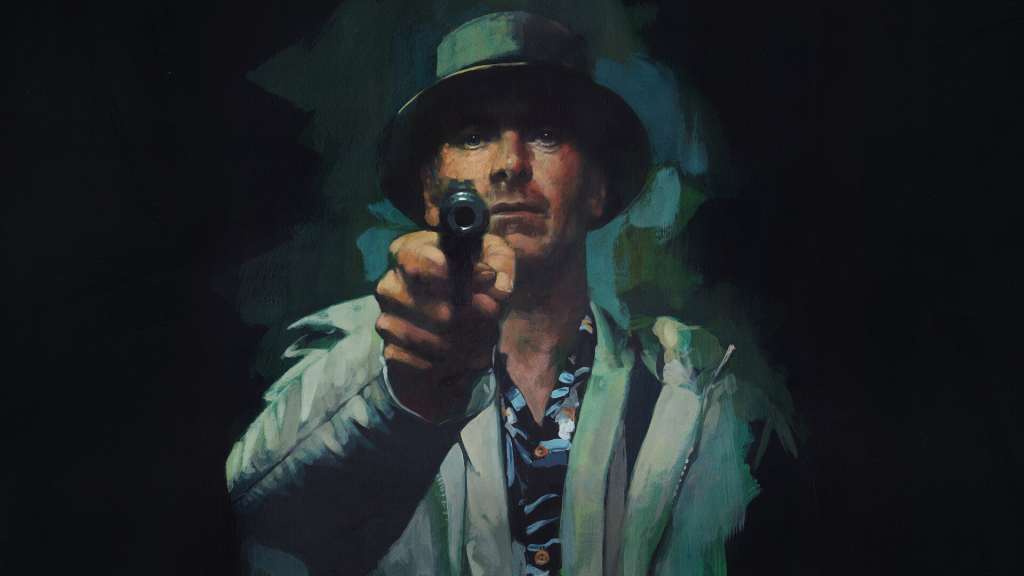

What used to be David Fincher’s love affair with Netflix, a maverick streaming service which bankrolled his projects dating back to House of Cards and which agreed to finance his long-gestating passion project Mank (which disappeared from the “For You” menu just as rapidly as it evaporated from our collective consciousness), has now clearly calcified into a predictable marriage. And as is the case with many long-term committed relationships, that spark has gone out and made way for mundane familiarity of obligatory fortnightly coitus. Which is more or less what The Killer feels like.
Adapted from a comic book (or should I call it a graphic novel to give it a bit more pizzazz?) by Alexis Nolent, The Killer reunites David Fincher with Andrew Kevin Walker (who did the adaption) after nearly thirty years, as the last time the two officially collaborated was during the production of Seven in 1995. Fine, I can call it Se7en because I can see you twitch from down here, even though in my head this spelling makes me pronounce it as “Sesevenen”. See how stupid it makes you look?
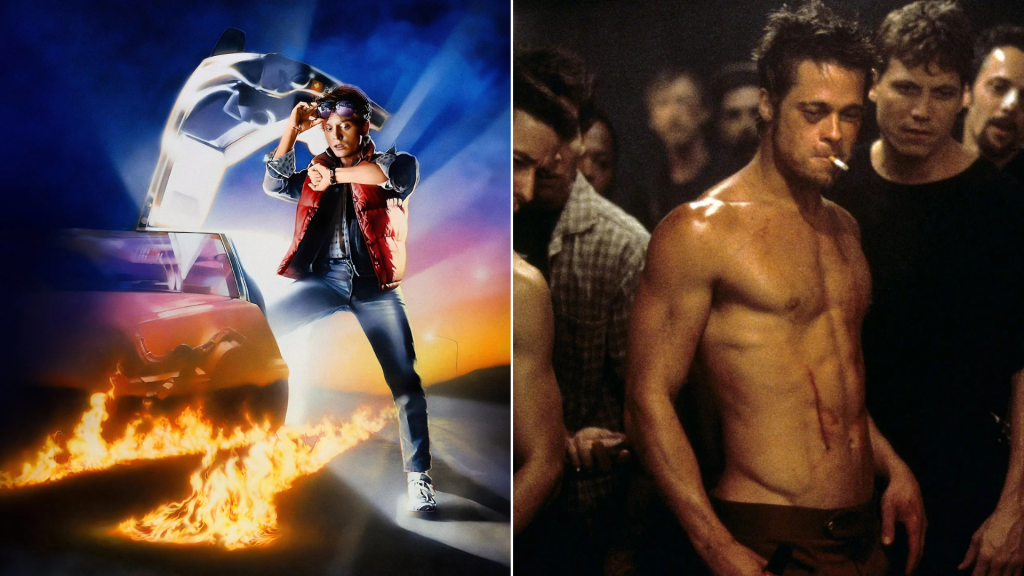
Anyway, this isn’t technically true because Walker also doctored Fight Club and The Game, but this would still leave the chasm between now and the last time they worked together over two decades wide. Therefore, you’d be excused if you assumed their reunion was akin to one between two lovers after many years apart. Unfortunately, two people finding each other after such a long time are no longer who they were when they were in love with each other. Think of Past Lives if you need an example of just that. What happens when they finally come together is a realization of just how much time has passed and how much they have changed in that time. Fincher and Walker are no longer in their twenties or thirties. They are sixty-year-old men who seem consumed with a desire to find out if they still “have it”.
I’m not sure they do. But boy, do they try.
Thus, The Killer begins with a predictably “saulbassean” opening credit sequence scored, as you might expect, by Trent Reznor and Atticus Ross. From then, we move on to meet the titular killer (Michael Fassbender), whose real name we never discover. The filmmaker walks us through his process as he preps for a kill. We see him meditate, stretch his hammies, pontificate over his craft, all to the tune of rock and roll interspersed with the killer’s own inner monologue. Point is, we never leave his headspace. We see what he sees. We hear what he hears. However, the killer’s religiously executed method folds like a cheap suit when confronted with the chaotic randomness of the universe, as his perfectly prepared assassination falls prey to a fluke, as – instead of executing a high value target – he misses and kills a bystander.
From there, we observe as the killer follows his emergency process of immediate self-exfiltration to his home in the Dominican Republic where he finds out that the agency he works for had sent assassins to take him out in response to his failure and left his partner (Sophie Charlotte). Naturally, we then follow our protagonist as he concocts (or maybe methodically executes a pre-concocted scenario he had thought about before, who knows) a plan to ensure his self-preservation by way of retaliating against the hand that once fed him and now seems bent on choking him to death.
And as we hang onto the killer’s shoulder, with our view only partially obstructed by his hat – that as he surmises himself makes him blend in better because he looks like a German tourist… though I question the veracity of this statement because at no point in the film does Michael Fassbender wear sandals and socks – we might eventually discover that what we see looks incredibly familiar. Almost too familiar. From the crisp visual brevity and pervasive sense of complete directorial stranglehold enveloping the picture to specific character cues and elements of iconography, The Killer is effectively an attempt to recapture something Fincher once had – his youth. It is by all accounts a movie that spares no expense to re-engineer the authorial aesthetic the filmmaker commanded at a time when he was making Se7en, Fight Club and Panic Room. At all costs.
Unfortunately, in consequence of the film’s focus being firmly trained on this stylistic attempt, something else ends up sidelined. Not that it has to – cinema is not a zero-sum game – but in this case it clearly looks that way because the director is too busy figuring out how to do what he used to do reflexively when he was a spring chicken to notice that the story he is telling is nothing but a pile of visual clichés, obnoxiously obvious shorthand, narrative conveniences and – perhaps most egregiously – dangerously overwritten elements of dialogue. For examples of the latter, I refer you to any scene with the killer confronting his handler (Charles Parnell), the client who ordered his termination (Arliss Howard) or his would-be assassin (Tilda Swinton) who indulges in telling us a joke about hunting, anal sex and bears. It’s honestly difficult to miss just how heavy-handed some of the writing is in this film, and the elements of visual storytelling aren’t much better either, come to think of it.
Thankfully, not all is lost because what could have been completely sunk by what I can only presume is just a product of the story being adapted from a medium infamous for not being too subtle in its writing acumen, ends up at least partially salvaged by Michael Fassbender’s performative mastery. He embodies the central character with requisite combination of restraint and haunting conviction so as to ensure – or at least do his darndest – we don’t look too hard for these narrative shortcomings the movie is overflowing with. Fassbender’s presence is what keeps us invested – nothing else, really – as we continue mesmerized by his singular mission focus and his somewhat magnetizingly stoic demeanour reminiscent of Paul Schrader and Jean-Pierre Melville’s antiheroes.
Hence, The Killer is overall a passable piece of visually-inclined entertainment, though it loses its lustre long before the credits begin to roll. In a strange way, it is perhaps best treated as a me-too companion to John Wick movies because it similarly dabbles in surface-level mythology and easy-on-the-uptake iconography. However, in contrast to the now iconic series about an assassin who’s thinking he’s back, The Killer ensures some depth of character is explored thanks to Fassbender’s towering talent, and that the world-building – video game-esque as it is – somehow feels a bit more lived in and organic.
Nevertheless, I can’t help but feel that the entire experiment of David Fincher going back to the well and reconnecting with his old flame Andrew Kevin Walker just doesn’t have the same oomph it would have had if they had made it in the 90s. I suppose the desire is there, the craft is there but somehow it just doesn’t work because the energy is no longer at the required level. So, maybe it’s time for David Fincher to realize he is at least a decade-and-a-half too late for his midlife crisis film. Instead, what he has turned in is a how-are-you-doing-fellow-teenagers film and it honestly feels odd. The Killer wants to be a cool movie full of vigour and fury, but it’s too measured and stylistically mature to pull it off. It’s a cinematic equivalent of Steve Buscemi wearing a baseball cap backwards holding a skateboard, or better yet, a record of what happens when two hexagenerians meet for a sexual congress – a whole lot of body horror enabled by modern technology with very limited audience appeal, let alone any tangible cultural staying power.


 Flasz On Film
Leave a reply to THE HUNTED, Organic Green Screens, and Self-Reflective Musings on Chickens Coming Home to Roost – Flasz On Film Cancel reply