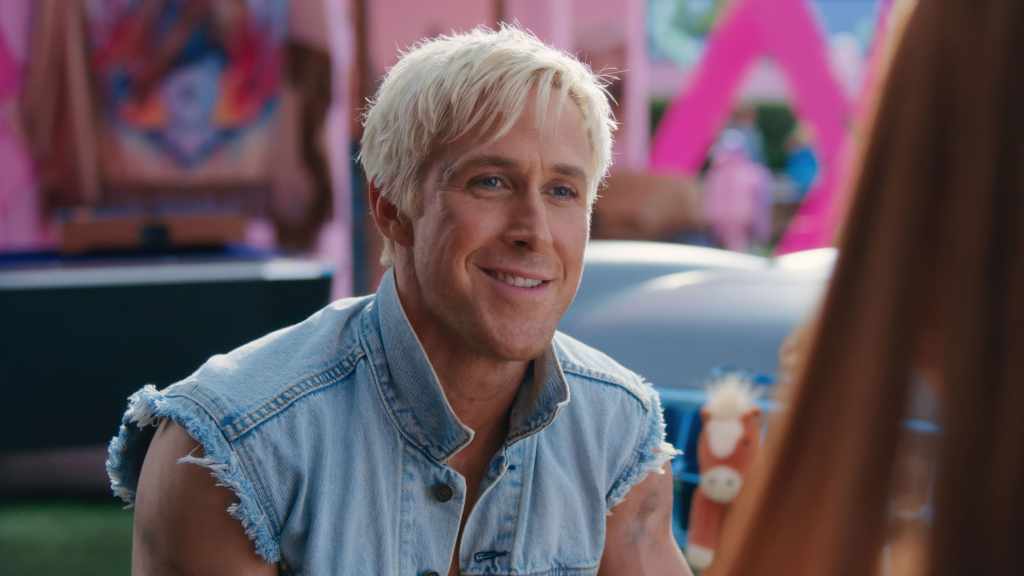
I won’t lie, when I stepped into the cinema as an unaccompanied male with an express intent to watch Greta Gerwig’s Barbie, I must have looked out of place in my polo shirt and jeans and not even an ounce of pink bedazzling my appearance. For a second, I was worried I was about to subject myself to an Are You There God? It’s Me Margaret experience, but those fleeting doubts dissipated as soon as the movie started. Having watched it, I emerged thinking every girl should probably go out and see it. However, having a bit more time to think about it, I’d like to extend this invitation to every man as well, especially because since its release, the discourse surrounding Barbie has crystallized around taking sides in a tribal war between the sexes… which makes me think either that I watched a different movie than everybody else, or that frighteningly large sections of our societies are incapable of interrogating a simple social satire without throwing a fit at the first mention of the p-word, aka “patriarchy.”
Yes, Barbie is a politically inclined movie. There’s absolutely no debate about that. In fact, I’d be surprised if it had turned out not to be one, given the fact Greta Gerwig has been expressing her views on womanhood and feminism in her directorial efforts (and through her acting work, too) for a long time. But that’s not a good enough reason to get angry about a movie, let alone to accuse it of outright misandry, unless you choose to leave the cinema after the first forty-five minutes and form your opinion based on the small chunk of the story… or maybe you simply walked into the movie with your mind made up already because a bunch of delicate male egos writing for right-wing outlets and recording dumb TikToks for short-lived online notoriety have convinced you that Barbie is somehow toxic to men. It isn’t.
In fact, Greta Gerwig’s Barbie gives men a unique opportunity to experience a movie that is equally made with women in mind, but also happens to have a broadly general appeal as well. Therefore, it doesn’t have a barrier to entry that an Agnes Varda film would have. It’s not an overtly intellectual arthouse piece aimed at a narrow sub-demographic of viewers, none of whom probably need a lecture about feminine woes. It’s a fun summer comedy that works as a stylized spectacle and carries a message. And, if you happen to be a man who wandered into the cinema to watch it, Barbie also presents an opportunity to at least attempt to empathize with the female experience and maybe to live vicariously for just shy of two hours through one (or more) of the film’s leads.
Because the movie chooses to disguise its central themes as a heightened satire awash with symbolism, it is quite simply a fun experience – you know, learn as you play – to follow Margot Robbie’s character on her own journey of self-discovery, which metaphorically functions as a reflection of any young girl’s journey into adulthood. We may think it’s easy for girls and women to find their place in the world, actualize and to thrive because everywhere we turn, we hear about equity initiatives, inclusivity campaigns, etc., but reality is just different.
I know. Life is hard for everyone. Coming of age isn’t easy for boys either. Still, it’s different and anyone raising a daughter may be able to tell you that. Women and girls face different challenges to us and I think it is important for men to realize that and get on board with making some societal adjustments, which would accommodate their needs. Women and men should never be at war. In fact, if and when they do, there can be no winners in such conflicts, only victims. Instead, the movie eventually arrives at what we should have always known, which is that Kens and Barbies are all in this together and should work together to empower each other.
Therefore, it should be easy for us to realize we should all campaign for flexible and generous parental leave so that it would always be up to the individual to decide whether they’d like to focus on their careers or to commit to parenting full time. Maybe that’s how you get kickass women to ascend to the tops of their respective fields organically, without ever needing to make political choices and fan animosities among fractured male egos who somehow feel oppressed by equality imposed from the top. And Barbie engenders this conversation without descending to militant sabre-rattling, and most importantly without indulging in sanctimonious navel-gazing. It should leave you, a male viewer, with these thoughts simmering under your bonnet without making you consciously aware of what happened because as far as you were concerned, you just watched a fun musical with a fish-out-of-water element and a truly tearful ending.
But that’s not over. Why I think Barbie is an indispensable male viewing has to do with Ken, other Kens… and Allan. After all, because men and women are topologically complementary, the story of Barbie is also the story of Ken. To this end, Gerwig very cleverly nests a handful of different journeys through a male experience tucked just behind the central dramatic exploits Barbie gets involved in. Now, a superficial examination of Ken’s character progression is what could drive some (already angry) pundits to think Gerwig’s movie is a piece of misandrist hate speech, but nothing could be further from the truth. In fact, the movie is loaded with compelling observations men could and should incorporate into their own journeys.
Look, forget that Ken (and Barbie, too) is a completely asexual being, or that contrary to Barbie, he doesn’t get to be doctor Ken, or fireman Ken. In Barbieland – which is indistinguishable from a walled-off liberal arts college full of rainbows and unicorns – Ken is just an avatar for a young man who has yet to actualize. He isn’t anything special because he has no idea what he wants to be. All he knows is that he looks great. However, what he is about to learn is that once he leaves Barbieland and enters the real world, life is ever so slightly simpler for him than it is for Barbie. He doesn’t get catcalled on the street, he doesn’t know what it feels like to fear a walk in the park and it’s probably just a tad easier for him to self-actualize. What he has to learn is that just because the world is geared to your advantage does not mean you should take it, let alone abuse it.
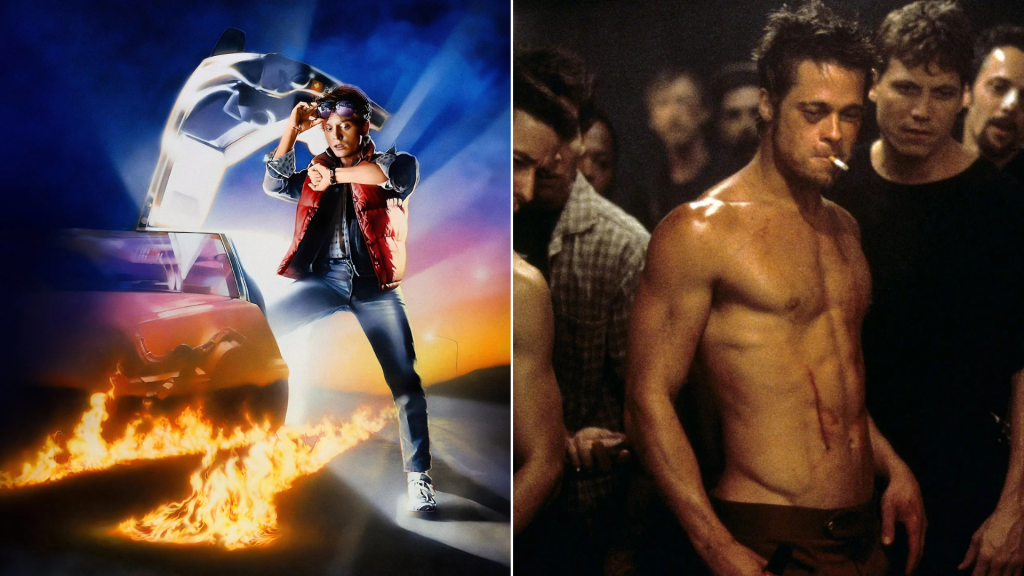
This is perhaps the primary male lesson coming out of Ken’s journey who literally becomes a Tyler-Durden-meets-Andrew-Tate for a minute and comes stunningly close to ruining the world for everyone. Tilting a table that is already pre-tilted a little bit more in your favour is quite a bit easier than levelling it back. In fact, doing so may include tilting it the other way around for a second before finding the right balance and Ken’s own journey reflects the need for men to remain consciously aware of the simple fact we get to have an easier ride in many respects. Nobody will ever reconsider hiring a young man because he might take time off work in a few years’ time to have kids. It’s all about awareness and conduct reflecting this awareness.
Also, Ken’s progression shows that to become a complete human being he needs to consider the needs of his partner, as well as his own emotional core. As men we are always taught to be strong and impenetrable, and to never get bogged down by our own weaknesses. We are always told to achieve and strive for greatness, all of which are important goals to keep in mind, but – as Gerwig reminds us in the film’s finale – the goal is not to achieve. The goal is to become a better person, a better partner and a better father. Achievement is a means to an end, and the end is to be a part of a family, a community and a society. Ask your wife, your girlfriend, or your daughter what she wants from you and who she wants you to be and you’ll probably hear what Ken heard from Barbie. She wants you to be the best you can be, but she also wants you to be happy and emotionally fulfilled, which is something our fathers and grandfathers had no idea how to express to us. She doesn’t need you to be a stone-cold killer with a physique of a demigod. Sure, take care of your body and take care of your emotions. You don’t have to win at life to be fulfilled. You’re enough. Or… Kenough.
Thus, Gerwig maps out an interesting pathway for her male characters that is of great use in real life. She asks you not to fall into any tribal traps. She doesn’t want you to be a subservient Ken. She wants you to be a self-assured and actualized Ken who is a competent and understanding partner to the actualized and self-assured Barbie. Every Barbie needs not a Ken, but an evolved Ken.
But what about Allan? Isn’t he an antidote to Ken’s Durden-esque toxicity? Doesn’t he beat up a bunch of dudes, take control and save the day? Isn’t the message of the film to be an Allan in the world of Kens? No, it is not. Allan is also on a path. He is not an alternative to what Ken is but a person on the way to becoming an evolved version of himself, but from a different direction. He is a guy who has his heart in the right place and whose mind is open to the injustices of the world, but who still lacks the follow-through and confidence to impact upon the world. Therefore, he needs to arrive at the evolved Ken position from a different direction. Instead of tempering his confidence, he needs to improve it because, even after all he’s done for Barbieland, Barbies barely notice him anyway.
I suppose the lesson is that if you see yourself more in Allan, then great. You’re on the right track. You know what’s what. Now, get to the gym, take care of yourself, develop your own interests and work on your confidence because you are still just a few steps away from becoming a bitter incel blaming his dating failures on everyone but himself. You’re on a journey of self-discovery. Being an Allan is not an endpoint. It’s a stage on a differently mapped male journey.
All in all, Barbie is a movie for men just as it is a movie for women simply because male and female journeys are (and should continue to be) complementary. Therefore, ignore the naysayers and threatened egos suggesting Greta Gerwig’s movie is a first step to a male genocide or something. It’s a film that celebrates femininity and womanhood but in doing so it also gives men a handful of important pointers about finding our own way in a world we should all figure out how to change so that it would work for the benefit of everyone – Barbies, Kens, Allans, women, men, and everyone else who wants to be a part of it.



 Flasz On Film
Leave a reply to 2023 in Review: My 5 Most-Read Articles | Flasz On Film Cancel reply