
As the concept of elevated horror has established a foothold within the landscape of the genre over the course of the last decade, highly specific microgenres have emerged within it all married to varied metaphorical or allegorical interpretations, such as racial politics (Get Out, Candyman), or class wars (The Menu, Us). Also, grief seems to have become an intriguing thematic sinkhole for many filmmakers to investigate with Hereditary, Midsommar, The Night House as some of the more prominent examples, perhaps because it lends itself to natural application within the horror genre. However, it may be possible to extract a more general – and maybe enlightening in some fashion – interpretation of this seemingly incidental momentum driving modern storytellers to hide solemn messaging about loss, grief and trauma within their movies and hence elevating them beyond fundamental parameters of base level entertainment, which is where Talk to Me may be of some help.
On its surface, Talk to Me (written and directed by a duo of twin brothers Danny and Michael Philippou) slides right into the microgenre formula of a supernatural horror with a thematic false bottom, upon which it executes rather respectably. In fact, even if I were to interrogate this movie completely superficially – thus failing to acknowledge the movie’s innate desire to be interpreted allegorically as well – I’d still be a pretty happy customer. And that’s because the Philippous seem to have a perfectly firm grasp on the knowhow of manufacturing successful scares, building dread, leveraging compelling performances from Sophie Wilde, Joe Bird and others, and maintaining a suspenseful tone by way of both indulging in occasionally disturbing imagery and denying the viewer respite at times they would wish to step outside for a breath of fresh air.
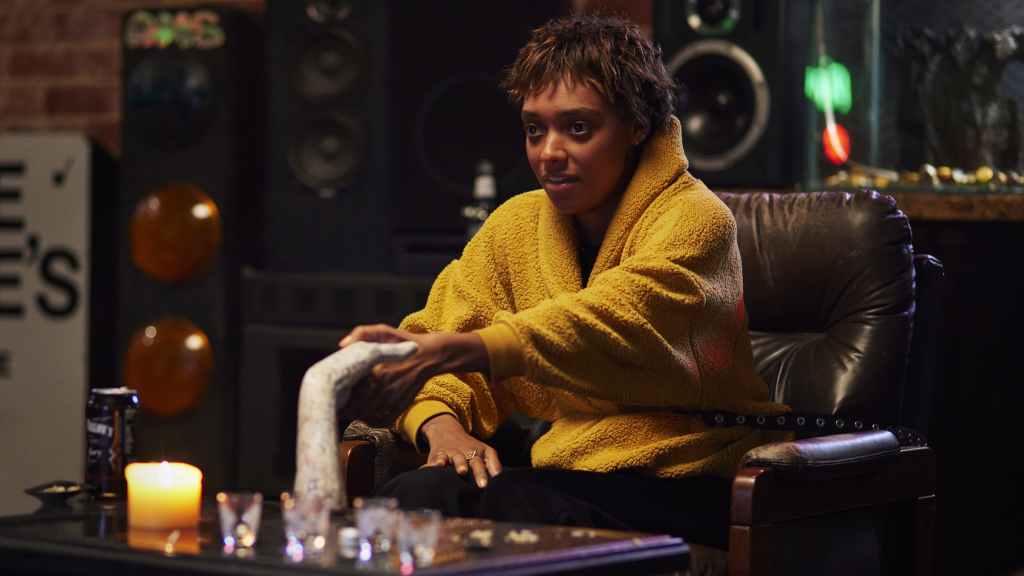
Nevertheless, a story about teenagers playing with forces beyond their understanding might immediately come across as formulaic. A seasoned viewer will simply expect a succession of narrative beats which see the main character Mia (Sophie Wilde), who is struggling to move on from her mother’s tragic and untimely passing, as she participates in a teenage-get-together-turned-summoning-session. They will anticipate this ritual would go wrong and that an attempt to communicate with the dead will end up with some sinister supernatural forces making their way through to the plane of the living, where they shall haunt the existence of the central characters. Which is exactly what happens. Mia gets together with a bunch of friends, they all take turns summoning spirits of the dead by giving a ceramic hand (allegedly an embalmed hand of some kind of a warlock encased in ceramics, go figure) a firm handshake and inviting them to talk to them. The trick is not to do it for too long because these summoned spirits might not want to leave your body.
Once these rules are explained, organically, methodically and without ever distracting you from the spectacle at hand, the stage is set for this apparent chain of familiar story beats to continue. We all know more or less where Talk to Me will go because it is following a set of well-established tropes. But is it a problem? Of course not. Horror is built on familiarity and a good chunk of the fun is seeing how new generations of filmmakers come and re-investigate the ideas you know by heart and still produce stories which are fresh, thrilling, visceral and most of all entertaining.
However, that’s not the end of it because underneath its solid execution on well-worn ideas underpinned by great special effects work and occasional flashes of potent visual inspiration, Talk to Me may be a movie referred to as instrumental in decoding the “elevated era” in the genre by future film historians. And that’s because – inadvertently or otherwise – it spells out outright why it might be that modern Millennial and up-and-coming Gen-Z filmmakers choose to encase such metaphorically invested explorations of grief in their own genre journeys. At least from where I was sitting, it became obvious to me that Talk to Me goes a step further – a layer deeper – in its allegorical trip and uses the themes of grief and trauma as a tool to explore something else – a generational cry for connection.
Now, I’m pretty sure you’d be fine if all you got out of Talk to Me was a conversation about the struggle involved dealing with a loss of a loved one, the ripples it can send across the family and how unresolved troubles can hound us into deterioration and ultimately into self-destruction. It’s already plenty. But it only takes a few more observations to extract what I think this movie truly says about the world at large.
For instance, what we may end up missing on the way to identifying a familiar node of the supernatural séance is that all these characters we follow are atomized. They are not a cohesive community engaged in a shared experience, but a collection of individuals all invested in their own microscopic universes. In fact, as they all take turns summoning dreadful looking deadites and invite them to possess their bodies for ninety seconds or less, the remaining crowd of onlookers are often watching what’s occurring while recording on their phones. They forgo the real experience and choose to interact with the supernatural phenomena filtered through their smartphone cameras, presumably with a view to post their recordings on social media where they all think they interact with the world… while completely disregarding the shared experiences they engaged in with others in reality.
What is more, the very idea of sitting down and engaging in potentially dangerous activities – while not entirely new to older generations – is in this case a part of the metaphorical yearning for connection. These youngsters choose to put their lives in peril to experience something real, to feel some kind of a touch. Although the ritual as described in the film could be interpreted as a metaphorical stand-in for taking drugs, I think there is a distinct difference to be delineated. These kids are not choosing to numb themselves or to depart the real world. They are already numb. They don’t interact with each other in any meaningful way. They cohabit the same spaces, sure, but they are all alone. They don’t talk about their problems and deeply seated traumas or regrets. And when they do talk, nobody listens because – again – everyone is ultra-invested in their own personal journeys.
Therefore, Mia’s unfolding phantasmagoria can and should be seen as an avatar for the younger generation’s chronic inability (or outright refusal) to connect with their immediate surroundings while at the same time yearning for establishing that connection with anyone else. Mia is not on speaking terms with her dad. Her dad keeps secrets regarding her mother’s death from her. Her mother kept her illness to herself, which drove her into the grave. All they need to do is open up, but they are somehow mortally afraid of doing so and they’d rather invite dead people to invade their bodies before they would tell their friends and family what they actually feel.
Such is the power of Talk to Me that not only does it address this point directly, but it also serves as a guide to go back and perhaps reinterpret Hereditary or The Night House through this filter and notice we are generationally knocked off balance and that we have lost the ability to express ourselves. Instead, we retreat to our own selves, interact with the world through the veneer of social media and wonder why our circuitry is becoming fried. Consequently, we’d shake hands with the dead just to feel something… even if we risk losing ourselves in a downward spiral towards madness, or even surrendering our souls to demons we haven’t the faculties to comprehend. After all, what we fear most, like Mia, is being alone.
And that’s what makes Talk to Me a five-star movie. It’s not the competence of its execution. It’s not the viscera of the experience. It’s not Sophie Wilde’s performance touted as the most unsettling possession since Linda Blair. It’s not the dread, the tone or respectful reinvention of genre familiarity. Taken together, all these aspects add up to a great experience with a horror movie. The metaphorical mapping of grief and trauma elevates it to a great elevated horror. And if you scratch a bit further, you shall find that Talk to Me is not just an “elevated horror”, but an elevated “elevated horror.” And that’s how Talk to Me ought to be remembered.


 Flasz On Film
Leave a comment